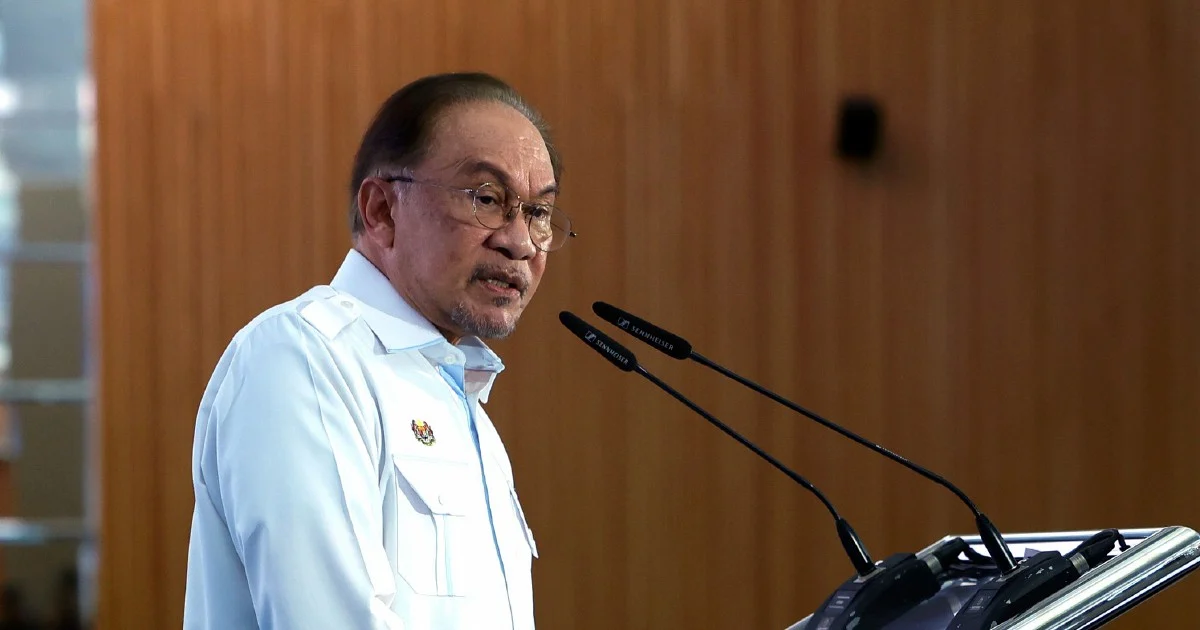
Prime Minister Datuk Seri Anwar Ibrahim has moved to dismiss mounting allegations that Putrajaya distributes development allocations in an unfair manner across Malaysian states, a longstanding point of contention in federal-state relations that periodically surfaces during discussions about regional equity.
The matter of how federal resources reach different states remains contentious in Malaysian politics, particularly among opposition-led administrations that argue their regions receive disproportionately smaller budgets compared to ruling coalition territories. The complaint structure follows predictable patterns whenever new budget announcements arrive or infrastructure projects concentrate in particular areas, reigniting debates about whether the federal government uses allocation mechanisms as a political tool.
Anwar's dismissal of these accusations comes amid an environment where transparency about federal spending distribution has become increasingly scrutinised by both state governments and civil society observers. Several state assemblies have in recent years raised questions about the methodology and criteria underpinning the allocation formula, particularly those administered through various federal development funds and infrastructure channels. Opposition-controlled states have been especially vocal in questioning whether their reduced representation in federal decision-making translates into reduced financial resources.
The Prime Minister's response suggests the federal government maintains confidence in its current distribution mechanisms and rejects the premise that political considerations drive allocation decisions. This stance typically rests on the argument that federal development funds follow predetermined formulae based on demographic factors, development needs assessment, and infrastructure priorities established through technical planning rather than political affiliation. However, critics counter that these very criteria can be manipulated to advantage certain regions over others.
Investigations by various watchdog groups have attempted to analyse allocation patterns, though definitively proving deliberate bias remains methodologically challenging. Federal data on disbursements exists in fragmented form across multiple ministries and implementing agencies, making comprehensive analysis difficult. The complexity of Malaysia's federal structure—with its distinct allocation streams for rural development, urban infrastructure, federal territories, and various ministry-specific programmes—further complicates attempts at straightforward comparison.
For Malaysian states, particularly those governed by opposition parties, the allocation question carries significant practical weight. Development infrastructure directly impacts economic growth potential, employment opportunities, and the government's ability to deliver public services. States that perceive themselves as disadvantaged face legitimate pressure to raise these concerns with voters, especially when neighbouring territories with similar populations appear to receive substantially larger infrastructure investments or development grants.
The federal government's position implicitly suggests that those questioning allocation fairness may be misinterpreting data or failing to account for the full picture of federal expenditure occurring within their territories. Ministers have periodically emphasised that federal spending flows through multiple channels—federal agencies, statutory bodies, government-linked companies—and that comprehensive analysis requires examining all these sources rather than relying on selective indicators. This argument contains validity, yet it simultaneously illustrates why the allocation debate persists: opacity invites suspicion.
Anwar's direct confrontation of these allegations signals the administration's intent to move past what officials likely view as politically motivated charges. Whether this approach proves effective remains uncertain, particularly if documentation continues to surface suggesting meaningful disparities that the federal government cannot adequately explain. The Prime Minister's authority and political standing suffer whenever credible evidence emerges supporting claims that his administration has treated certain states differently.
For Southeast Asian observers, Malaysia's allocation disputes reflect broader federalism challenges that plague developing democracies throughout the region. Questions about central government resource distribution to subnational units arise regularly in Indonesia, Thailand's previous administrations, and Philippines governance. Malaysia's relatively stable federal system at least permits these debates to occur through institutional channels rather than erupting into more serious confrontation.
Moving forward, the government might enhance its position by releasing more granular data on development allocations broken down by state and programme, allowing independent analysts to scrutinise whether disparities genuinely reflect policy choices or emerge from legitimate technical factors. Greater transparency typically defuses such allegations more effectively than dismissals alone. As Malaysian federalism continues evolving, questions about equitable resource distribution will likely intensify rather than diminish, requiring sustained attention from policymakers committed to maintaining inter-state harmony.

