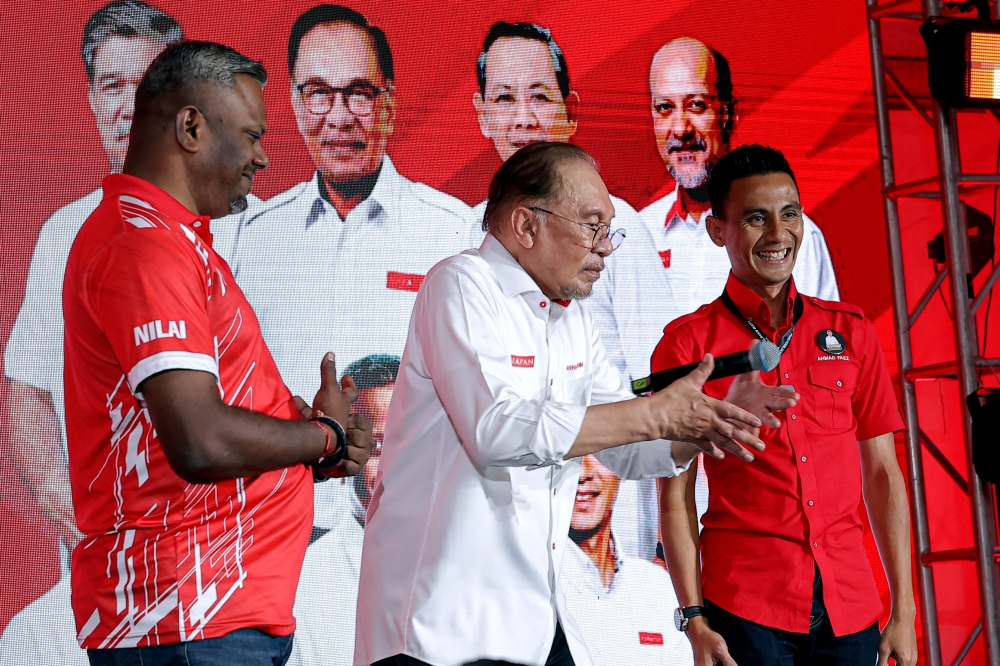
Prime Minister Datuk Seri Anwar Ibrahim sought to repair relations with Malaysia's Indian community on Wednesday, restating his apology for remarks that had provoked significant concern among the ethnic group. Speaking in Seremban, the premier underscored his commitment to inclusive governance, declaring that Malaysia is a country that embraces all its people equally, irrespective of their racial or religious background. The move represents an attempt to move beyond the controversy while reinforcing the administration's foundational message about national cohesion and shared citizenship.
The government leader's intervention comes as part of ongoing efforts to maintain communal harmony across Malaysia's multiethnic and multireligious landscape. His statement in Seremban was carefully calibrated to acknowledge the concerns raised while positioning himself as a leader committed to the principles of national unity enshrined in the Federal Constitution. By choosing to reiterate rather than simply repeat his earlier apology, Anwar sought to demonstrate that his commitment to bridging divides was substantive and enduring rather than reactive.
The Indian Malaysian community represents a significant demographic and electoral constituency within the country, particularly in urban centres and certain states where their representation is concentrated. Issues affecting this community—from economic participation and educational opportunities to cultural recognition and political representation—carry substantial weight in national discourse. Anwar's deliberate engagement with these concerns signals that his administration recognises the importance of maintaining confidence among all major ethnic blocs for effective governance and political stability.
Malaysia's approach to managing intercommunal relations has evolved considerably since independence, moving from earlier frameworks that emphasised implicit hierarchy toward explicit commitments to equality and shared prosperity. However, periodic incidents that touch on sensitive issues continue to test these commitments and require political leadership to reaffirm core principles. Such moments create opportunities for leaders to clarify their vision and rebuild trust when relations become strained.
The prime minister's emphasis on inclusive national identity reflects broader regional trends in Southeast Asia, where multiethnic societies continue grappling with the tension between community-specific interests and overarching national frameworks. Malaysia's experience offers lessons about the ongoing work required to sustain diverse societies, particularly when political communication touches on topics that resonate differently across ethnic communities. Leaders must navigate these challenges with sensitivity while maintaining credibility across constituencies.
Anwar's restatement also addresses potential concerns among Indian Malaysian voters about whether their interests receive adequate attention within the current political configuration. The Indian community, historically constituting between seven and eight percent of Malaysia's population, has experienced periods of relative marginalisation in mainstream political discourse. By explicitly addressing their concerns, Anwar attempts to ensure that this constituency does not feel excluded from the national project or bypassed by government priorities.
The timing of such reconciliation efforts matters significantly in Malaysia's political calendar. With electoral considerations always present in democratic systems, how leaders respond to community grievances influences voter behaviour and coalition dynamics. Anwar's proactive approach suggests awareness that failing to adequately address concerns could translate into electoral vulnerability, particularly in constituencies with substantial Indian Malaysian populations or in swing areas where community support proves decisive.
Government officials and civil society leaders have increasingly recognised that national unity in Malaysia requires not merely passive coexistence but active cultivation of mutual respect and genuine engagement across ethnic lines. Public statements by political leaders thus serve functions beyond immediate diplomatic repair—they reinforce civic culture and provide language that communities use when discussing their own relationships with one another. Anwar's rhetoric, emphasising that Malaysia belongs to all Malaysians, contributes to this broader national conversation about identity and belonging.
The prime minister's commitment to inclusive governance extends beyond symbolic gestures to potential policy implications. Ensuring that government programmes, public resource allocation, and institutional reforms reflect this commitment requires consistent follow-through across multiple departments and agencies. Communities monitor not only what leaders say but how those principles translate into concrete actions affecting their daily lives, economic opportunities, and cultural recognition.
Looking forward, Anwar's approach suggests that his administration intends to position itself as a custodian of Malaysia's pluralistic values at a time when polarisation along various lines remains a persistent challenge. This positioning carries implications for how the government frames policy decisions affecting different communities and how it manages inevitable disagreements about resource allocation, representation, and cultural matters. By establishing clear rhetorical commitment to inclusivity, leaders create benchmarks against which their actual policies will be measured.
The broader context for these discussions involves Malaysia's transformation as a nation navigating modernisation, generational change, and the evolution of community identities in an increasingly interconnected world. Younger Malaysians across all ethnic groups increasingly expect their leaders to articulate visions that transcend communal divisions while simultaneously respecting the distinct identities and interests of particular communities. Anwar's statements appear designed to appeal to both expectations simultaneously.
As Malaysia continues managing its multicommunal character amid social and economic pressures, moments of tension followed by reconciliation efforts become part of the country's regular rhythm. How leaders respond to these moments—with sensitivity, clarity, and genuine commitment to inclusion—shapes the trajectory of national unity. Anwar's reiterated apology and emphasis on inclusive governance contribute to these ongoing processes of affirmation and renewal that multiethnic societies require.

