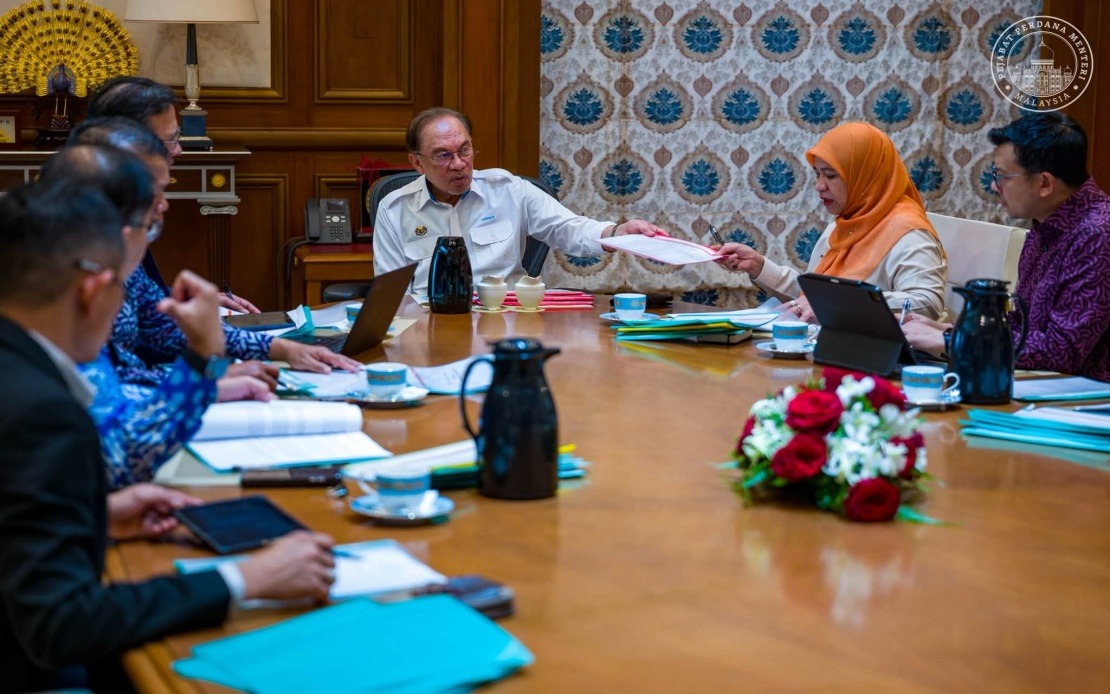
Prime Minister Datuk Seri Anwar Ibrahim has issued a direct directive to the Federal Land Development Authority to accelerate resolution of persistent problems affecting FELDA settlers, signalling the government's commitment to addressing grievances that have accumulated over decades. In a statement released on July 6, Anwar emphasised that the issues—particularly those concerning second-generation housing arrangements and land ownership rights—cannot continue to languish without concrete action, placing the matter squarely within the MADANI Government's policy agenda.
The housing and land ownership challenges plaguing FELDA communities represent one of Malaysia's most enduring social policy problems. Second-generation settlers, born to original land scheme participants, have faced significant obstacles in establishing formal housing rights and securing land tenure within FELDA schemes. These complications stem from the original settlement framework, which was structured primarily around first-generation beneficiaries, leaving subsequent generations in legal and administrative limbo regarding property rights and inheritance protocols.
Anwar's intervention reflects growing political acknowledgement that FELDA's structural limitations have created genuine hardship for settlers and their descendants. The authority, established to provide land development opportunities to rural Malaysians, now manages settlements where demographic shifts and generational transitions have exposed gaps in governance frameworks. Without clear mechanisms for transferring land rights and facilitating housing development, second-generation residents have struggled to acquire formal property ownership, hindering their economic advancement and family stability.
The Prime Minister's call for "careful examination" followed by "clear solution plans" suggests recognition that addressing these issues demands systematic analysis rather than ad-hoc interventions. This approach indicates awareness that problems within FELDA schemes are multifaceted, involving legal documentation, financial mechanisms, administrative procedures, and potentially constitutional considerations regarding native land tenure. Each dimension requires tailored solutions that balance historical commitments to original settlers with equitable treatment of their descendants.
For Malaysian policymakers and FELDA beneficiaries alike, the urgency Anwar has attached to this matter carries significant implications. FELDA encompasses approximately 112,000 families across multiple schemes nationwide, meaning that housing and land ownership uncertainties affect hundreds of thousands of individuals and their economic prospects. The ripple effects extend through rural communities dependent on agricultural settlements, where property rights form the foundation for credit access, investment in farm improvements, and intergenerational wealth transfer.
The political dimension cannot be overlooked. FELDA settlers represent a historically significant voting bloc, particularly in rural constituencies. Their concerns regarding land security and housing access have occasionally surfaced in electoral contexts, making this a matter of both governance substance and political calculation. By publicly committing to rapid resolution, Anwar signals responsiveness to an constituency whose welfare has sometimes been deprioritised in broader development agendas.
The MADANI Government framework explicitly emphasises strengthening FELDA operations and ensuring that implemented programmes genuinely serve settler communities and their families. This positioning suggests that government intervention will extend beyond symbolic gestures toward institutional reform. Potential solutions might include legislative amendments clarifying land transfer procedures, financial instruments facilitating second-generation housing development, or administrative streamlining to reduce bureaucratic barriers currently impeding settlement among younger FELDA residents.
Regional context adds further significance to FELDA's reform agenda. Across Southeast Asia, land tenure security and smallholder agricultural development remain critical development challenges. Malaysia's experience with FELDA—both its successes in establishing viable rural communities and its struggles with intergenerational property rights—offers lessons relevant to neighbouring countries addressing similar demographic transitions within agricultural settlement schemes. Effective reform could demonstrate viable pathways for managing evolving tenure arrangements within institutionalised land development frameworks.
The timeline for FELDA's response remains unclear, though Anwar's emphasis on immediate action suggests expectations of relatively swift progress. This creates pressure on FELDA management to move beyond prolonged consultative phases toward implementable proposals. Whether reform will require parliamentary legislation, administrative restructuring, financial commitments, or combinations thereof will likely become apparent as FELDA develops its response strategy.
Fundamentally, Anwar's directive represents acknowledgement that FELDA's original mandate—providing land and livelihood opportunities to rural Malaysians—remains incomplete as long as second and subsequent generations lack secure property rights. Resolving these issues connects directly to broader government objectives regarding inclusive development, rural prosperity, and equitable access to productive assets. The coming months will reveal whether renewed political focus translates into substantive institutional changes capable of delivering tangible improvements for FELDA communities struggling with longstanding tenure uncertainties.

