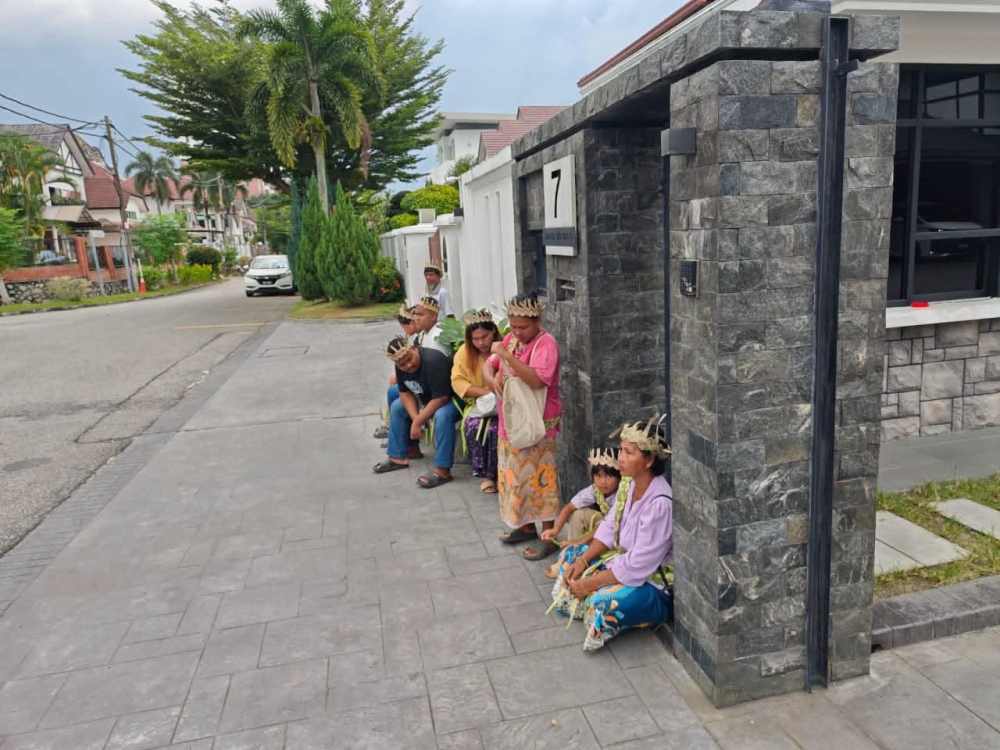
Prime Minister Datuk Seri Anwar Ibrahim has committed to bringing a contentious land dispute involving Orang Asli communities in Maran to the attention of the Pahang state administration, following his engagement with residents from the affected area. The premier's pledge represents a formal undertaking to act on grievances that have weighed on indigenous families for years, marking a potential shift in federal-level attention to Orang Asli land rights issues in the east coast state.
The dispute centres on land tenure and resource access rights claimed by Orang Asli settlements in the Maran district, a region in Pahang that has historically experienced tensions between indigenous land claims and competing commercial or developmental interests. During his recent interactions with villagers, Anwar gathered first-hand accounts of their circumstances, which prompted his decision to escalate the matter through official channels with Pahang's state government. This direct consultation approach underscores the government's stated commitment to inclusive governance that incorporates grassroots voices in policy formulation.
Orang Asli land disputes remain among the most persistent governance challenges in Malaysia, reflecting broader structural issues around indigenous land recognition, documentation, and administration. The Maran case exemplifies how indigenous communities continue to lack secure tenure over ancestral territories despite constitutional protections and various federal legislation designed to safeguard their interests. Land disputes of this nature often stem from overlapping claims—indigenous customary rights versus state-issued leases or permits to external parties—creating complicated legal scenarios that require coordinated federal and state intervention.
The involvement of the Prime Minister's Office adds executive weight to what might otherwise remain a localised administrative matter. By personally committing to raise the issue with Pahang's leadership, Anwar signals that Orang Asli concerns occupy a place in his administration's wider policy agenda. However, the actual resolution will depend significantly on Pahang's responsiveness and its willingness to revisit land allocations or usage agreements that may have been sanctioned under previous state administrations.
For Malaysian indigenous communities, land security directly correlates with livelihood stability, cultural preservation, and intergenerational wealth accumulation. The Maran situation reflects a pattern seen across Peninsular Malaysia, Sabah, and Sarawak, where Orang Asli and other indigenous groups find themselves marginalised in contemporary land markets and development narratives. When disputes like these reach the federal level, they create precedent opportunities—successful resolution in Maran could inform approaches to similar grievances elsewhere and potentially strengthen protections for indigenous land rights more broadly.
Pahang, as Malaysia's largest state by area, has substantial Orang Asli populations distributed across its interior regions. The state government's approach to these communities historically emphasised economic development and resource extraction, which has sometimes conflicted with indigenous territorial claims. The incoming federal pressure may necessitate a rebalancing of priorities, particularly if the Prime Minister's office initiates follow-up mechanisms to monitor progress on the Maran case.
Anwar's commitment also reflects broader international obligations Malaysia has undertaken regarding indigenous peoples' rights. The country's endorsement of frameworks emphasising free, prior, and informed consent for development affecting indigenous lands creates normative expectations that federal leaders can leverage to encourage state-level compliance. A visible federal intervention in the Maran dispute could demonstrate Malaysia's seriousness about reconciling these international commitments with domestic practice.
The practical pathways for resolving such disputes typically involve several steps: comprehensive land surveys to establish customary boundaries, mediation between claimant communities and current licence holders, and potentially compensation or alternative land allocation arrangements. Federal involvement can facilitate access to resources and expertise that individual states might lack, particularly when disputes involve significant financial implications or complex legal precedent-setting.
For regional observers, the Maran case illustrates the evolving dynamics of indigenous governance in Southeast Asia's larger democracies. Malaysia's approach—combining federal political commitment with state-level implementation—differs from approaches in neighbouring countries but still reflects common tensions between indigenous land rights and modern state administration. How effectively Anwar's administration and Pahang coordinate on this issue will influence broader perceptions of Malaysia's commitment to indigenous welfare and indigenous rights protection.
The timeline for tangible progress remains unclear, as does the scope of what resolution might entail. Anwar's undertaking to raise the matter represents a necessary initial step, but sustained political will and institutional coordination will determine whether the Maran dispute moves toward meaningful closure or settles into a prolonged bureaucratic process. Indigenous communities across Malaysia will be watching this case closely, as outcomes here may inform their own advocacy strategies and expectations of federal responsiveness.

