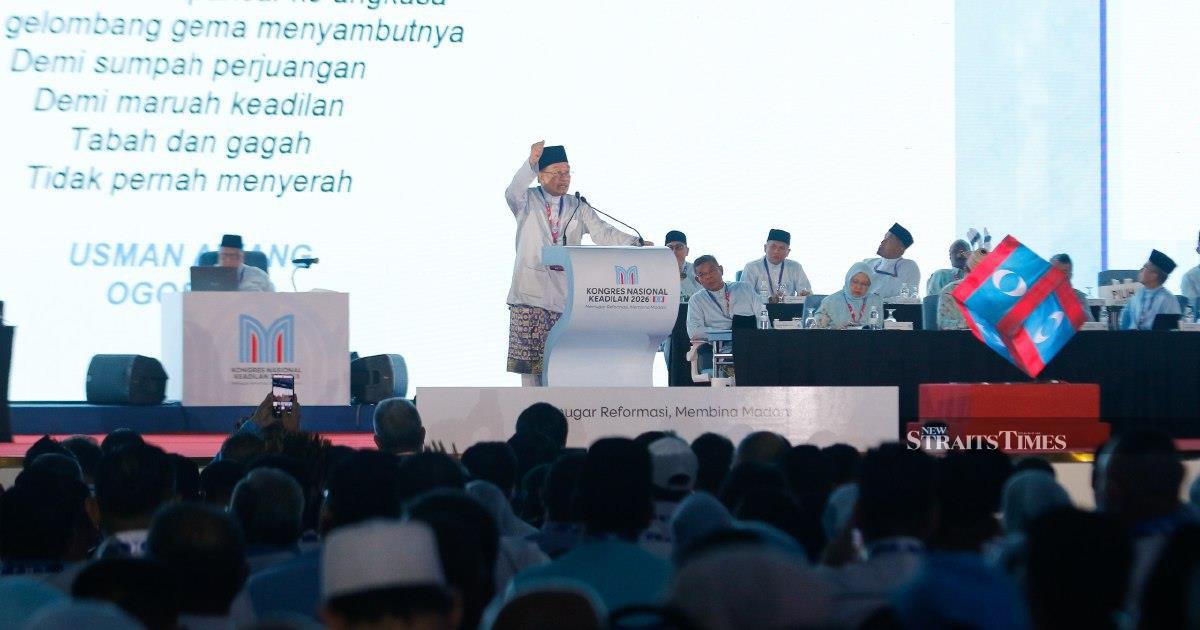
PKR president Datuk Seri Anwar Ibrahim has signalled that Malaysia's government intends to accelerate its reform programme, moving beyond the foundational work of recent years to pursue more ambitious structural changes. Speaking in Ayer Keroh, Anwar indicated a shift toward a more forceful implementation strategy, suggesting that the administration has consolidated sufficient political capital to tackle more challenging transformation initiatives.
The statement carries considerable significance for Malaysia's political trajectory, particularly given the coalition's previous focus on establishing stability and rebuilding institutional credibility following the tumultuous period of 2018 to 2023. The promise of intensified reform suggests the government believes it has moved beyond crisis management and is now positioned to pursue its longer-term vision for institutional, economic, and social development.
For Malaysian observers, this declaration reflects confidence in the administration's political standing. The coalition has weathered multiple challenges, from internal disagreements to external pressure, and appears to view its current position as sufficiently secure to warrant pressing forward with more contentious initiatives. This timing matters significantly in the context of Malaysia's electoral cycle and economic conditions, both of which influence the viability of major policy changes.
The broader implications for Southeast Asia are noteworthy as well. Malaysia's reform trajectory has historically influenced regional approaches to governance, institutional strengthening, and economic modernisation. A more aggressive pursuit of reforms could position Malaysia as a model for other regional governments considering similar transformations, though implementation challenges may offer cautionary lessons. The region watches closely how Malaysia navigates the balance between rapid change and maintaining political stability.
The focus on reform also responds to persistent demands from civil society, business groups, and international observers who have long advocated for deeper institutional changes. These stakeholders have periodically questioned whether incremental progress moves fast enough to address systemic challenges in areas ranging from anti-corruption efforts to judicial independence and transparency. An acceleration could respond to these pressures while demonstrating the government's commitment to substantive change rather than cosmetic modifications.
However, intensifying reform efforts presents considerable risks. More aggressive policies typically generate resistance from affected constituencies, whether entrenched bureaucratic interests, communities apprehensive about economic disruption, or political actors concerned about losing influence. The government will need to maintain careful balance between pursuing its agenda and preserving the political coalition that enables implementation. Missteps in managing this dynamic could undermine both reform efforts and overall political stability.
Anwar's framing of this acceleration is strategically important. By characterising the shift as a necessary evolution rather than an admission of previous slowness, he positions the government as competent and forward-looking. This narrative matters for public perception and for maintaining support among coalition partners who may have varying views on the pace and scope of change. The messaging suggests confidence that accelerated implementation can succeed where more cautious approaches might have faltered.
The practical implementation of accelerated reforms will prove more challenging than announcement. Malaysia's bureaucratic structures, legal frameworks, and political realities often constrain rapid implementation regardless of government determination. Previous reform initiatives have frequently encountered delays due to technical complexity, resistance from embedded interests, or unforeseen complications. The gap between announced intentions and actual outcomes has historically been substantial in Malaysia's reform history.
Regional and international observers will scrutinise how Malaysia pursues this agenda, particularly regarding areas with transnational dimensions. Economic reforms affecting trade relationships, financial regulations, or investment frameworks will interest ASEAN partners and major trading nations. Reforms related to governance and rule of law carry implications for Malaysia's standing in international assessments and its ability to attract investment and talent.
For ordinary Malaysians, the practical impact of accelerated reforms depends entirely on which initiatives the government prioritises and how effectively they are executed. Reform that addresses cost of living, employment opportunities, healthcare, or education could generate substantial public support. Conversely, changes perceived as primarily benefiting elites or imposing costs on ordinary citizens could generate backlash regardless of their long-term merits or governance benefits.
The timing of this announcement also reflects Malaysia's economic context. Moderate economic growth combined with persistent inflation and public sector budget constraints creates both urgency and difficulty for reform. While these pressures motivate action, they also limit the government's ability to ease the transition through generous spending or extended implementation periods. Reforms that impose short-term costs to achieve long-term gains become harder to pursue when economic conditions are already challenging households.
Moving forward, Anwar's commitment to accelerated reform will be tested against specific policy announcements and measurable outcomes. The statement serves as both a declaration of intent and an implicit acceptance of accountability. How the government defines success, which reforms it prioritises, and how effectively it manages implementation will determine whether this acceleration represents genuine transformation or merely rhetorical repositioning. Malaysian stakeholders will watch closely to distinguish between promise and performance.

