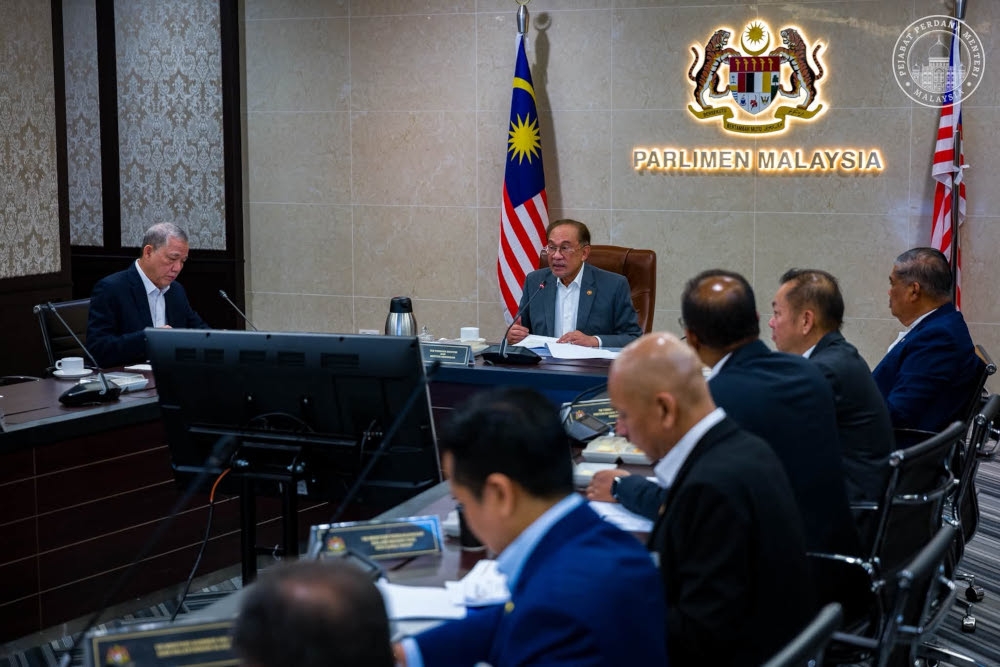
Prime Minister Datuk Seri Anwar Ibrahim has initiated a coordinated government response to shield Malaysia's food supply from the anticipated disruptions of a Super El Niño weather event, signalling heightened concern among federal leadership about the country's agricultural vulnerability. The directive targets multiple agencies, with the Ministry of Agriculture and Food Industries taking centre stage in formulating protective strategies to insulate domestic production systems from the climatic pressures expected to emerge.
The Super El Niño phenomenon, a particularly intense variation of the naturally occurring El Niño cycle, poses significant risks to food production throughout Southeast Asia. These weather patterns typically bring extended drought conditions, altered precipitation patterns, and temperature fluctuations that devastate traditional farming regions. For Malaysia, where agriculture remains a pillar of rural livelihoods and food sovereignty, such disruptions threaten both domestic supply chains and the nation's capacity to feed its population reliably.
The timing of Anwar's intervention reflects growing regional awareness of climate vulnerabilities in the food sector. Neighbouring countries including Thailand, Vietnam, and Indonesia face similar pressures, as prolonged dry spells undermine rice cultivation, palm oil production, and vegetable farming. Malaysia's position as both a significant agricultural exporter and food importer creates dual exposure—domestic crop failures simultaneously reduce export revenues while forcing greater reliance on international markets, a situation that tightens household budgets for ordinary Malaysians purchasing staples.
Government planners are examining multiple intervention points across the food system, from farm-level practices to storage infrastructure and supply chain logistics. These assessments likely include evaluating irrigation capacity, soil conservation measures, and the strategic stockpiling of essential commodities. The Ministry's response framework addresses not merely immediate crisis response, but systemic resilience—building redundancies into supply networks so that localized agricultural failures do not cascade into nationwide shortages or price spikes.
For Malaysian farmers, the anticipated El Niño event presents an immediate operational challenge. Smallholders in particular, lacking sophisticated irrigation or financial reserves to weather extended production gaps, face genuine existential pressure. Government support mechanisms—whether subsidised water access, emergency crop insurance, or replanting assistance—become essential safety valves. The federal directive suggests consideration of such farmer-centred supports alongside broader supply-chain measures.
Storage and inventory management emerge as critical levers in the food security equation. Malaysia's capacity to maintain strategic reserves of rice, salt, and other essentials determines how effectively the country can absorb production shortfalls without permitting retail shortages or speculative price increases. The government's ability to release reserves at controlled pace preserves market stability while supporting vulnerable households most dependent on consistent affordable food access.
International procurement strategies require careful attention during El Niño episodes, as competing demand from multiple nations simultaneously facing agricultural stress drives up global commodity prices. Malaysia's diplomatic and commercial engagement with established trading partners becomes especially valuable when navigating such periods. Securing advance agreements for grain and vegetable imports, negotiating long-term contracts, and maintaining goodwill with reliable suppliers all strengthen Malaysia's negotiating position.
The broader context of climate adaptation in Southeast Asia positions Malaysia's proactive stance as a regional leadership signal. Countries demonstrating capacity to anticipate climate shocks and marshal institutional responses build credibility with both domestic constituencies and international observers. Conversely, nations caught flatfooted by foreseeable climatic events face economic damage, social instability, and reputational costs. Anwar's directive telegraphs that Malaysia intends to occupy the former category.
For ordinary Malaysians, the implications remain somewhat abstract at present, but the directive carries direct relevance to future living costs and food availability. El Niño-induced agricultural contractions historically correlate with retail price increases for vegetables, grains, and protein sources. Government action to mitigate supply disruptions serves as a stabilising force protecting household budgets, particularly for lower-income segments where food expenditure consumes a larger proportion of disposable income.
The Ministry of Agriculture and Food Industries now faces the complex task of translating high-level political direction into concrete operational measures. This involves technical assessments of infrastructure capacity, consultations with farming communities and agribusiness stakeholders, and coordination across multiple government entities responsible for water management, trade, storage, and food safety. The challenge encompasses both quantity—ensuring sufficient food volumes reach consumers—and quality, maintaining nutritional standards and safety during supply chain stress.
Longer-term implications extend beyond the immediate El Niño episode. The government's response framework, once established, can serve as a template for managing other climate-related disruptions anticipated in coming decades. Malaysia's tropical location and weather vulnerability position climate adaptation as an enduring governance priority, and institutional learning from this episode strengthens systemic resilience against future shocks.
The coordination between federal leadership and sectoral ministries reflects recognition that food security constitutes a multidimensional challenge requiring integrated solutions. Neither agricultural policy alone, nor trade policy alone, nor infrastructure investment alone suffices—effective food security demands simultaneous attention to production, distribution, pricing, and emergency response. Anwar's directive implicitly endorses this comprehensive approach, mandating agencies to function as coordinated components of an overarching system designed to protect Malaysian households from climate-induced food instability.

