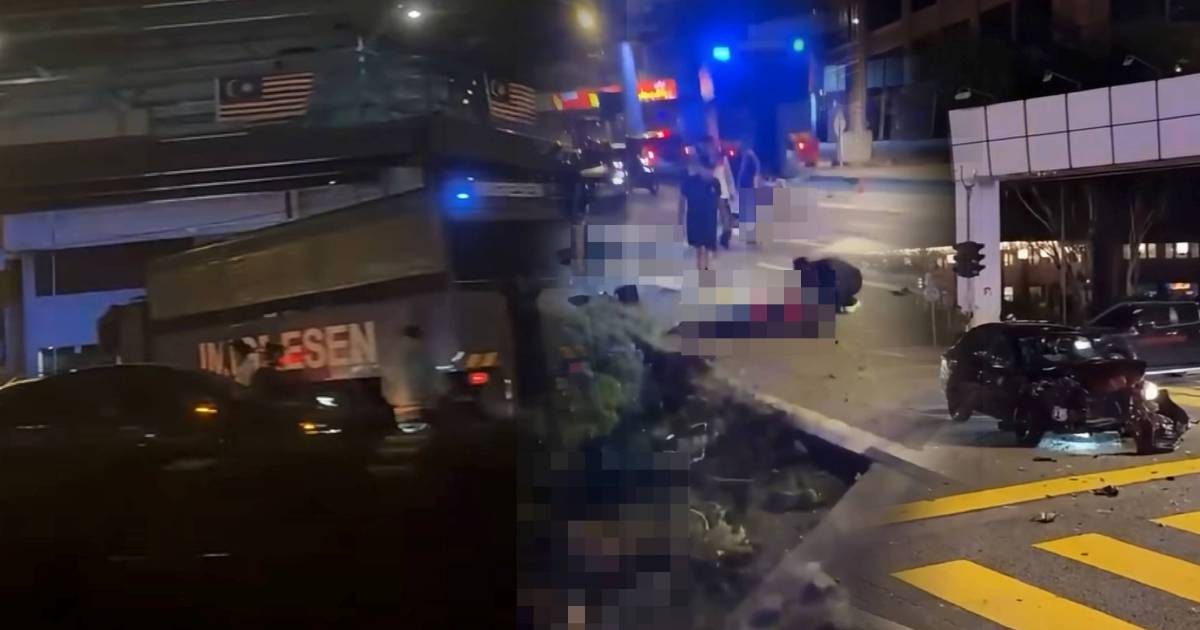
Prime Minister Datuk Seri Anwar Ibrahim has directed the Immigration Department to launch an immediate and comprehensive investigation into a fatal road accident involving one of its vehicles that occurred on Jalan Sultan Ismail in Kuala Lumpur this morning. The directive underscores the gravity with which the Prime Minister regards the incident, signalling that senior government leadership is closely monitoring the matter and expects swift action from the relevant authorities.
The crash, which resulted in fatalities, has prompted urgent scrutiny into the circumstances that led to the collision. By ordering a thorough probe, Datuk Seri Anwar has ensured that every aspect of the incident—from vehicle maintenance and driver conduct to road conditions and any third-party involvement—will be examined systematically. This approach reflects a broader commitment to accountability within government agencies, particularly those entrusted with public responsibilities and safety-sensitive operations.
Jalan Sultan Ismail, a major thoroughfare in the heart of Kuala Lumpur's business and administrative district, is a road frequently traversed by government vehicles, commercial traffic, and private motorists. Accidents on this corridor attract particular attention given the high volume of daily traffic and the proximity to critical infrastructure and offices. The timing of the incident early in the day suggests investigators will benefit from witness accounts and security footage that may help reconstruct the sequence of events.
The Immigration Department, which operates a fleet of vehicles for various operational purposes including transport of personnel and equipment, maintains its own safety protocols and maintenance schedules. Any fatality involving government property raises questions about adherence to these procedures, the competence of operators, and whether there were systemic lapses. An investigation of the calibre ordered by the Prime Minister will likely examine all such dimensions, potentially revealing whether corrective measures are necessary across the department's transport operations.
For Malaysia's road safety landscape, such incidents serve as important reminders of the persistent challenges that plague the nation's highways and urban thoroughfares. Government vehicles, despite their strategic importance and regular maintenance, are not immune to accidents—a fact that underscores the unpredictability of road conditions and human error factors. The investigation findings may yield insights applicable to fleet management practices across all government agencies.
The involvement of a government department in a fatal accident also carries administrative and policy implications. Insurance claims, liability assessments, and potential compensation to affected families are matters that will likely emerge from the investigation process. Additionally, the department may face scrutiny regarding driver training protocols and whether vehicles underwent timely safety inspections before deployment.
From a public relations standpoint, the Prime Minister's swift intervention demonstrates responsiveness to serious incidents and a willingness to hold government agencies accountable. In an era when public confidence in institutional competence is frequently tested, such visible leadership can help restore trust by signalling that no department—regardless of its function—operates above scrutiny when lives are at stake.
The investigation will also be closely watched by road safety advocates and civil society organisations in Malaysia, who have long campaigned for stricter enforcement of traffic laws and improved vehicle safety standards. If the crash resulted from preventable causes—such as mechanical failure, excessive speed, or driver fatigue—the findings could catalyse discussions around strengthening regulations applicable to all vehicle operators, particularly those in the government sector.
For the families of those who lost their lives in the incident, the Prime Minister's intervention may offer some assurance that their concerns will not be dismissed or minimised. The directive for a thorough investigation sends a message that accountability extends even to powerful government institutions, and that transparency will be maintained throughout the process.
As investigations proceed, attention will likely focus on preliminary police reports, autopsy findings if applicable, and statements from witnesses and surviving occupants. The Immigration Department's cooperation with investigators will be essential, as will the involvement of the Royal Malaysia Police, the Fire and Rescue Department, and potentially the Road Transport Department, all of whom may have jurisdiction over different aspects of the incident.
The broader context of this incident reflects Malaysia's ongoing challenges with road safety, where nearly 3,000 fatalities occur annually on the nation's roads. Fatal crashes involving large vehicles, particularly those operated by government agencies, tend to generate heightened public and political attention—as evidenced by the Prime Minister's direct involvement in this case. Such high-profile incidents, when thoroughly investigated and lessons publicly communicated, can serve as catalysts for systemic improvements in safety culture and enforcement across the transport sector.

