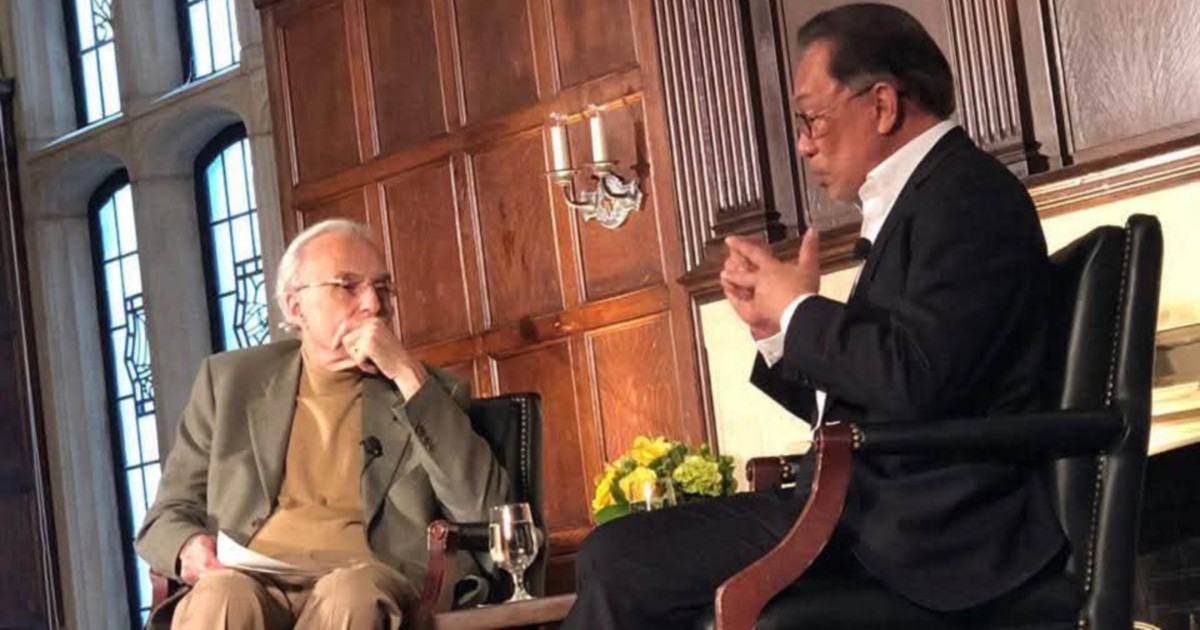
Prime Minister Datuk Seri Anwar Ibrahim has paid tribute to the scholarly legacy of Professor John L. Esposito, one of the world's most eminent academics specialising in Islamic studies, following the distinguished scholar's recent passing. The Malaysian leader conveyed his heartfelt condolences, acknowledging the profound contribution that Esposito made to global understanding of Islam and Muslim communities.
Esposito's death marks the loss of a towering intellectual figure whose research and writings shaped Western academic discourse on Islam for more than five decades. His career was distinguished by a commitment to fostering serious, nuanced scholarship that moved beyond stereotypes and sensationalism to examine the complexities of Islamic theology, history, and contemporary Muslim societies. The Georgetown University professor became a trusted voice in bridging misunderstandings between Western audiences and the Muslim world, at a time when such communication channels were increasingly vital.
Throughout his academic tenure, Esposito authored and edited over 40 books, many of which became seminal texts in universities and research institutions across North America, Europe, and Asia. His works encompassed the political dimensions of Islam, Islamic movements, interfaith dialogue, and the role of religion in global affairs. His research extended beyond Arab nations to encompass Muslim-majority regions across Africa, South Asia, and Southeast Asia, providing comprehensive regional perspectives that enriched the field considerably.
Beyond his prolific publication record, Esposito was instrumental in establishing institutional infrastructure for Islamic studies. As founding director of the Prince Alwaleed Bin Talal Center for Muslim-Christian Understanding at Georgetown University, he created spaces where scholars of diverse backgrounds could engage in rigorous, respectful examination of religious traditions and their contemporary manifestations. This institutional commitment reflected his conviction that understanding Islam required sustained engagement, not occasional commentary.
For Malaysia and other Southeast Asian nations, Esposito's scholarly work held particular relevance. His analyses examined how Islamic practice and governance varied significantly across different cultural and historical contexts, validating regional approaches to Islam that reflected local traditions alongside universal religious principles. His scholarship supported the notion that Islam in Southeast Asia—characterised by greater pluralism, democracy, and religious tolerance in many instances—represented legitimate expressions of Islamic faith rather than deviations from a supposed universal norm.
During decades of heightened geopolitical tensions, especially following major international incidents, Esposito became a crucial voice urging Western policymakers and publics to distinguish between extremist ideologies and mainstream Islamic thought. His work systematically challenged reductionist narratives that portrayed Islam monolithically as incompatible with modernity, pluralism, or democracy. This intellectual contribution proved invaluable in countries like Malaysia, where religious diversity coexists with Islamic governance structures.
Esposito's engagement with Muslim-majority nations extended to advisory roles and consultancy work where his expertise informed diplomatic and academic exchanges. He fostered intellectual networks across continents, bringing scholars, policymakers, and religious leaders into conversation. These connections proved especially important for countries navigating questions of religious identity, state legitimacy, and international relations—challenges that remain contemporary across the region.
The scholar's passing comes at a moment when careful, informed analysis of religious movements, interfaith relations, and Islamic governance remains critically needed. Rising polarisation in multiple societies has only underscored the importance of the kind of thoughtful, evidence-based scholarship that characterised Esposito's career. His methods—rooted in rigorous research, respectful of diverse perspectives, and attentive to historical context—offer a template for how academics can meaningfully contribute to public understanding.
Anwar's public acknowledgement of Esposito's death reflects Malaysia's broader appreciation for scholarly contributions to international dialogue. The Prime Minister has himself championed interfaith understanding and dialogue among religions, positioning such engagement as essential to regional stability and mutual prosperity. Esposito's career trajectory and intellectual commitments align closely with these values, making his loss resonant within Malaysian policy circles and academic institutions.
Institutions throughout the region, including universities in Malaysia, have long drawn upon Esposito's frameworks, case studies, and analytical approaches in their own Islamic studies programmes and research. Graduate students across Southeast Asia encountered his work in their reading lists, learned from his methodologies, and built upon his foundations as they developed their own scholarly voices. The intellectual architecture he helped construct will continue shaping how future generations study and understand Islam.
The loss of Esposito underscores the particular value of scholars who achieve international stature while maintaining deep commitment to rigorous, balanced analysis. In an era of increasing polarisation around religious identity and geopolitics, the scholarly traditions he exemplified—careful reading of primary sources, attention to diverse voices within faith communities, and resistance to crude generalisations—remain indispensable tools for understanding our complex world and building bridges across traditions.

