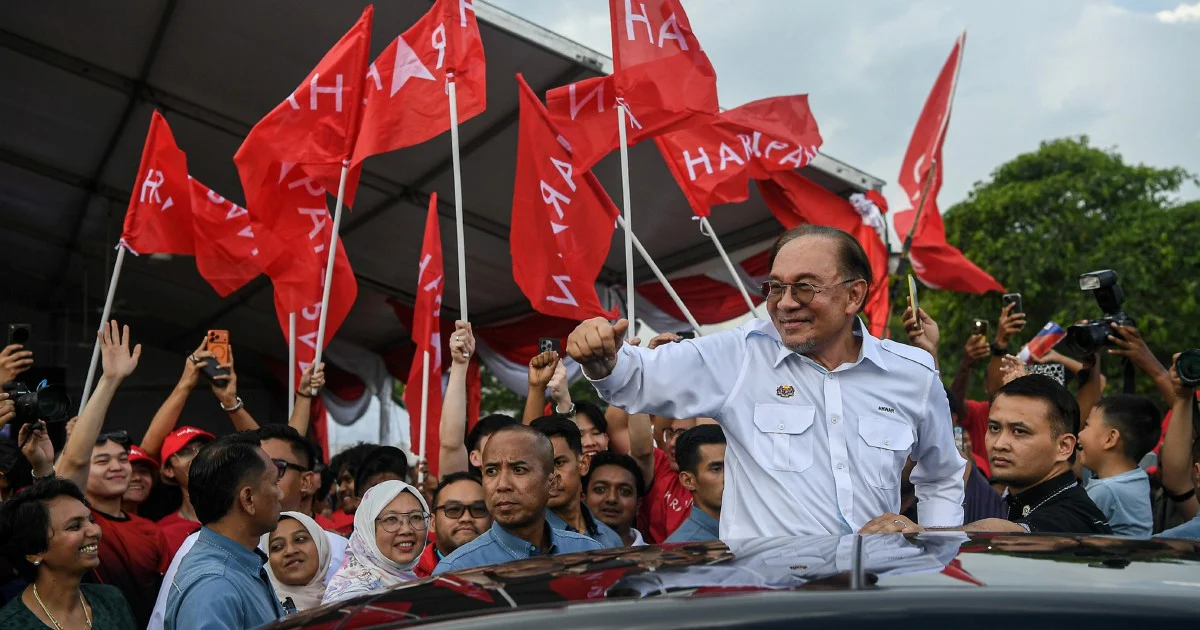
Prime Minister and Pakatan Harapan chairman Datuk Seri Anwar Ibrahim has attacked political figures unwilling to work alongside the Democratic Action Party, characterising their refusal to share platforms as fundamentally disrespectful to electoral outcomes. Speaking in Segamat, the PKR leader challenged the rationale behind such partisan stances, suggesting they contradict the democratic principle of honouring public preferences.
Anwar's remarks come amid ongoing tensions within Malaysian politics over DAP's continued role in the ruling coalition. The party, which draws significant support from urban centres and Chinese-majority constituencies, has been a fixture of Pakatan Harapan since its 2018 formation, yet remains controversial among certain political quarters that question its presence in government. These objections have occasionally manifested as reluctance from coalition partners or rival politicians to publicly associate with DAP representatives, a pattern Anwar sought to directly address.
The Prime Minister's intervention reflects broader frustrations with what coalition strategists view as performative posturing by opponents. Rather than engaging substantively on policy differences, critics of DAP often resort to symbolic gestures—declining joint appearances, refusing collaborative initiatives, or emphasising party-specific grievances—that Anwar suggests disrespect the voters who supported the broader Pakatan Harapan programme. This framing reframes the debate from abstract concerns about DAP's ideology or representation to concrete questions about democratic legitimacy.
For Malaysia's political ecosystem, Anwar's comments underscore the persistence of communal sensitivities and inter-coalition friction even within governing arrangements. Despite nominal unity under the Pakatan banner, underlying tensions periodically surface, particularly when DAP's prominence or policy positions become focal points. Smaller parties within the coalition, and rival blocs opposing PH, have periodically sought to exploit these fissures by questioning DAP's appropriateness as a coalition partner or government participant.
The timing of Anwar's remarks carries significance for coalition management. As Malaysia approaches future electoral cycles, maintaining coherence within Pakatan Harapan remains critical to countering rival blocs and preserving legislative majorities. Politicians or public figures who refuse platforms with DAP, whether from Umno, PAS, or other parties, implicitly challenge the coalition's legitimacy and the mandate voters bestowed upon it. Anwar's pushback suggests the Prime Minister views such behaviour as corrosive to collective governance.
From a Southeast Asian perspective, Malaysia's experience navigates the tension between communal politics and multiethnic coalitional democracy. DAP's substantial representation of non-Malay constituencies means its inclusion in government fundamentally reflects demographic realities and electoral outcomes. Anwar's defence of DAP participation thus represents a broader commitment to inclusive governance structures, even when individual parties or figures remain uncomfortable with specific partners. This principle extends beyond Malaysian borders, as other regional democracies wrestle with similar dynamics.
The opposition to DAP collaboration often relies on longstanding narratives about the party's secular orientation, Chinese-majority base, or historical positions, arguments that persist despite DAP's evolution and demonstrated willingness to accommodate coalition partners' sensitivities. These criticisms occasionally reflect legitimate policy disagreements but frequently veer into personalised attacks or communal messaging designed to mobilise specific constituencies against the party. Anwar's intervention attempts to redirect political discourse toward respect for voter preferences rather than allowing such narratives to dominate.
For governing coalitions worldwide, the challenge Anwar articulates is familiar: how to maintain functional unity while accommodating internal diversity and addressing external scepticism. In Malaysia's context, where communal politics retains considerable influence, this becomes particularly acute. Smaller coalition partners, independent MPs supporting government, and fence-sitting politicians may face pressure from various quarters to distance themselves from DAP, potentially destabilising the arrangement that delivered electoral victory.
Looking forward, Anwar's vigorous defence of DAP collaboration may signal intensified efforts to shore up coalition cohesion ahead of anticipated electoral challenges. Whether addressing Umno elements uncomfortable with DAP presence, PAS figures viewing the party as ideological competition, or independent voices seeking leverage, the Prime Minister has staked out clear terrain: respecting democratic outcomes means accepting the legitimacy of voters' coalition choices, including DAP's continued participation. This stance carries implications not merely for immediate coalition stability but for broader precedents regarding how Malaysian politics accommodates diversity within governing arrangements.

