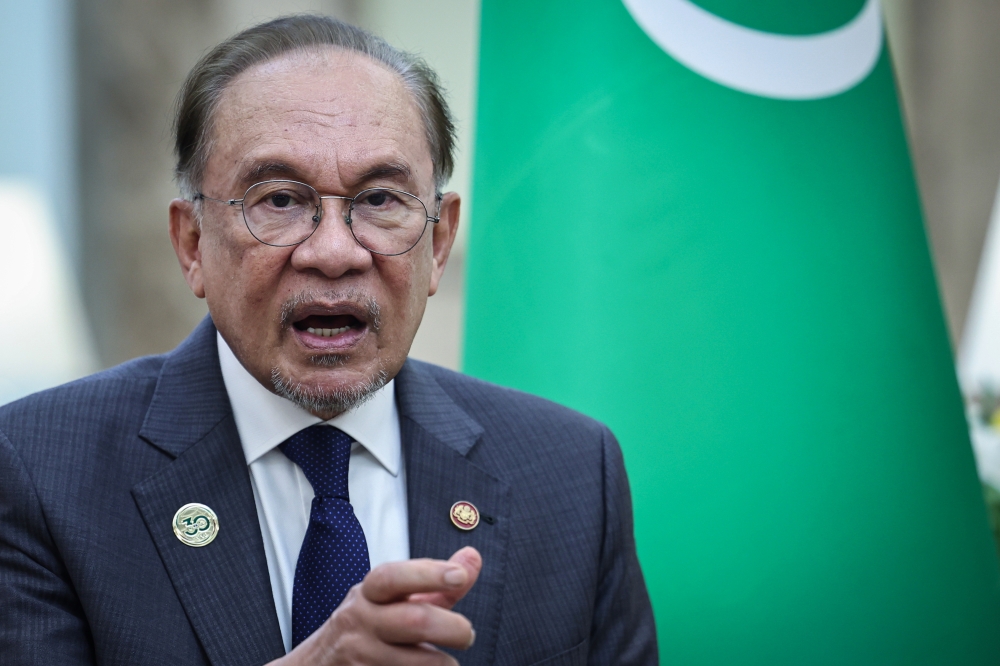
Prime Minister Datuk Seri Anwar Ibrahim has expressed profound sorrow at the death of John L. Esposito, one of the West's most influential scholars of Islam and Muslim societies. The passing of the Georgetown University professor marks the loss of a pivotal intellectual voice who spent more than five decades building bridges between Islamic civilizations and the broader international community through rigorous academic work and tireless advocacy for interfaith dialogue.
In his statement, Anwar characterized Esposito as a steadfast ally to Muslims globally, recognizing the scholar's extraordinary commitment to advancing knowledge and understanding at a time when misconceptions about Islam have often dominated Western public discourse. The Prime Minister's remarks underscore the significant role that Esposito played in Malaysia's broader engagement with international academic and intellectual circles, particularly in shaping how Muslim-majority nations are perceived and studied in leading Western institutions.
Esposito's scholarly contributions extended across multiple decades, during which he established himself as a leading authority on contemporary Islamic movements, Muslim politics, and the intersection of religion and international relations. His prolific output included numerous books, academic papers, and policy analyses that have become standard references in universities worldwide. His work distinguished itself through a commitment to nuanced, evidence-based analysis rather than the reductive stereotyping that has sometimes characterized Western discussions of Islam and Muslims.
The Georgetown University Center for Muslim-Christian Understanding, which Esposito founded and directed, became an institutional embodiment of his intellectual mission. The center positioned itself as a space for serious scholarship untethered from contemporary political biases, allowing researchers and policymakers to engage with complex questions about Muslim societies without predetermined conclusions. This approach proved influential for Malaysian policymakers and intellectuals seeking authoritative, balanced perspectives on global Islamic developments and their regional implications.
Beyond his academic standing, Esposito cultivated genuine relationships with Muslim leaders, scholars, and civil society figures across multiple continents. His willingness to listen, learn, and collaborate across religious and cultural boundaries made him an exceptional figure in a landscape often characterized by mutual suspicion and stereotyping. For Malaysia specifically, his work contributed to international recognition of the country's unique model of Islamic governance and pluralistic society, providing intellectual ammunition against reductive Western narratives about Islam and modernity.
The scholar's influence extended into the policy realm, where his analyses informed discussions among diplomats, security specialists, and international relations professionals. His research on Islamic movements and political Islam provided context and complexity that counterbalanced sensationalist media coverage and helped officials understand the diverse theological, political, and social motivations animating different Islamic actors globally. This was particularly relevant for Southeast Asia, a region where many Western analysts struggled to grasp the diversity of Muslim political expression and governance models.
Esposito's passing occurs amid ongoing global tensions and misunderstandings regarding Islam and Muslims. The contemporary international environment continues to grapple with questions that animated much of his scholarly life—how to promote genuine dialogue across religious lines, how to counter extremism while respecting legitimate religious expression, and how to build societies that accommodate multiple faith traditions. His death represents a loss of intellectual authority at a moment when such voices remain desperately needed in Western institutions and media spaces.
For Malaysia and other Muslim-majority nations, Esposito's legacy carries particular significance. His scholarship lent credibility and intellectual heft to arguments that Muslims and Western societies could coexist peacefully and productively, that Islamic governance need not be monolithic or inherently hostile to pluralism, and that understanding required genuine engagement rather than preconceived assumptions. His willingness to defend Muslim societies against caricature while remaining intellectually honest about challenges within those societies modeled a form of scholarship that Malaysia itself has sought to embody in international forums.
The Prime Minister's tribute reflects a broader recognition that Esposito operated as a genuine intellectual partner to Muslim leaders and scholars rather than as a Western observer speaking about Muslims from a position of detachment. His commitment to understanding Islam on its own terms, informed by deep engagement with Islamic sources and Muslim thinkers, distinguished his work and explained his influence and respect within both academic and policy circles across the Muslim world.
As Malaysia navigates its own identity as both a Muslim-majority nation and a participant in globalized networks of commerce, technology, and culture, the loss of figures like Esposito becomes more acute. The scholar's ability to explain Muslim societies to Western audiences while explaining Western perspectives to Muslims served a crucial diplomatic function in an increasingly fragmented world. His passing underscores the continued need for intellectuals willing to undertake the painstaking work of genuine cross-cultural understanding, particularly at a moment when polarization and mutual incomprehension threaten international stability and interfaith coexistence.

