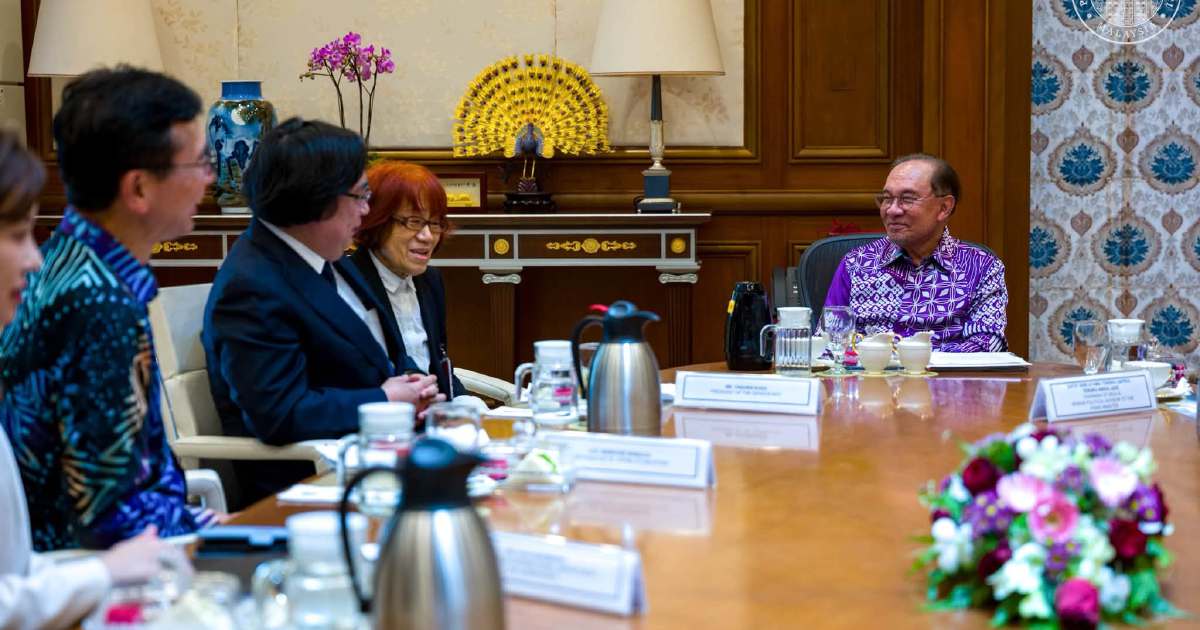
Prime Minister Datuk Seri Anwar Ibrahim received a courtesy call from Yasushi Kudo, president of Genron NPO, in Kuala Lumpur today, during which the two officials explored ways to deepen strategic engagement between Malaysia and Japan. The meeting underscored both nations' commitment to strengthening multilateral cooperation at a time when regional stability and economic partnerships have grown increasingly significant in Southeast Asia's geopolitical landscape.
Genron NPO, formally known as the Japan Open Forum, is a prominent independent think tank based in Tokyo that focuses on policy research, international dialogue, and advocacy across various strategic domains. The organization has emerged as an influential voice in Japanese foreign policy debates, regularly convening high-level discussions among politicians, academics, business leaders, and opinion shapers. Its engagement with regional counterparts reflects Japan's sustained interest in building robust intellectual and institutional networks across Asia.
The bilateral discussion between Anwar and Kudo represents a continuation of Malaysia and Japan's enduring diplomatic relationship, which spans multiple areas including trade, security cooperation, educational exchange, and cultural initiatives. Both nations have historically maintained warm ties rooted in shared interests in regional prosperity and stability. Malaysia has consistently positioned itself as a crucial anchor for Japanese engagement in Southeast Asia, serving as both a commercial hub and a strategic partner in maintaining freedom of navigation and upholding international maritime law.
At the governmental level, Malaysia-Japan relations have expanded substantially in recent years. Japan remains one of Malaysia's most significant investors and trading partners, with Japanese corporations operating extensively across automotive manufacturing, electronics, financial services, and infrastructure development sectors. These economic linkages create multiple channels for cooperation beyond traditional diplomatic channels, encouraging sustained dialogue between governmental bodies and private sector representatives.
The timing of this meeting carries additional significance given the broader regional context. Southeast Asia continues to navigate complex dynamics involving great power competition, supply chain reconfiguration, and the imperative for smaller nations to maintain strategic autonomy. For Malaysia, deepening engagement with Japan represents an opportunity to strengthen ties with a mature democracy and technological powerhouse that shares commitment to rules-based international order and regional prosperity.
Genron NPO's involvement in this dialogue suggests Japan's recognition that sustainable regional relationships require ongoing engagement beyond formal diplomatic channels. Think tanks and policy research organizations often facilitate candid discussions that allow governments to explore ideas and test approaches before formal policy announcements. Through such platforms, leaders like Kudo can contribute meaningfully to shaping bilateral agendas and identifying emerging areas for cooperation.
The emphasis on strategic dialogue carries particular relevance for Malaysia's broader foreign policy objectives. As Prime Minister, Anwar Ibrahim has consistently advocated for pragmatic engagement with diverse global partners while championing multilateralism and inclusive regional frameworks. His administration has pursued balanced relationships with major powers while prioritizing ASEAN centrality and Southeast Asian unity, objectives that align well with Japan's own regional vision.
Trade and investment remain cornerstones of the Malaysia-Japan relationship. Japanese automotive manufacturers, semiconductor producers, and machinery exporters have established deep roots in Malaysian industrial ecosystems. Reciprocally, Malaysian palm oil, rubber, and manufactured goods find substantial markets in Japan. These commercial interdependencies create natural incentives for political leaders to maintain strong institutional relationships and resolve any friction points efficiently.
Cultural and educational exchanges constitute another pillar of bilateral ties. Thousands of Malaysian students pursue higher education in Japanese institutions annually, while Japanese expatriates and long-term residents have become integrated into Malaysia's multicultural fabric. These people-to-people connections foster mutual understanding and create lasting networks that transcend government officials and formal ceremonies.
Looking forward, potential cooperation areas between Malaysia and Japan extend into emerging domains including digital technology, green energy transition, and space exploration. Both nations recognize the strategic importance of artificial intelligence, cybersecurity, and telecommunications infrastructure in ensuring prosperity and security. Japan's technological capabilities and Malaysia's positioning as a digital innovation hub in Southeast Asia create complementary strengths.
The security dimension of Malaysia-Japan relations, though often understated in public discourse, remains substantive. Both nations share concerns regarding maritime security, counter-terrorism, and the need to maintain stable regional conditions. Cooperative frameworks in defense exchanges, naval coordination, and intelligence sharing continue to develop cautiously but meaningfully.
This meeting exemplifies how middle powers in Asia leverage diverse diplomatic channels to advance national interests while contributing to regional stability. Through engagements with think tanks, civil society organizations, and policy intellectuals, governments like Malaysia and Japan can deepen relationships and explore innovative approaches to shared challenges. Kudo's visit therefore represents more than ceremonial exchange; it signals sustained strategic commitment between two nations navigating an increasingly complex regional environment.

