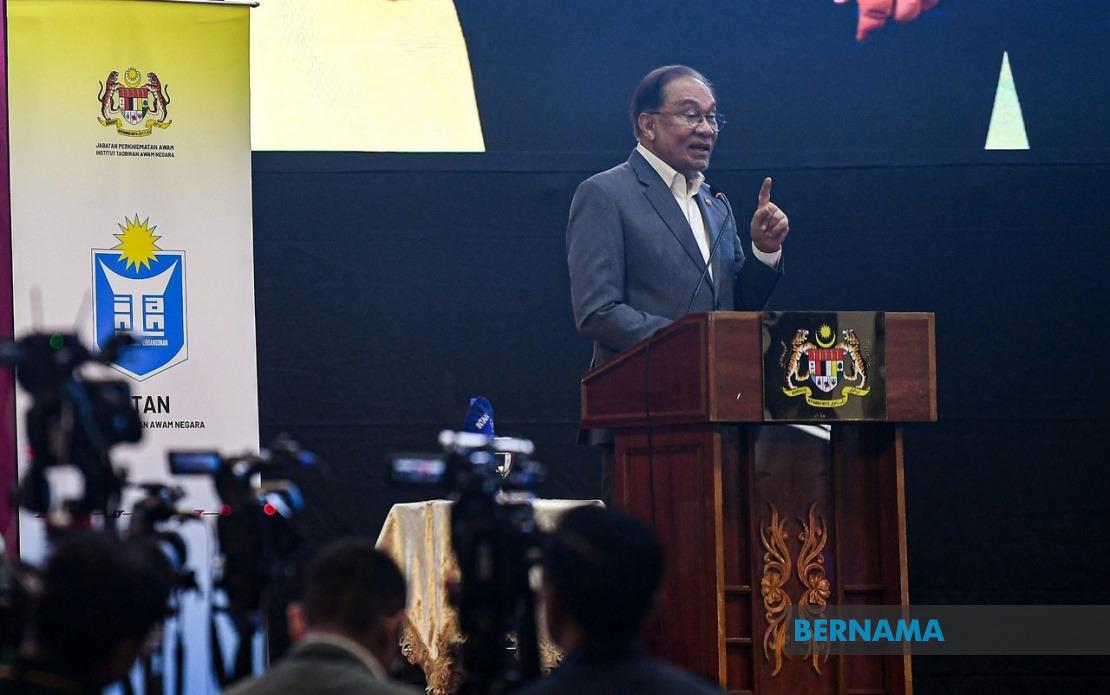
Prime Minister Datuk Seri Anwar Ibrahim has offered an apology for any perception that his direct and commanding manner towards civil servants may have come across as overly severe. Speaking during an engagement with Central Zone government employees at Universiti Islam Selangor on July 20, the Prime Minister acknowledged feedback from various quarters that his communication style does not always align with traditional expectations of prime ministerial conduct.
Anwar revealed that advisors and observers have repeatedly urged him to moderate his approach, emphasising that holding the country's highest office demands a more measured and genial demeanour when interacting with the public and government machinery. The Prime Minister conceded that he has been making a deliberate effort to adjust his speaking manner and adopt a more composed tone during official engagements and policy discussions. However, he maintained that completely suppressing his natural intensity would be dishonest to both himself and the institutions he addresses.
The Prime Minister's comments came during remarks made alongside Chief Secretary to the Government Tan Sri Shamsul Azri Abu Bakar at the gathering of civil servants. Rather than characterising his firmness as a character flaw, Anwar framed it as an extension of his deep conviction about the critical responsibilities shouldered by the civil service in implementing government initiatives and advancing national development objectives. He suggested that his passionate delivery reflects the weight he assigns to the bureaucracy's role in translating policy into tangible outcomes that benefit Malaysians.
Anwar's willingness to acknowledge the perception issue demonstrates a political consciousness about image management and the symbolic importance of how leaders communicate with institutions. The apology, however, came with a notable caveat: the Prime Minister defended his underlying approach by asserting that his emotional investment in national matters sometimes necessitates more forthright expression. This positioning allows him to both validate legitimate concerns about tone while protecting his core conviction that leadership requires candour, particularly when addressing those responsible for executing government programmes.
The context surrounding these remarks is significant for understanding contemporary Malaysian governance. The Prime Minister's coalition government, which took office following the November 2022 elections, faces substantial pressure to deliver on economic revitalisation, cost-of-living relief, and institutional reform. In this environment, Anwar's direct communication style towards the civil service can be interpreted as reflecting urgency about implementation and accountability. Whether this approach proves counterproductive or motivational remains contested, with the Prime Minister's latest comments suggesting he is calibrating his strategy based on feedback received.
For Malaysia's extensive civil service, which comprises hundreds of thousands of employees across federal, state, and local levels, the dynamics between political leadership and administrative machinery carry considerable implications. A Prime Minister's communication style sets the tone for how government institutions operate and how public servants perceive their relationship with elected leadership. Anwar's comments suggest an ongoing negotiation between maintaining directness and demonstrating respect for the institutional dignity of the civil service, an institution that has historically wielded considerable influence in Malaysian governance.
The video recording of these remarks, which Anwar shared on Facebook, represents a calculated effort to communicate his perspective directly to the Malaysian public rather than filtering his message through media interpretation. This approach has become increasingly common among senior political figures seeking to manage their public image and control narrative framing. By articulating his position in his own words, Anwar attempts to provide context for his communication style while simultaneously demonstrating responsiveness to public perception, a delicate balance that senior politicians must constantly navigate.
Anwar's reference to addressing his team reflects the administrative structure within which he operates. The Prime Minister positioned civil servants as members of a collective enterprise in which the political executive and bureaucratic apparatus share responsibility for national outcomes. This framing suggests that his firm communication derives not from contempt but from the view that the civil service must be energised and mobilised to meet the government's policy agenda. Whether this rationale resonates with civil servants or whether it merely provides intellectual justification for an assertive leadership style depends partly on observable improvements in service delivery and governance outcomes.
The broader context of leadership communication in Southeast Asia reveals that different political cultures maintain varying expectations about prime ministerial deportment. While some societies prize reserved and formal leadership styles, others reward directness and apparent passion. Anwar's incremental adjustments to his communication approach reflect his attempt to navigate Malaysia's particular expectations, where respect for institutions coexists with appreciation for leaders who demonstrate commitment to concrete results. The tension between these competing values underpins his recent commentary.
Moving forward, this incident provides insight into how the Prime Minister perceives his role and the kind of governance culture he wishes to establish. Rather than entirely abandoning his natural communication style, Anwar appears committed to conscious modulation while maintaining his underlying conviction about the importance of direct engagement with the machinery of government. Whether this compromise proves sustainable and whether it successfully addresses concerns about his demeanour among civil servants will likely influence broader perceptions of his leadership effectiveness and capacity to work collaboratively with institutional stakeholders.

