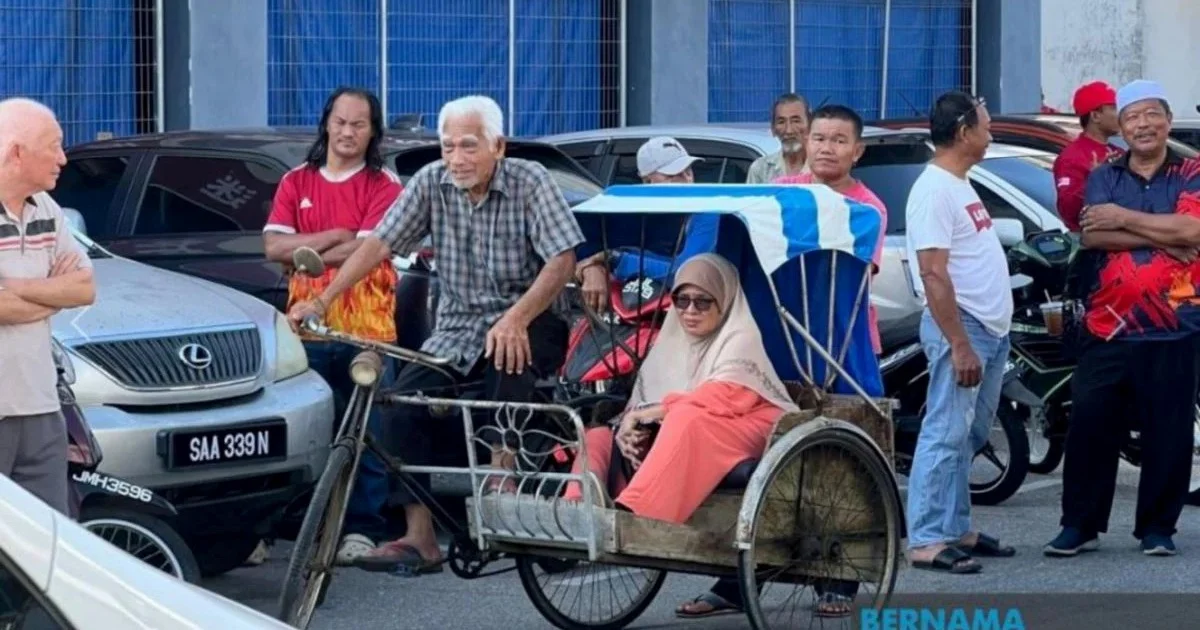
In a moment that encapsulates the enduring human spirit across generations, Prime Minister Datuk Seri Anwar Ibrahim has acknowledged the remarkable dedication of an elderly man whose determination to honour his wife's wishes captured public attention in Kuala Lumpur. The octogenarian, undeterred by his advanced age, physically pedalled his traditional trishaw for nearly a kilometre—a considerable distance for someone in their late eighties—so that his wife could experience the occasion she had long hoped for: a close encounter with the nation's leader.
The encounter between Anwar and the elderly couple represents far more than a simple ceremonial exchange. It speaks to the character of ordinary Malaysians who, despite physical limitations and the modest means of their livelihood, harbour dreams and aspirations worthy of pursuing. The trishaw rider's selfless act—exerting himself physically to transport his wife to this meeting—underscores a form of devotion that many family-oriented societies, including Malaysia's, deeply cherish and respect. This is particularly poignant in the context of contemporary urban life, where such traditional values sometimes risk being overshadowed by modern priorities.
Anwar's public recognition of this gesture carries symbolic weight beyond the immediate interpersonal acknowledgment. When a sitting prime minister takes time to express genuine gratitude towards a humble trishaw operator, it signals that leadership extends beyond grand policy announcements and ceremonial duties. It demonstrates a willingness to see and honour the human dimensions of citizenship—the hopes and love that bind families together, regardless of their socioeconomic standing. For many Malaysian citizens, such recognition validates their own everyday struggles and aspirations.
The trishaw, itself a symbol rooted in Southeast Asian culture and history, adds another layer of meaning to this narrative. These three-wheeled vehicles, still common in many Malaysian towns and cities, represent a form of livelihood that connects generations. They embody a slower-paced, more personal mode of urban transport that increasingly gives way to motorized vehicles. The fact that an 86-year-old man continues to operate his trishaw speaks to economic necessity for many Malaysian elderly, who lack adequate retirement provisions and must continue working well into their later years.
This incident also illuminates the broader reality facing Malaysia's aging population. Many seniors depend on informal sector work like trishaw operations to sustain themselves and their families. Healthcare costs, inflation, and rising living standards place considerable financial pressure on elderly citizens who may have limited savings or pension coverage. While the government has established various senior citizen programmes and welfare initiatives, there remain significant gaps in support for vulnerable elderly Malaysians who continue contributing to the economy through informal livelihoods.
The wife's wish to see Anwar, though simple in expression, reflects a common human desire for connection with national leadership. In societies where political figures can sometimes seem distant from ordinary people, such personal encounters carry emotional significance. For an elderly woman, meeting the prime minister represents a memorable milestone—a tangible connection to the nation's highest office that transcends the abstract nature of national governance experienced through news media and broadcasts.
Anwar's gracious response to this story also demonstrates political awareness. In an era of increasing polarization and where public sentiment can shift rapidly, genuinely appreciating ordinary citizens' experiences builds goodwill and reinforces a leader's connection to the electorate. The story has the potential to resonate across demographic groups—appealing to those who value family bonds, respect for the elderly, and recognition of informal sector workers' contributions to Malaysian society.
The incident raises questions about how Malaysian society supports its aging workforce, particularly those in informal sectors with minimal safety nets. Unlike salaried employees with structured retirement benefits, trishaw riders and similar informal workers must navigate old age with limited institutional support. Policymakers might benefit from examining whether current social safety programmes adequately address the needs of elderly workers who remain economically active out of necessity rather than choice.
For younger Malaysians witnessing this story, it offers an instructive example of filial piety and spousal devotion—values that remain central to Malaysian culture despite rapid modernization. The elderly man's willingness to exert himself physically for his wife's happiness demonstrates a form of love that transcends commercial transactions or material accumulation. In a society increasingly influenced by consumerist values, such authentic human connection carries powerful countercultural significance.
Anwar's gesture of gratitude, while simple, contributes to a broader narrative about how leadership manifests beyond policy implementation. It suggests that genuine engagement with citizens' lives and aspirations—listening to their stories, acknowledging their efforts, and recognizing their worth—constitutes an essential dimension of political leadership. For the elderly couple involved, this encounter will likely remain a cherished memory, but it also serves as a reminder to society more broadly about the value of recognizing quiet courage and unconditional devotion wherever they appear, from parliament to the streets where a trishaw rider continues his daily labours.

