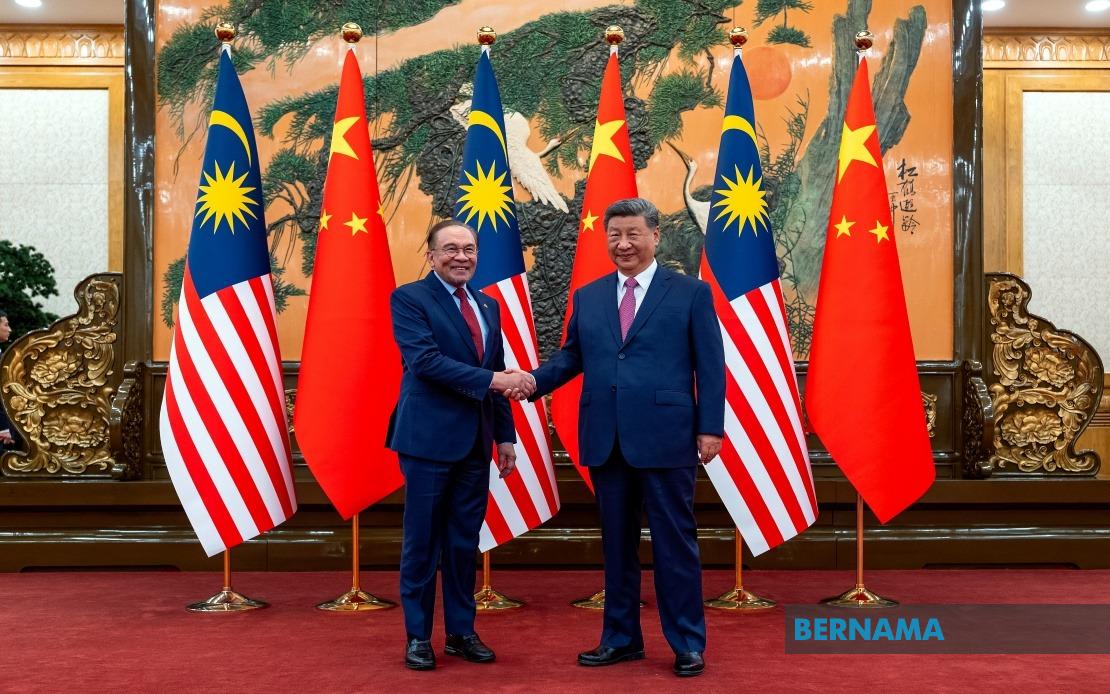
Prime Minister Datuk Seri Anwar Ibrahim has dispatched formal congratulations to Chinese President Xi Jinping marking the 105th anniversary of the Communist Party of China, underscoring the Malaysian government's commitment to strengthening bilateral relations with Beijing. Through a social media announcement, Anwar detailed how he conveyed greetings from both the Malaysian government and its citizenry, signalling the symbolic importance Kuala Lumpur places on maintaining cordial ties with its northern neighbour and leading regional economic partner.
In his communication to Xi, Anwar expressed admiration for the Chinese ruling party's lengthy historical trajectory and its role in directing the nation's development. The Prime Minister specifically acknowledged how the party has drawn upon China's vast civilisational heritage, accumulated historical experience, and deeply rooted cultural values spanning millennia to guide the country's modernisation and growth. This framing reflects the diplomatic language typically employed when addressing Beijing's governance structures and ideological frameworks, emphasising continuity and cultural foundations rather than political systems.
A particularly significant element of Anwar's message concerns Malaysia's pioneering diplomatic recognition of the People's Republic of China on May 31, 1974. This decision, made by the Malaysian government five decades ago, positioned Malaysia as the first non-socialist Southeast Asian nation to establish formal relations with Beijing during the Cold War era. Such recognition required considerable political courage and strategic foresight, as most Western-aligned countries in the region remained cautious about engaging communist China at that juncture. Anwar's invocation of this historical milestone serves to anchor contemporary Malaysia-China relations in a foundation of decisiveness and forward-thinking statecraft.
The passage of fifty years since that pivotal 1974 recognition has witnessed Malaysia and China evolve their relationship into one of Southeast Asia's most substantive bilateral partnerships. The foundation laid by that early diplomatic breakthrough has matured into multifaceted cooperation spanning trade, investment, infrastructure development, and strategic dialogue. Malaysia's willingness to establish ties with Beijing when many regional peers hesitated has positioned the country as a trusted intermediary and partner, enabling Malaysia to leverage its unique diplomatic standing in regional architecture.
Anwar's restatement of Malaysia's commitment to deepening strategic cooperation with China emphasises three fundamental pillars: mutual respect, reciprocal trust, and shared material benefits. This trilogy of principles has become the standard vocabulary in Malaysian official discourse regarding the relationship with Beijing, reflecting a pragmatic approach that sidesteps ideological considerations in favour of tangible national interests. For Malaysia, engagement with China encompasses economic opportunities, infrastructure investments through initiatives like the Digital Free Trade Zone, technology partnerships, and regional stability considerations.
The timing of this congratulatory message arrives amid the complex geopolitical landscape of Southeast Asia, where balancing great power interests remains central to Malaysian foreign policy. China's expanding regional influence through economic and strategic initiatives has prompted other Southeast Asian nations to carefully calibrate their engagement, seeking to benefit from Beijing's investment appetite whilst maintaining autonomy and hedging against excessive dependency. Malaysia, with its established relationship with China and its chairman role in ASEAN during certain periods, has generally navigated this terrain with measured diplomacy.
From a Malaysian perspective, the maintenance of strong China ties serves multiple strategic objectives. Economically, Chinese investment and trade flows constitute essential components of Malaysia's development agenda, particularly in manufacturing, technology sectors, and infrastructure projects. Politically, Malaysia benefits from its status as a reliable partner to Beijing within ASEAN, potentially offering diplomatic influence and access to regional consultations. The country's significant ethnic Chinese population, numbering in the millions, also creates natural constituencies with cultural and familial links to China, adding a demographic dimension to bilateral relations.
Anwar's messaging further reflects Malaysia's broader approach to managing relationships with major powers in an era of intensifying strategic competition between the United States and China. Rather than adopting an overtly aligned position, Malaysian leadership attempts to maintain productive engagement with both Washington and Beijing, extracting benefits from competition between the powers whilst preserving strategic autonomy. This balancing act requires careful diplomatic signalling, and ceremonial exchanges such as anniversary congratulations serve as visible affirmations of relationship maintenance without necessarily implying exclusive alignment.
The Communist Party of China's role in governing 1.4 billion people and shaping regional dynamics makes anniversary acknowledgements from regional leaders significant diplomatic signals. When the Prime Minister of a major Southeast Asian economy extends formal felicitations, Beijing interprets this as validation of the relationship's importance and evidence of stable, predictable engagement. Conversely, such gestures also communicate to Malaysia's other partners that the country maintains diverse relationships and cannot be pressured into abandoning any particular external engagement.
Looking forward, Malaysia's relationship with China will likely continue evolving as both nations navigate post-pandemic economic recovery, technological advancement, and shifting regional power dynamics. The fifty-year foundation established in 1974 provides resilience to the partnership, yet emerging challenges around trade imbalances, labour practices in Chinese-invested projects, and regional security concerns demand ongoing attention. Anwar's continued emphasis on mutual respect and shared benefits suggests Malaysia intends to deepen cooperation whilst remaining attentive to protecting national interests and maintaining the democratic values and institutional integrity that define Malaysian governance.

