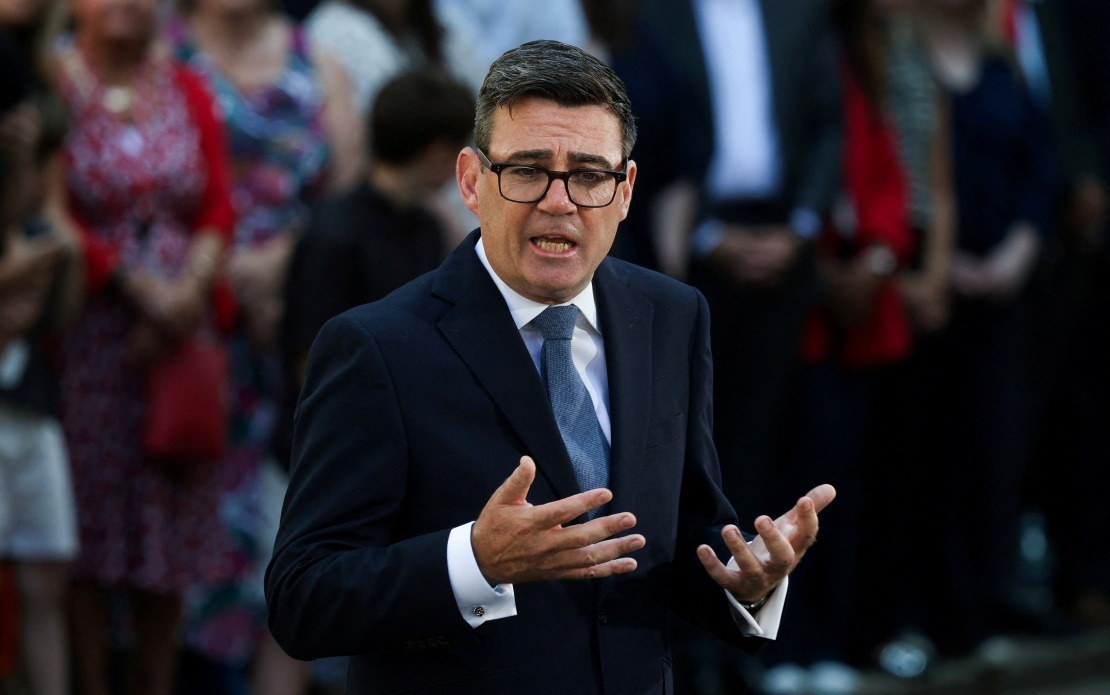
Prime Minister Datuk Seri Anwar Ibrahim has formally congratulated Andy Burnham following his appointment as the United Kingdom's seventh prime minister in a decade, seizing the occasion to underscore Malaysia's commitment to strengthening one of Southeast Asia's most enduring partnerships with London. The Malaysian leader took to social media to express his enthusiasm about collaborating with Britain's new Labour administration, positioning the transition as an opportune moment to refresh and expand cooperation frameworks that have historically anchored bilateral relations.
Anwar's overture came as Burnham officially assumed the premiership on Monday after the Labour Party selected him as successor to Keir Starmer, who formally resigned at Buckingham Palace following a turbulent tenure marked by internal party tensions and policy challenges. The timing of Malaysia's diplomatic gesture reflects Kuala Lumpur's recognition of Britain's significance as a partner nation, particularly given the substantial defence, trade, and cultural linkages that have developed since Malaysia's independence.
Among the substantive cooperation areas identified by Anwar is the finalisation of a Digital Trade Agreement between the two countries, a priority that aligns with Malaysia's broader regional strategy to position itself as a digital hub within Southeast Asia and expand e-commerce frameworks with developed economies. Such an agreement would facilitate smoother cross-border transactions, reduce tariff barriers on digital services, and create new opportunities for Malaysian technology companies seeking entry into British markets. The digital trade initiative also reflects a global trend among Commonwealth nations and trading partners to modernise agreements originally structured around traditional goods and services.
Beyond commerce, Anwar highlighted collaborative potential in artificial intelligence and digitalisation—sectors where both nations possess complementary strengths. Malaysia, with its growing tech ecosystem and government investment in AI research, could benefit from British expertise in emerging technologies, while the UK gains access to Southeast Asian markets and development opportunities. Defence cooperation represents another pillar, a domain where Malaysia and Britain maintain institutional frameworks inherited from their colonial history but increasingly focused on regional security challenges, maritime protection, and technology transfer.
Clean energy emerged as a third priority in Anwar's stated agenda, reflecting the global consensus on climate action and energy transition that has become a benchmark for bilateral partnerships. Malaysia's renewable energy ambitions and Britain's advanced green technology sector present mutually beneficial opportunities, from offshore wind expertise to sustainable manufacturing standards that could enhance Malaysian exports to European markets.
Anwar's public acknowledgement of Burnham's position on the Gaza crisis adds a political dimension to the diplomatic greeting, signalling Malaysia's sensitivity to human rights issues and suggesting that bilateral relations extend beyond transactional economic interests to encompass shared values regarding international conflicts. The Malaysian Prime Minister specifically praised Burnham's candour in admitting that Britain's initial response to the humanitarian situation fell short of moral standards, and his calls for increased international pressure on the Israeli regime. This framing allows Anwar to position Malaysia as aligned with progressive international opinion while navigating the complex geopolitics of Middle Eastern affairs.
The 70th anniversary of Malaysia-UK diplomatic relations, scheduled for next year, provides the institutional calendar point that both governments will likely mobilise to advance their agenda. Such milestone anniversaries traditionally trigger elevated engagement, cultural exchanges, and high-level visits that can breathe fresh momentum into partnership frameworks. For Malaysia, commemorating seven decades of diplomatic ties with a permanent Security Council member and major military power holds symbolic significance as the nation continues to assert its regional prominence and strengthen alignments with established democracies.
Anwar's courtesy reference to outgoing Prime Minister Keir Starmer demonstrates diplomatic protocol but also reflects the Malaysian government's pragmatic approach to managing relationships across political transitions. Despite Starmer's brief tenure, Kuala Lumpur sought to acknowledge his contributions, ensuring continuity and goodwill regardless of electoral outcomes in partner countries. This approach contrasts with more transactional diplomatic cultures and reinforces Malaysia's positioning as a stable, relationship-oriented actor in global affairs.
The transition in British leadership also occurs amid broader regional dynamics in which Malaysia is reassessing its strategic partnerships within the context of evolving regional security architecture. With tensions in the South China Sea, growing great power competition between the United States and China, and ASEAN's efforts to maintain centrality in regional forums, Malaysia's cultivation of partnerships with traditional allies such as Britain serves multiple strategic objectives beyond immediate economic gains. A strengthened Malaysia-UK partnership signals Malaysia's commitment to maintaining balanced international relations and demonstrates that Southeast Asian nations continue to value engagement with Western democracies.
The substantive areas identified by Anwar—digital trade, artificial intelligence, defence, and clean energy—collectively represent a modernised partnership agenda that moves beyond the historical military basing rights and Commonwealth institutional frameworks that previously defined the relationship. This evolution reflects both nations' recognition that 21st-century partnerships must address technological disruption, climate imperatives, and hybrid security challenges that transcend traditional military concerns.
From a Malaysian perspective, engagement with a new British administration during a period of potential policy recalibration offers opportunities to reset bilateral terms around contemporary priorities. Britain, under new Labour leadership and navigating post-Brexit international positioning, may be receptive to deepened Commonwealth ties and expanding strategic partnerships in Indo-Pacific regions where Malaysia occupies a significant position. The convergence of Malaysian interests in digital transformation and green energy with Britain's technological capabilities and climate commitments suggests that bilateral cooperation frameworks announced in coming months could yield substantial mutual benefits and serve as a model for Malaysian partnerships with other developed democracies.

