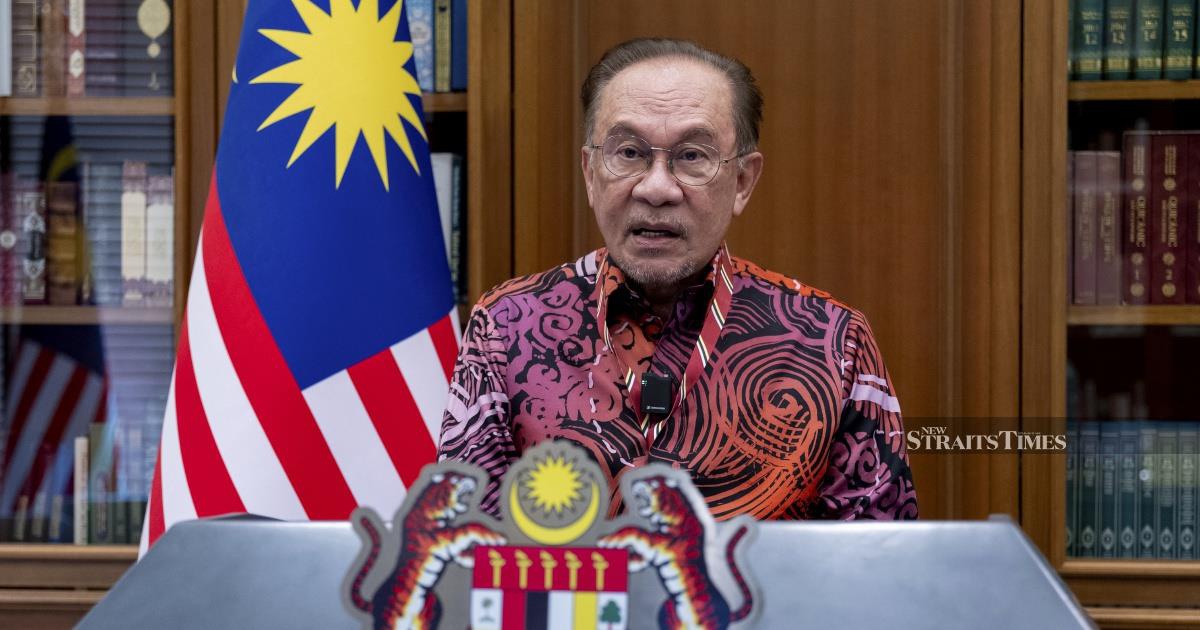
Prime Minister Datuk Seri Anwar Ibrahim has sent formal greetings to China marking the 105th anniversary of the Chinese Communist Party, a gesture that reflects the ongoing diplomatic relations between Kuala Lumpur and Beijing. The congratulatory message represents a continuation of Malaysia's established protocol for acknowledging major political and historical occasions involving the Chinese government, maintaining the cordial bilateral ties that have been a cornerstone of Malaysia's foreign policy in the region.
This expression of goodwill arrives amid a period of sustained engagement between Malaysia and China across multiple sectors. The two nations have maintained substantial trade relationships, cultural exchanges, and cooperation frameworks that span infrastructure development, investment, and technological collaboration. Such ceremonial acknowledgements serve as important markers in the diplomatic calendar, signalling Malaysia's commitment to nurturing constructive relations with one of the world's largest economies and a key regional power in Southeast Asia.
The significance of marking the Chinese Communist Party's founding anniversary extends beyond mere ceremonial courtesy. The party, established in 1921, has shaped China's trajectory over more than a century, and its institutional continuity has direct implications for regional stability and Malaysia's strategic positioning in Asia. As China's global influence continues to expand, Malaysia's approach of maintaining respectful diplomatic channels across different ideological frameworks demonstrates pragmatism in international relations.
For Malaysian policymakers, engagement with China encompasses several critical dimensions. Economic cooperation has seen Malaysian businesses benefit from Chinese investment and market access, while infrastructure projects like portions of the Belt and Road Initiative have transformed Malaysia's development landscape. At the same time, Malaysia navigates the complex geopolitical environment of the South China Sea, where maritime interests and territorial claims require careful diplomatic management alongside broader strategic partnerships.
The Prime Minister's congratulatory gesture reflects a broader Southeast Asian pattern where nations maintain formal courtesies with major powers regardless of domestic governance models. Malaysia, as a Muslim-majority democracy, has historically balanced relations with countries of varying political systems, viewing engagement as essential to national interests and regional prosperity. This pragmatic approach has enabled Kuala Lumpur to secure beneficial relationships across the political spectrum.
China's role in regional affairs has intensified over recent decades, making bilateral communication and symbolic gestures important mechanisms for relationship maintenance. Malaysia's acknowledgement of the Communist Party's milestone contributes to an atmosphere of mutual respect that facilitates dialogue on trade, investment, security, and cultural matters. Such communications also underscore the principle of non-interference in internal affairs while affirming commitment to cooperation on matters of mutual benefit.
From a Southeast Asian perspective, stable Malaysia-China relations carry broader implications for regional cohesion and economic integration. Malaysia serves as an important bridge between South China Sea stakeholders and major powers, and its diplomatic relationships significantly influence the region's trajectory. Sustained engagement with Beijing, while maintaining close ties with other partners including the United States, Japan, and India, positions Malaysia as a balanced actor in complex regional geopolitics.
The anniversary recognition also occurs within a context where Malaysia continues to develop its position in various multilateral frameworks involving China, including ASEAN mechanisms and economic partnerships. These institutional relationships benefit from consistent diplomatic engagement at all levels, including the acknowledgement of significant political occasions that hold symbolic importance within China's political culture and historical narrative.
Looking forward, such expressions of diplomatic courtesy will likely remain routine elements of Malaysia's foreign relations strategy. The maintenance of functional, respectful relations with China serves Malaysian interests in trade expansion, investment attraction, and regional stability. At the same time, Malaysia's multicultural society and diverse international partnerships ensure that engagement with any single nation remains balanced within a broader portfolio of strategic relationships that reflect national priorities and values.

