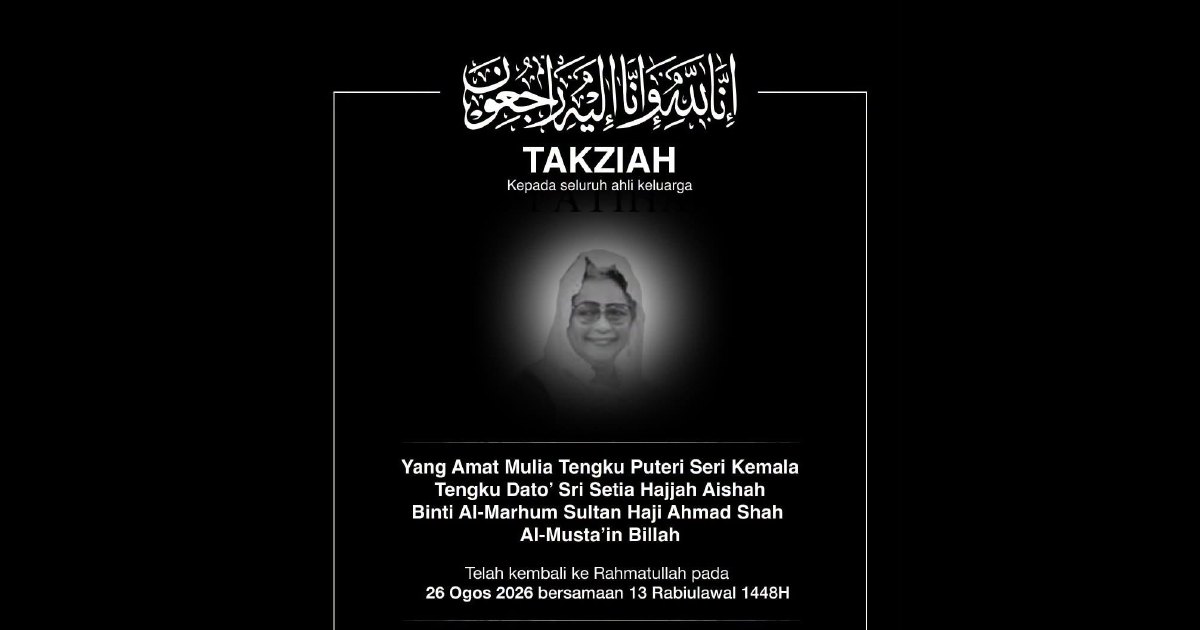
Prime Minister Datuk Seri Anwar Ibrahim has extended formal condolences to Sultan Al-Sultan Abdullah Ri'ayatuddin Al-Mustafa Billah Shah and members of the Pahang Royal Family following the death of Tengku Puteri Seri Kemala Tengku Datuk Seri Aishah, the Sultan's elder sister. The Prime Minister's expression of sympathy marks the nation's acknowledgement of the loss within one of Malaysia's most prominent royal households.
The passing represents a significant moment for the Pahang monarchy, with the senior family member having held a prominent position within the state's royal circles. Tengku Puteri Seri Kemala's death comes as the nation continues its normal constitutional operations under Sultan Abdullah's reign as the 16th Yang di-Pertuan Agong, a position he has held since December 2018.
Royal deaths in Malaysia carry substantial significance beyond family circles, given the constitutional role of the sultans within the country's system of governance. The Pahang sultanate, one of Malaysia's oldest and most historically significant kingdoms, maintains deep institutional importance within the federal framework. As such, expressions of condolence from the highest levels of government are customary protocol that reflect both personal sympathy and national respect for the institution.
Anwar's message of condolence represents the government's formal recognition of the loss. Such statements from the Prime Minister serve as an important gesture of unity between the executive branch and the constitutional monarchy, reinforcing the partnership that underpins Malaysia's governance structure. The timing and nature of these expressions are carefully considered within the context of Malaysia's unique constitutional arrangements.
The Pahang Royal Family maintains particular prominence within Malaysian royal circles, with historical connections spanning centuries. The state's sultanate has produced several Yang di-Pertuan Agong, and the family continues to hold significant influence in both state and national affairs. Members of the royal family regularly participate in ceremonial functions, charitable endeavours, and serve as patrons of various cultural and social initiatives throughout the nation.
For Malaysian readers, the passing underscores the traditions and protocols that characterise royal succession and family matters within the country's constitutional monarchy system. The formal acknowledgement by the Prime Minister demonstrates how such events are handled within Malaysia's political framework, where respect for the institution of monarchy remains a cornerstone of national governance and social stability.
The death also comes within the broader context of the Malaysian calendar, where royal ceremonies and state functions play important roles throughout the year. The loss of a senior royal family member typically prompts periods of mourning and reflection within palace circles, often accompanied by special prayers and observances in accordance with Islamic tradition, as all Malaysian sultans and their families adhere to the Muslim faith.
Sultan Abdullah himself, as the current Sultan of Pahang and the nation's constitutional head of state, would likely observe customary mourning practices alongside his immediate family members. The Sultan has been known to maintain strong family bonds and regularly participates in state affairs while also fulfilling his national responsibilities as Yang di-Pertuan Agong, a dual role that requires careful attention to constitutional obligations.
The condolence message from the Prime Minister also reflects broader diplomatic protocol, as Malaysia places considerable emphasis on maintaining harmonious relations between the government and constitutional institutions. The formal nature of such expressions serves multiple purposes within the national framework, reinforcing institutional respect and demonstrating the continuity of Malaysia's governance structures during significant moments.
For the international community observing Malaysian affairs, such moments illustrate how the country's unique constitutional arrangement integrates royal institutions with democratic governance. The Sultan's role combines ceremonial significance with substantive constitutional responsibilities, making the royal household's welfare a matter of national concern rather than purely private family consideration.
The passing of Tengku Puteri Seri Kemala represents a personal loss for the Sultan and the Pahang Royal Family while also marking a significant moment within Malaysia's institutional landscape. The Prime Minister's swift expression of condolence demonstrates the government's continued commitment to acknowledging and supporting the constitutional monarchy, which remains fundamental to Malaysia's political identity and social cohesion.

