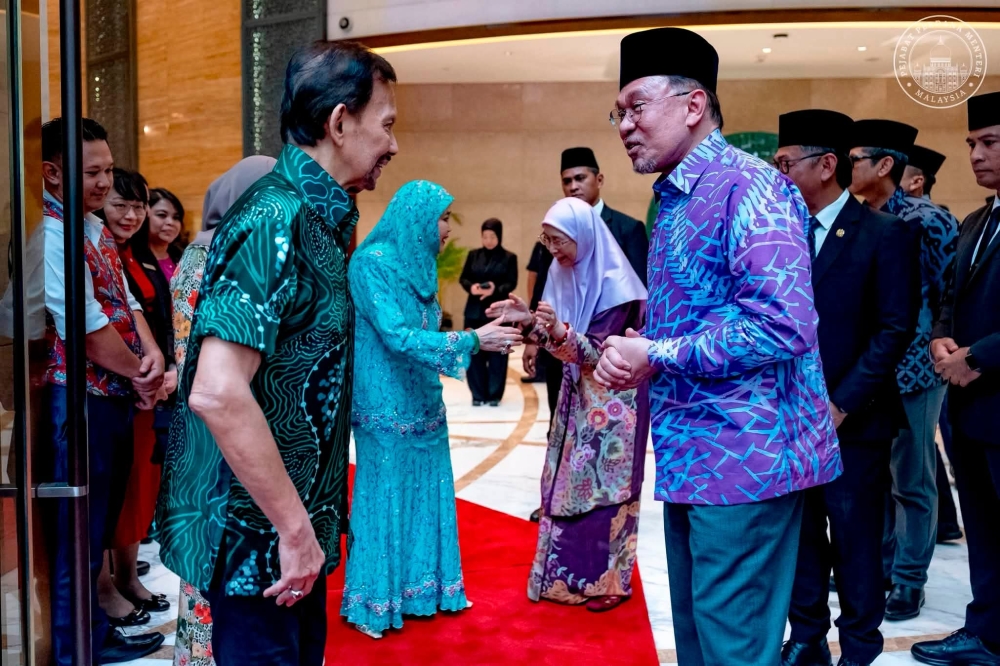
Prime Minister Datuk Seri Anwar Ibrahim marked the Brunei Sultan's birthday by extending formal congratulations, using the occasion to underscore Malaysia's unwavering commitment to strengthening bilateral relations between the two neighbouring Southeast Asian nations. The gesture, delivered through official channels, reflects the importance both governments place on maintaining cordial diplomatic ties and fostering closer cooperation across multiple sectors.
The birthday message carries particular significance given the intricate historical and cultural ties binding Malaysia and Brunei. As fellow members of the Association of Southeast Asian Nations, the two countries share overlapping interests in regional security, economic development, and maritime cooperation. Anwar's public acknowledgement of this milestone reinforces the priority Malaysia assigns to its relationship with Brunei, particularly at a time when intra-regional dialogue remains essential for addressing common challenges.
Malaysia and Brunei have long enjoyed stable diplomatic relations rooted in shared Islamic heritage, comparable governance structures, and geographic proximity. The two nations maintain extensive people-to-people connections, with significant populations of shared ancestry and cultural affinity. These foundations have historically insulated their relationship from the kinds of tensions that occasionally characterise interactions among other ASEAN members, creating a model of sustained bilateral cooperation within the regional framework.
Beyond ceremonial courtesies, the timing of Anwar's message carries strategic undertones. Malaysia has consistently pursued deepened engagement with Brunei across trade, investment, and security domains. Both nations recognise that strengthened bilateral partnerships contribute to broader ASEAN cohesion and enhance their collective capacity to navigate complex geopolitical dynamics in Southeast Asia and the wider Indo-Pacific region. Economic complementarities, particularly in energy and resource sectors, provide concrete foundations for expanding commercial ties.
The reaffirmation of Malaysia-Brunei solidarity reflects broader diplomatic positioning within Southeast Asia. As regional powers reassert influence and competition intensifies over maritime resources and strategic interests, smaller states and neighbours increasingly value stable, predictable partnerships. Malaysia's explicit recommitment to this relationship signals consistency in foreign policy and provides reassurance regarding the predictability of Malaysian actions in regional affairs.
Anwar's administration has prioritised maintaining strong relationships across all immediate neighbours, recognising that divisive or fraught diplomacy constrains Malaysia's capacity to address pressing domestic priorities. By contrast, harmonious regional relations create space for coordinated action on transnational issues including counterterrorism, human trafficking, transboundary environmental challenges, and maritime security. The birthday message, whilst ceremonial in appearance, embeds these broader strategic considerations.
Brunei, as a smaller but resource-rich nation, values reassurance from larger regional players regarding respect for its sovereignty and territorial integrity. Malaysia's consistent emphasis on bilateral ties provides this reassurance whilst simultaneously positioning itself as a reliable partner in advancing shared interests. This mutual security dynamic underpins both nations' commitment to maintaining constructive relations despite occasional minor disagreements that characterise any neighbouring countries.
The diplomatic message also occurs within a context of Malaysia positioning itself as an important voice within ASEAN, particularly on issues concerning regional autonomy and the management of great power competition. A stable, united ASEAN dependent on strong bilateral foundations among member states enhances Malaysia's diplomatic influence and its ability to advocate for ASEAN's interests when engaging with external powers. Brunei, though smaller, contributes meaningfully to these collective efforts, particularly on maritime and energy-related issues.
Looking forward, the reaffirmation of Malaysia-Brunei ties suggests continued focus on practical cooperation mechanisms. Both nations maintain established channels for dialogue across defence, commerce, and cultural domains. Educational exchanges, joint security operations, and coordinated positions within regional multilateral forums characterise the substance of their relationship beyond formal ceremonies. These ongoing programmes generate tangible benefits for both populations and entrench bilateral cooperation at institutional levels.
The gesture exemplifies Malaysia's broader diplomatic philosophy under Anwar's leadership, emphasising continuity, stability, and pragmatic engagement with immediate neighbours. Rather than pursuing confrontational stances or allowing minor disagreements to escalate, the approach prioritises shared interests and long-term relationship management. This orientation reflects lessons from regional history and recognition that durable prosperity requires predictable, cooperative relationships within the immediate neighbourhood.
For Malaysian readers, the significance extends beyond ceremonial protocol. Strong ties with Brunei contribute to regional stability that facilitates trade, investment, and people movement. Economic interdependencies, whilst modest in aggregate terms, matter considerably for border communities and businesses engaged in cross-border commerce. Additionally, Malaysia's demonstrated commitment to maintaining harmonious relations with all neighbours strengthens its credibility as a responsible regional actor.
As Southeast Asia navigates increasingly complex geopolitical terrain marked by great power competition and evolving security challenges, the steadiness of Malaysia-Brunei relations provides a stabilising foundation. Anwar's birthday message, read in this context, represents more than ceremonial courtesy—it embodies Malaysia's commitment to the diplomatic fundamentals that enable regional stability and create conditions for shared prosperity across Southeast Asia.

