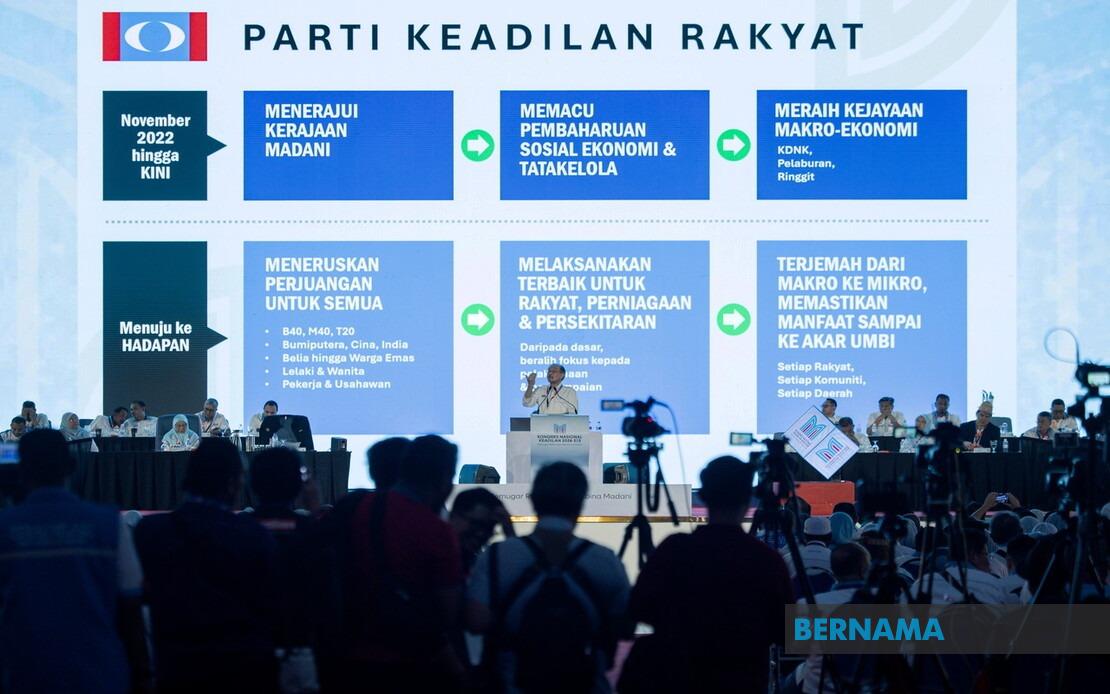
PKR president Datuk Seri Anwar Ibrahim has formally empowered vice-president Datuk Seri Saifuddin Nasution Ismail to execute the full responsibilities of the party's deputy president position, a decision announced during the PKR National Congress 2026 held at the Melaka International Trade Centre in Ayer Keroh on August 16. The Home Minister will assume these additional responsibilities while Nurul Izzah Anwar, the incumbent deputy president, takes a temporary leave of absence from the role.
During his closing remarks at the congress, Anwar acknowledged that assigning these duties to Saifuddin Nasution represents an expanded workload for the senior minister. Nevertheless, he expressed confidence in Saifuddin Nasution's capability and commitment, characterizing him as a trusted colleague of many years whose understanding of the party's operations and working methods would serve PKR well during this interim period. The appointment underscores the confidence Anwar places in Saifuddin Nasution's organisational acumen and loyalty to the party hierarchy.
Anwar explicitly called upon the entire PKR machinery to extend their unwavering support, full cooperation, and loyalty to Saifuddin Nasution as he shoulders these expanded duties. This appeal to party grassroots reflects the sensitivity surrounding leadership transitions within PKR, particularly given the party's history of internal factional tensions. By framing the appointment as temporary rather than permanent, Anwar seeks to maintain stability while accommodating Nurul Izzah's leave arrangement without creating unnecessary friction within the broader party structure.
The Central Leadership Council of PKR had previously endorsed this arrangement on August 6, with information chief Datuk Seri Fahmi Fadzil announcing the interim nature of Saifuddin Nasution's appointment to the deputy president's duties. This earlier decision paved the way for the formal endorsement delivered at the national congress, providing party members with advance notice of the leadership transition. The measured, deliberate approach to communicating the change suggests the party leadership wished to ensure transparency and minimize speculation about the reasons behind Nurul Izzah's temporary absence.
Beyond Saifuddin Nasution's appointment, Anwar announced several other significant shifts in party responsibilities. Amirudin Shari, another vice-president, has been designated as the party's election director, a crucial portfolio given Malaysia's fluid electoral landscape and the possibility of snap elections at federal or state levels. Simultaneously, Tengku Datuk Seri Zafrul Tengku Abdul Aziz has assumed the role of coordinator in the Prime Minister's Office, positioning him to serve as a liaison between PKR's party apparatus and the executive branch of government.
The congress also addressed internal concerns regarding leadership in Negeri Sembilan, a state where PKR faced electoral setbacks in the August 1 state election. Anwar directed Datuk Seri Aminuddin Harun, another vice-president and former Negeri Sembilan Menteri Besar, to concentrate on his vice-presidential duties and responsibility for member training and cadre development programmes. This reassignment appears designed to redirect Aminuddin's energies toward constructive party-building activities rather than state-level political positioning, which has become a source of internal dissension.
The situation in Negeri Sembilan carries particular significance for PKR's broader organisational health. Six division chiefs from the state had called for a review of Aminuddin's position as chairman of the Negeri Sembilan PKR State Leadership Council, effectively challenging his local party authority. Rather than removing him, Anwar opted for a strategic repositioning that elevates Aminuddin's formal status while moving him away from the flashpoint of state politics. This maneuver allows Anwar to acknowledge grassroots concerns without appearing to capitulate to internal pressure, thereby preserving both Aminuddin's dignity and the party leader's authority.
Anwar seized the opportunity to reframe PKR's electoral defeat in Negeri Sembilan as a collective responsibility rather than an individual failure. By resisting calls to scapegoat Aminuddin alone, the party president signalled his commitment to unified leadership and shared accountability for electoral performance. This approach carries implications for party morale and internal cohesion, particularly at a time when Malaysian politics remains volatile and opposition coalitions continue to reorganise following the 2023 general election.
The broader context of these leadership decisions reflects PKR's ongoing maturation as a governing party. With representation in the Prime Minister's Office and control of several state governments, PKR faces the challenge of balancing party organisational needs with governmental responsibilities. The distribution of roles announced at the congress attempts to ensure that senior party figures remain engaged with both internal party machinery and state-level political challenges, reducing the risk of organisational decay that sometimes afflicts parties in power.
For Malaysian politics more widely, PKR's internal adjustments matter considerably given the party's centrality to the ruling coalition. The strength of the Pakatan Harapan alliance depends substantially on PKR's institutional stability and the loyalty of its senior figures. By proactively managing succession concerns and redirecting potential challengers toward constructive roles, Anwar appears intent on preventing internal disputes from destabilising the broader government. These moves also suggest contingency planning for potential changes in ministerial portfolios or cabinet compositions in the months ahead.
Saifuddin Nasution's assumption of deputy president duties also carries practical implications. As Home Minister, his workload already encompasses critical portfolios including internal security, disaster management, and local government administration. Adding party deputy president responsibilities means this senior figure must effectively manage competing demands between ministerial obligations and party organisational work. The success of this arrangement will depend heavily on the depth of the support infrastructure available to him and the party's willingness to shield him from routine administrative burdens.
The congress decisions ultimately reflect Anwar's effort to preserve party unity during a period of electoral transition and grassroots frustration in certain states. Rather than dramatic reshuffles that might trigger further internal conflict, Anwar has opted for measured adjustments that respect existing hierarchies while addressing specific concerns. This gradualist approach carries risks if underlying problems persist, but it also preserves organisational stability and demonstrates leadership confidence in the party's ability to navigate current challenges without major institutional convulsions.

