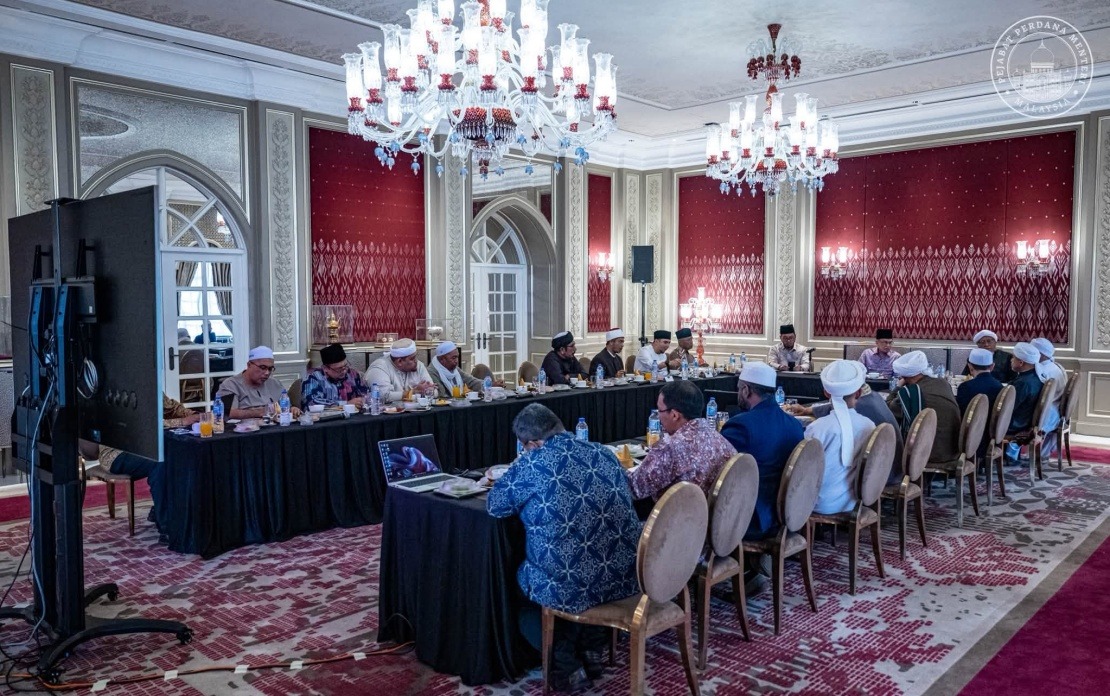
Prime Minister Datuk Seri Anwar Ibrahim has underscored the strategic value of engaging Malaysia's religious scholars as a cornerstone of informed policymaking, positioning such consultations as essential mechanisms for grounding government initiatives in both contemporary knowledge and Islamic principles. Speaking following a series of discussions held in conjunction with Maulidur Rasul celebrations, Anwar characterised these engagements not as ceremonial meetings but as substantive reflection opportunities designed to calibrate government action against the evolving needs of the Muslim community and the realities of modern governance.
The Prime Minister's emphasis on scholarly consultation reflects a broader recognition within his administration that policy legitimacy and effectiveness require alignment with religious leadership and intellectual traditions. By framing these dialogues as pathways to refining government direction, Anwar positions the federal government as institutionally responsive to Islamic thought rather than doctrinally independent, a positioning particularly significant in Malaysia's context where Islam holds constitutional prominence and religious authority commands considerable public influence.
During the afternoon's discussions, Anwar received Sheikh Dr Muhyiddin Awwamah, who represents Darul Hadis al-Awwamiyyah, a respected Islamic educational institution. The choice of interlocutor carries symbolic weight, as Sheikh Dr Muhyiddin carries intellectual lineage from his father, Al-'Allamah Sheikh Muhammad bin Awwamah, a distinguished hadith scholar whose contributions to Islamic jurisprudence span decades. This multi-generational connection to Islamic scholarship underscores the government's intent to tap into established intellectual networks rather than engage isolated voices.
The Prime Minister's public recognition of the elder Sheikh's literary contributions deserves particular attention, as it demonstrates a strategy of legitimising government engagement through acknowledgment of scholarly legacy. Anwar characterised the father's written works as transcending mere textual compilation, instead framing them as intellectual patrimony that sustains the chain of Islamic scholarly tradition across generations. This framing implicitly positions the government's consultation efforts as participating in that same transmissive process, suggesting that contemporary policy deliberation constitutes a legitimate extension of long-standing Islamic intellectual discourse.
For Malaysian policymakers, the timing and frequency of such scholarly consultations signal an attempt to navigate the complex terrain between secular governance frameworks and religious expectations. Malaysia's constitutional arrangement grants Islam institutional primacy while the federation operates as a constitutional monarchy with Westminster-derived parliamentary structures. This structural tension requires sophisticated political management, and regular consultation with religious scholars offers one mechanism for demonstrating that secular governance structures incorporate rather than exclude religious guidance.
The focus on exploring Islam's development trajectory within Malaysia carries immediate policy implications across multiple domains. Religious scholars' perspectives on education curricula, financial services regulation, women's rights, minority religious protections, and international engagement all carry potential consequences for government programmes. By establishing formal consultation channels, the government creates opportunities to anticipate religious scholarly objections before policies crystallise, potentially reducing subsequent contestation and legitimacy challenges.
Anwar's public articulation that knowledge should guide government effort, advice should refine implementation, and Muslim community needs should shape final form acknowledges a specific vision of religious authority's role in secular administration. Rather than religious scholars wielding veto power or directing policy unilaterally, this formulation positions them as wisdom sources whose input integrates into bureaucratic decision-making. The distinction matters operationally, as it preserves governmental discretion while creating meaningful consultative space for Islamic thought leaders.
For Southeast Asian observers, Malaysia's model of institutionalised religious consultation offers an alternative pathway between the secularism adopted by some regional neighbours and theocratic governance in others. By establishing regular, formal engagement with religious scholars, the Malaysian government demonstrates responsiveness to Islamic constituencies without conceding governance authority to religious institutions. This may hold relevance for other regional democracies with substantial Muslim populations grappling with similar tensions between secular institutional frameworks and religious legitimacy expectations.
The emphasis on continuing "the chain of Islamic scholarly tradition" suggests government concern with sustainability and institutional memory within religious circles. By honouring established scholars and their legacies, the administration may seek to position itself as protector of intellectual traditions that might otherwise face erosion through modernisation pressures. This appeals to conservative Islamic constituencies concerned with preserving classical learning alongside contemporary adaptation.
Moving forward, the frequency and substantive outputs of these scholarly consultations will signal whether they constitute genuine deliberative processes or primarily serve legitimation functions. The effectiveness of such engagement depends substantially on whether government agencies subsequently modify policies in response to scholarly input, and whether scholars perceive their contributions as meaningfully shaping outcomes. Consultation mechanisms that produce no apparent policy adjustments risk becoming viewed as performative exercises that dilute rather than enhance government credibility.
The government's invocation of scholars' responsibility to ensure religion flourishes when those wielding power listen to knowledge reflects a particular understanding of secular governance obligations toward religious communities. This framing positions the government not as implementing its own policy preferences but as a custodian ensuring that Islamic intellectual traditions inform state action. Whether Malaysian Muslim constituencies interpret this positioning as genuine institutional respect or sophisticated rhetorical management will likely influence broader perceptions of government legitimacy among religiously-conscious voters heading toward the next general election.

