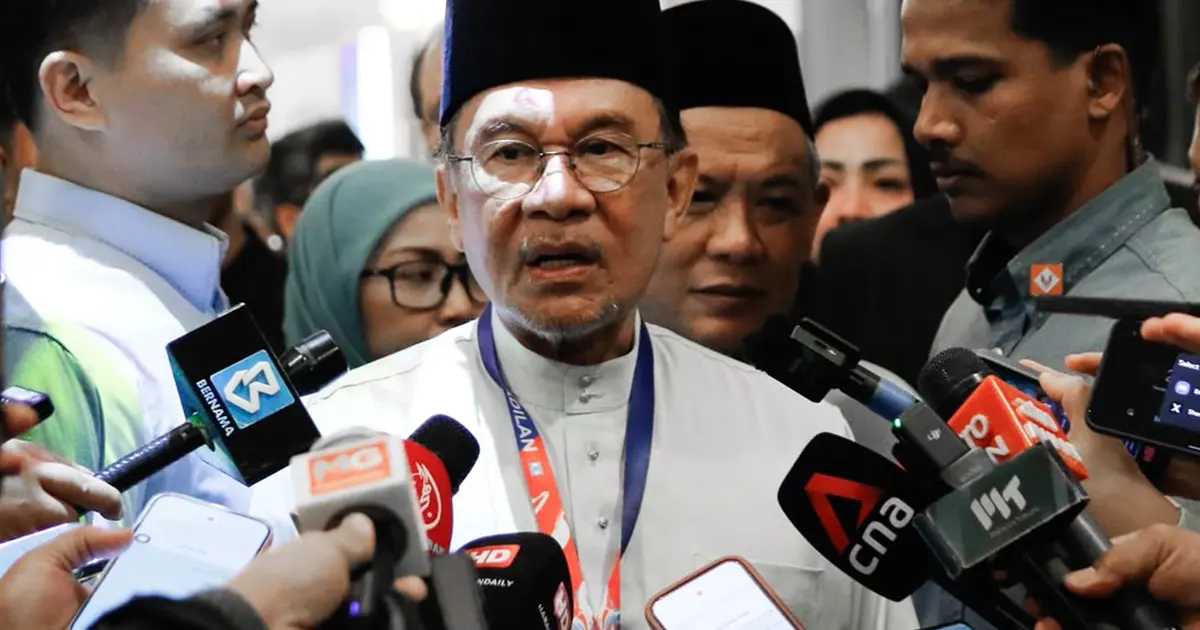
Prime Minister Anwar Ibrahim has sought to calm political waters by rejecting suggestions that his relationship with Deputy Prime Minister Zahid Hamidi is burdened by trust deficits, instead characterizing a recent public dispute as stemming from differing personal viewpoints rather than institutional discord. The clarification came in response to remarks made by Khairy Jamaluddin, the former Umno Youth chief, who had aired concerns in a podcast format about confidence levels within the government's upper echelons.
Anwar's intervention represents a deliberate effort to contain what could have escalated into a serious credibility crisis within the ruling coalition, particularly at a moment when the government requires cohesion to navigate pressing economic and governance challenges. By attributing the controversy to KJ's individual perspective rather than a broader schism between himself and Zahid, the Prime Minister sought to preserve the appearance of unified leadership and insulate the Deputy Prime Minister from potential collateral damage from the public disagreement.
The dynamics at play reflect the complex interplay of personalities and institutional loyalties that characterize Malaysia's contemporary political landscape. Khairy Jamaluddin, despite his exit from formal party youth leadership, continues to command considerable influence within Umno circles and retains visibility in national discourse through various platforms including media appearances and podcast engagements. His decision to discuss trust-related matters publicly suggested a willingness to speak candidly about internal government matters, a move that could have reverberated through coalition politics had it remained unaddressed.
Anwar's response strategy demonstrates the delicate balancing act required of a Prime Minister navigating a multi-party coalition government. Rather than directly challenging Khairy's assertions or defending Zahid against implied criticism, Anwar pivoted toward emphasizing that different actors in government may legitimately hold varying perspectives on substantive matters without this indicating fundamental breakdowns in institutional relationships. This framing allows all parties to maintain face while effectively sidelining the controversy.
The matter touched upon broader questions about governance structures and interpersonal dynamics within Malaysia's executive branch. Trust among senior government figures constitutes the foundation upon which effective policy implementation and crisis management rest. Public doubts about such relationships can undermine investor confidence, complicate legislative processes, and create openings for opposition parties to exploit perceived weaknesses. Anwar's quick response reflected an understanding of these potential cascading effects.
Khairy Jamaluddin's prominence in these discussions also warrants consideration within the context of Umno's internal dynamics and his personal political trajectory. As a figure who has occupied significant positions within his party and the broader government structure, his public commentary carries weight among party members and observers tracking intra-coalition developments. His decision to voice concerns through a podcast rather than through traditional party channels or private discussions suggested a deliberate choice to engage with public discourse on governance matters.
The characterization of the disagreement as rooted in differing perspectives rather than structural dysfunction also speaks to Malaysian political culture, where coalition governments have historically functioned despite substantial ideological and tactical differences among member parties. The Pakatan Harapan-Barisan Nasional configuration governing Malaysia since 2022 represents precisely this kind of pragmatic alliance, where multiple political entities with distinct histories and constituencies maintain working relationships focused on common policy objectives.
For Malaysian observers, this incident underscores both the resilience and fragility of contemporary coalition governance. The willingness of senior figures to publicly address potential sources of friction, and the ability to contain such disputes through careful messaging, demonstrates institutional maturity. Yet the very need for such containment efforts points to underlying tensions that require ongoing management. The relationship between Anwar and Zahid, already complicated by their respective histories and the manner in which their current positions were achieved, continues to draw scrutiny from political analysts and media observers.
The broader implications for Southeast Asia's largest economy extend to investor perceptions and economic confidence metrics. Markets and international observers parse statements from Malaysian political leaders for signals of stability or dysfunction. A government perceived as riven by trust deficits may face subtle but measurable headwinds in attracting foreign direct investment and maintaining favorable credit ratings. Anwar's swift clarification functioned partly as reassurance directed toward both domestic and international stakeholders.
Looking forward, the incident illustrates how contemporary Malaysian politics increasingly unfolds through multiple communication channels simultaneously. Traditional party structures coexist with digital platforms, podcasts, and social media as venues for political discourse. Senior figures must navigate expectations about when to engage publicly, when to address matters privately, and how to manage the narrative implications of their communications choices. Khairy's decision to use a podcast platform positioned his remarks outside typical official channels while still commanding significant attention.
The resolution of this particular controversy through Anwar's intervention does not necessarily resolve underlying questions about governance dynamics within the coalition. Political partnerships in Malaysia continue to require careful maintenance, regular recalibration of expectations, and strategic communication to prevent disagreements from metastasizing into more serious institutional conflicts. The Prime Minister's approach suggests confidence in the strength of core working relationships even as he acknowledged legitimate space for different perspectives among government figures.

