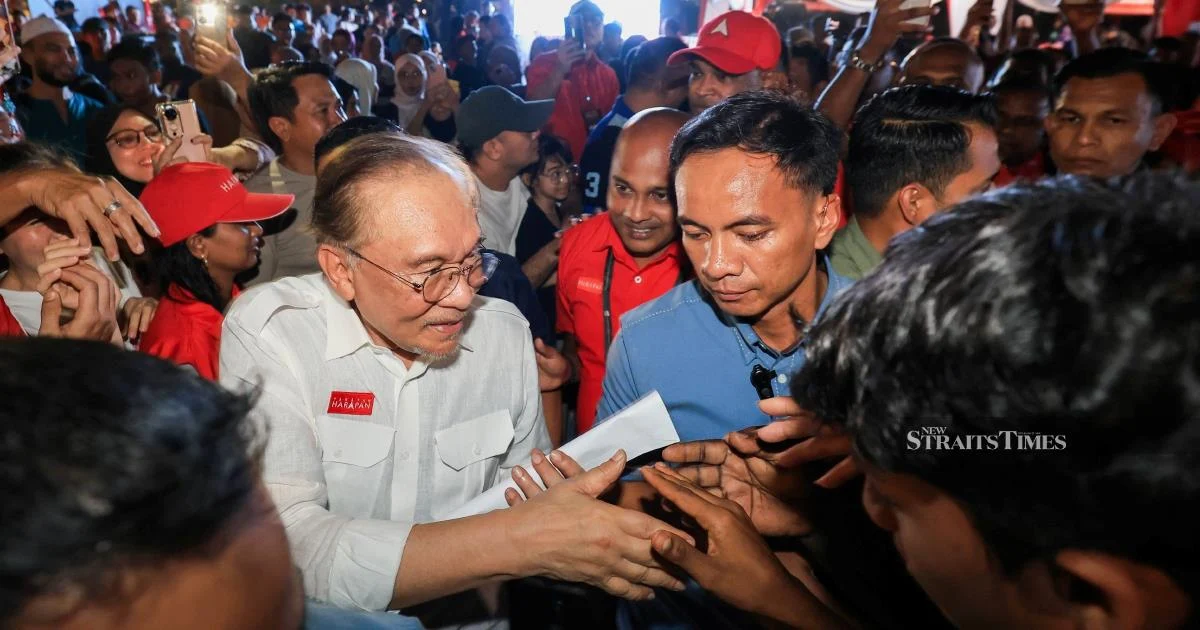
Prime Minister Datuk Seri Anwar Ibrahim has firmly rebuffed mounting appeals for an early dissolution of Parliament and snap elections, reaffirming that his coalition administration enjoys the democratic legitimacy required to govern throughout its prescribed term. Speaking from the administrative capital, the premier signalled his government's resolve to maintain its current trajectory despite growing speculation about a possible early electoral contest.
The calls for premature polls have emerged from various political quarters seeking to capitalise on shifting electoral dynamics and coalition realignments that have characterised Malaysia's recent political landscape. However, Anwar's response underscores the stability that the unity government framework has provided since its formation, suggesting that bringing the country to the ballot box prematurely would unnecessarily disrupt the administration's legislative agenda and policy implementation.
The concept of a unity government in Malaysia represents a significant departure from the nation's traditional two-coalition contest model. By bringing together parties from historically opposing blocs, the arrangement has survived multiple internal pressures and parliamentary challenges that might have toppled earlier administrations. This structure, while sometimes unwieldy in its coordination demands, has paradoxically granted the government greater resilience against the tactical parliamentary manoeuvres that previously destabilised Malaysian political life.
Anwar's assertion that the government maintains a governing mandate carries substantial weight in Malaysia's constitutional framework. Under the Federal Constitution, a government retains the right to remain in office as long as it commands the confidence of the Dewan Rakyat. The Prime Minister's statement implicitly confirms that the coalition continues to command sufficient parliamentary support to pass legislation and resist confidence votes, a prerequisite for dismissing early election demands as premature and unnecessary.
The timing of such calls often reflects the strategic calculations of opposition parties assessing their electoral prospects. If alternative coalitions perceive improved chances at the polls compared to their current parliamentary standing, they naturally advocate for elections. Conversely, Anwar's refusal to dissolve Parliament suggests confidence that either the government's popularity remains sufficient for re-election if it came to that, or that dissolution would be politically disadvantageous. His measured response indicates the administration is not intimidated by electoral challenges.
Malaysia's experience with early elections during the previous administration left substantial economic and institutional costs. The disruption to governance continuity, combined with the financial expenditure of holding campaigns during critical policy implementation phases, highlighted the risks of frequent electoral contests. Anwar's pushback against early polls rhetoric thus resonates with both practical governance concerns and public sentiment favouring political stability over constant electoral cycles.
The unity government model's effectiveness depends partly on the perception of durability and clear long-term planning. If the administration appeared vulnerable to dissolution at every political tremor, participating coalition members would face internal pressure to extract maximum concessions and position themselves for breakaway scenarios. By confidently asserting the government's mandate and electoral legitimacy, Anwar reinforces the coalition's structural integrity and reassures member parties of their collective staying power.
Regional observers have watched Malaysia's political stabilisation with particular interest, given the turbulence that undermined investor confidence and economic growth during earlier cycles of instability. The unity government, despite its occasional coordination challenges, has provided the policy certainty that businesses and international partners value. Premature elections would reset this recovery trajectory and inject fresh uncertainty into investment decisions and fiscal planning.
Anwar's stance also reflects his administration's commitment to completing key legislative and policy initiatives currently underway. Interrupting these programmes through early elections would defer important reforms and development projects that contribute to economic restructuring and institutional modernisation. The government's legislative calendar contains numerous priorities that early dissolution would disrupt, potentially leaving important work incomplete.
Politically, the Prime Minister's firm dismissal of early election calls serves multiple audiences simultaneously. For coalition members, it projects strength and direction. For the opposition, it signals that the government will not be intimidated into surrender through speculation and pressure tactics. For the broader Malaysian public, it conveys a message that governance priorities supersede perpetual electioneering and that the administration intends to deliver on its policy commitments throughout the parliamentary term.
The constitutional framework provides the government with legitimate grounds to resist such pressures indefinitely, barring a loss of parliamentary confidence. Anwar's invocation of the mandate concept grounds his position in democratic principle rather than mere executive will. This framing appeals to constitutional legitimacy and the results of the most recent general election, reminding stakeholders that the current arrangement reflects the people's actual electoral choice rather than an imposed or unstable arrangement.
Looking forward, the government's ability to maintain cohesion and deliver on promises will ultimately determine whether the mandate assertion proves durable or becomes increasingly contested. However, Anwar's firm rejection of early election calls demonstrates that the administration is prepared to govern through its full term while remaining confident in its foundational support. This stance could reshape expectations about Malaysia's political rhythm, potentially moving away from the frequent electoral cycles that characterised recent years toward a more conventional parliamentary cycle.

