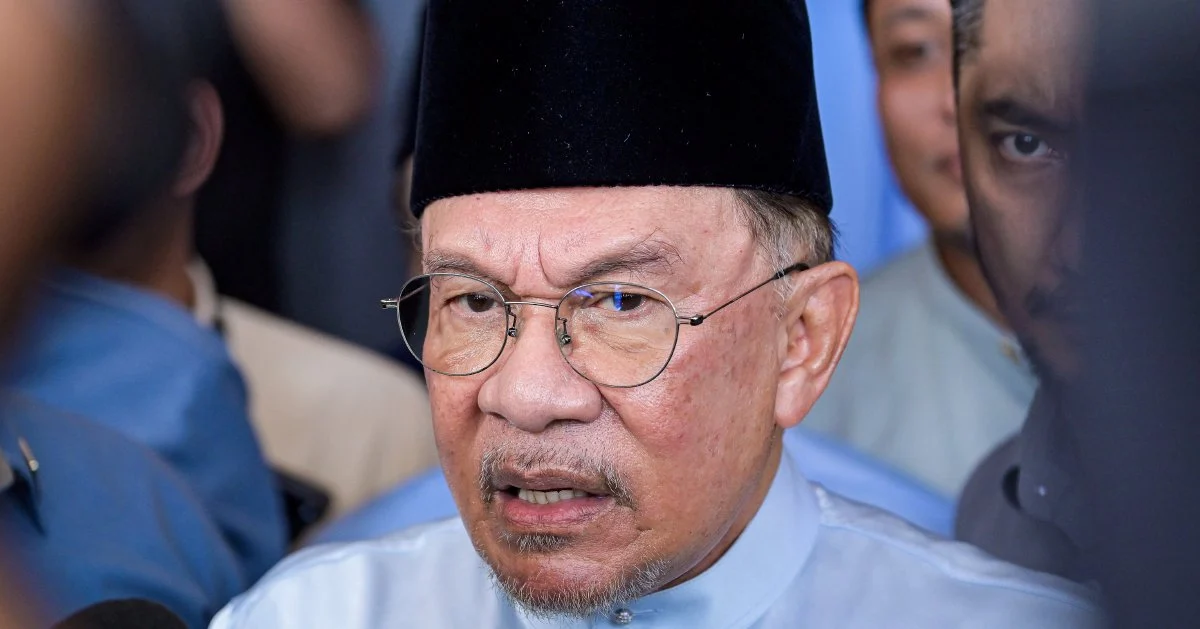
Prime Minister Datuk Seri Anwar Ibrahim has flatly rejected assertions that caretaker Johor Menteri Besar Datuk Onn Hafiz Ghazi received any directive preventing his attendance at a gathering of Federal Land Development Authority settlers. Speaking in Dengkil, the premier characterised the allegations as unfounded, signalling his intention to move past what he views as a distraction from government priorities.
The incident, which has drawn attention amid Johor's ongoing political dynamics, touches on a broader pattern of tensions between federal and state-level administrations that have occasionally surfaced during Malaysia's complex coalition politics. Allegations of this nature typically generate significant interest among political observers monitoring relationships between the federal government under Pakatan Harapan and state authorities, particularly in strategically important states like Johor.
Felda settlements represent economically vital constituencies with deeply rooted political loyalties and represent a critical voting demographic in Malaysian electoral politics. These communities, comprising smallholder rubber and palm oil farmers, have historically proven influential in determining electoral outcomes, particularly in states with substantial agricultural presence. Any perception of federal-state friction affecting these communities could have ripple effects across the political landscape.
The timing of such allegations is noteworthy given that Johor has been navigating significant political transition. The status of caretaker administrations introduces additional layers of complexity to state-level governance, as officials in such positions operate under inherent constraints regarding their authority and the duration of their tenure. This liminal status occasionally creates friction points where different interpretations of protocol and procedure surface.
Anwar's swift dismissal of the claims reflects his administration's apparent strategy of de-escalating perceived slights or conflicts that could undermine the broader coalition framework. The federal government has consistently emphasised the importance of maintaining stability across state administrations to ensure coherent policymaking and implementation of national initiatives. For a premier to engage extensively with allegations of this type risks elevating their profile and potentially entrenching divisions that his administration seeks to minimize.
The Felda context adds particular significance to this exchange. These settlements have long been constituencies where multiple political actors compete for influence and support, making them natural flashpoints for claims and counterclaims about exclusion or preferential treatment. Federal initiatives involving Felda communities often involve coordination across multiple government levels, creating opportunities for procedural disputes or disputes over protocol.
From a governance perspective, allegations of deliberate exclusion from public events raise questions about administrative transparency and the appropriate use of official channels. Whether such exclusions, if they occurred, would violate any formal regulations or represent merely tactical political manoeuvring remains a matter of interpretation depending on the specific circumstances.
The broader implications for Malaysia's political ecosystem centre on how coalition partners and different levels of government manage their relationships during periods of transition or tension. Johor's particular importance to national politics—encompassing significant economic activity, large portions of the electoral map, and strategic geographic positioning—means that state-level stability carries outsized weight.
Anwar's definitive statement suggests that the federal leadership views these allegations as neither credible nor worthy of extended engagement. This posture may reflect confidence that the claims lack substantiation or a strategic calculation that further discussion would only amplify a narrative the government wishes to contain. Either way, the prime minister's intervention signals that his office is monitoring such allegations even while dismissing their validity.
The incident also illuminates ongoing questions about how caretaker administrations exercise their responsibilities and the extent to which federal authorities maintain leverage over their decision-making. These questions have become increasingly relevant in Malaysian politics as elections have produced more transitional periods between administrations.
Moving forward, the exchange is likely to fade from immediate political discourse unless fresh developments emerge that reinvigorate the controversy. For observers tracking federal-state relations and coalition stability, however, the incident serves as a reminder of the multiple pressure points and areas of potential friction that can emerge during Malaysia's multi-level governance system, particularly when different political coalitions control different levels of administration.
The premier's handling of this matter reflects a broader approach emphasising national stability over point-scoring in state-level political skirmishes. Whether such an approach ultimately resolves underlying tensions or merely defers them remains a question that Malaysian political observers will continue monitoring as the administration moves forward.

