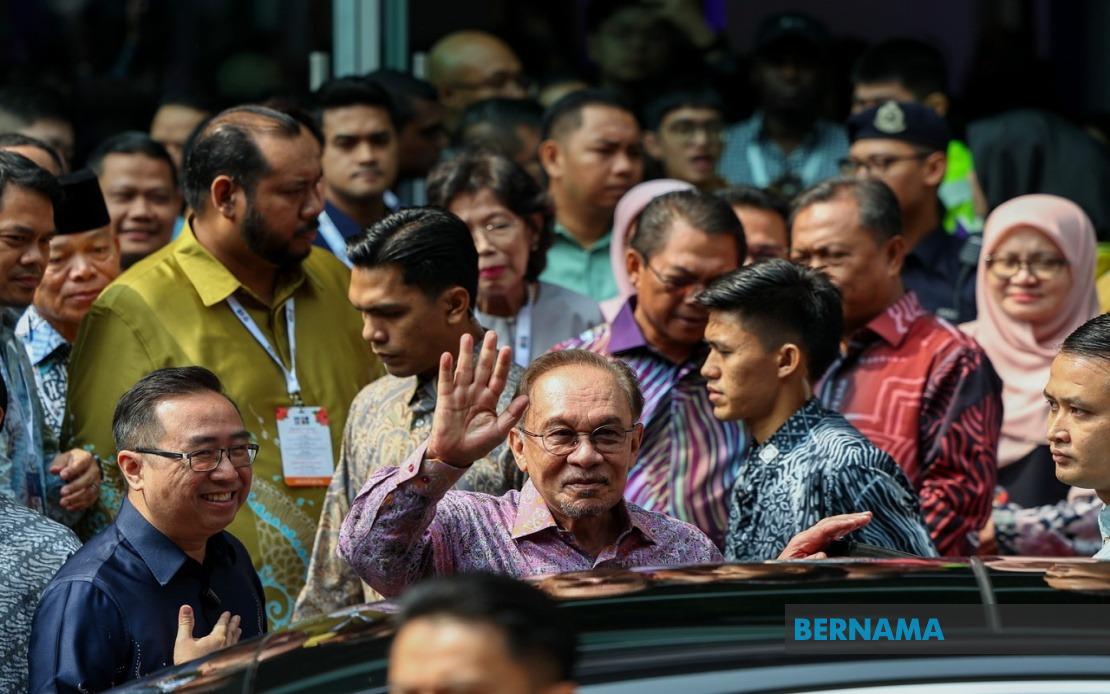
Prime Minister Anwar Ibrahim has distanced himself from reports suggesting the People's Justice Party has invited former deputy president Mohamed Azmin Ali back into its ranks, stating flatly that he received no prior notification of such overtures. Responding to questions during his visit to the National Innovation and Commercialisation Expo at Kuala Lumpur Convention Centre, Anwar offered a terse reply, questioning whether an invitation had actually been extended and emphasizing his own lack of involvement in any such decision.
The clarification comes after Azmin, who now serves as secretary-general of Parti Pribumi Bersatu Malaysia, publicly rejected any possibility of returning to PKR despite the apparent recruitment drive. The statement from the Bersatu official suggests internal party machinery may be working independently of Anwar's direct control, raising questions about the coherence of messaging from PKR's upper echelons during its broader membership consolidation efforts.
Azmin's departure from PKR in 2020 marked a significant rupture within the party, stemming from internal power struggles that eventually contributed to the wider political realignment during that tumultuous period. His subsequent move to Bersatu represented not merely a change of affiliation but a strategic pivot toward the Mahathir-aligned faction of Malaysian politics. His emphatic rejection of any homecoming suggests the breach remains unhealed and that personal or ideological differences continue to outweigh any institutional benefits of reunification.
Yet PKR's apparent outreach to former members appears broader and more systematic than any individual case. The party has reportedly extended invitations to several departing figures, with mixed results. Former Bandar Tun Razak MP Kamarudin Jaffar and former Nibong Tebal MP Mansor Othman have both been identified as potential returnees, signalling a strategy aimed at restoring organisational strength ahead of future electoral cycles.
More significantly, former PKR vice-president Xavier Jayakumar has already confirmed his intention to rejoin the party, demonstrating that the recruitment exercise has secured at least some victories. Jayakumar's return may carry particular symbolic weight given his seniority and previous standing within the organisation, potentially helping to legitimise PKR's efforts to rebuild after years of defections and internal turbulence.
Anwar's apparent unfamiliarity with the invitation details raises intriguing questions about party governance and decision-making processes. Either specific recruitment decisions are being made by lower-tier party officials without systematic briefing to the president, or Anwar is deliberately creating distance from initiatives that carry reputational risk. In Malaysian political culture, such ambiguity often reflects deliberate strategy rather than organisational dysfunction, allowing leadership to maintain plausible deniability while lower-ranking officials pursue necessary but potentially controversial tasks.
The timing of Anwar's disavowal is noteworthy, occurring as PKR navigates the increasingly complex landscape of Malaysian coalition politics. With the coalition government facing various pressures and the opposition regrouping, questions of party strength and member loyalty carry substantial weight. A failed recruitment drive or public rejection by senior figures like Azmin could undermine perceptions of PKR's institutional vitality at a critical moment.
For regional observers, the PKR membership saga reflects broader Southeast Asian patterns of political fluidity and personality-driven factionalism. Unlike Western democracies with relatively stable party structures, Malaysian political parties frequently experience significant membership churn as individual politicians pursue strategic positioning within coalitions. This fluidity creates both opportunities for parties to recover lost members and risks of protracted internal discord when recruitment efforts stall or backfire.
Azmin's resolute stance also underscores how personal relationships and accumulated grievances can transcend formal party mechanisms. His integration into Bersatu appears sufficiently complete that returning to PKR would require overcoming not only his previous conflicts with Anwar but also potential complications with his current party leadership and allies. The personal costs of such a move likely exceed any institutional benefits he might calculate.
The broader membership drive suggests PKR leadership recognises the need to strengthen internal numbers amid ongoing coalition dynamics. Losing members to competing coalitions over recent years has weakened the party's bargaining position, and systematic efforts to recover these figures represent a logical response. However, the apparent lack of clear coordination between recruitment efforts and senior party leadership hints at underlying structural challenges within PKR's organisational framework.
Moving forward, the success or failure of PKR's recruitment efforts will shape perceptions of party strength heading into the next electoral cycle. High-profile rejections like Azmin's may discourage other potential returnees, while secured commitments such as Jayakumar's return offer momentum. Anwar's distance from the initiative may reflect savvy political positioning, allowing the party to pursue necessary consolidation without committing his personal authority to outcomes beyond his control.
Ultimately, the exchange between Anwar and Azmin encapsulates the delicate balance Malaysian party leaders must maintain between organisational necessity and personal relationships. While PKR pursues its membership recovery strategy, the continued resistance of influential figures like Azmin reminds all stakeholders that institutional mechanics alone cannot bridge fundamental political or personal divisions. These dynamics will continue influencing coalition stability in Malaysia's fractious political ecosystem.

