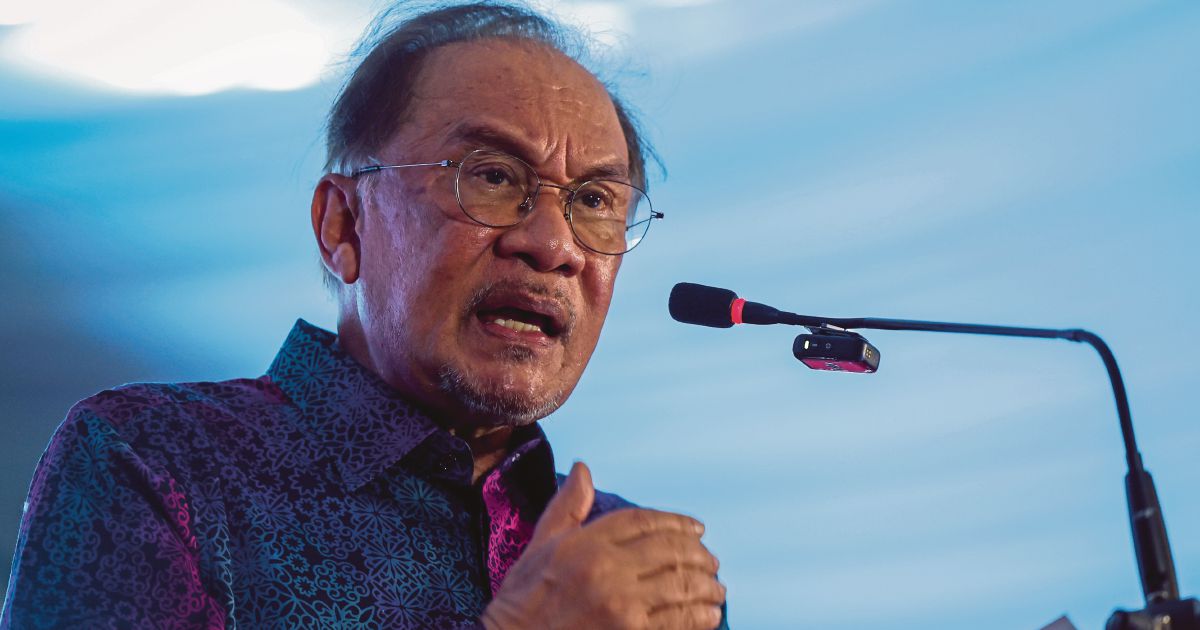
Prime Minister Datuk Seri Anwar Ibrahim has pushed back against Opposition criticism regarding his attendance in Parliament, contending that the substance of public discourse should centre on the Royal Commission of Inquiry findings concerning Tabung Haji rather than his personal schedule. Speaking in Kuala Lumpur, the premier sought to redirect attention towards what he characterised as the fundamental issue—allegations of betrayal affecting the savings of pilgrims and depositors who had entrusted their funds to the institution.
The strategic pivot reflects growing tensions over legislative accountability and the broader governance questions surrounding Malaysia's pilgrimage savings body. Opposition members have seized on the Prime Minister's repeated non-attendance at Parliament, using it as a barometer for his commitment to the legislative process. However, Anwar's counter-argument frames the debate differently: suggesting that parliamentary theatre and finger-pointing over attendance distract from substantive matters affecting ordinary Malaysians' financial security.
Tabung Haji, formally known as Lembaga Tabung Haji, manages savings for Muslim Malaysians planning to perform the Hajj pilgrimage. The institution holds billions of ringgit in deposits from hundreds of thousands of depositors. The RCI was established to investigate serious allegations of financial mismanagement and potential irregularities within the organisation. Its findings have become a flashpoint for policy discussion and accountability measures across the political spectrum.
Anwar's framing suggests that the government views the Tabung Haji investigation as a matter transcending partisan politics. By asserting that the Opposition's focus on his parliamentary attendance serves as a distraction, the Prime Minister implies that opponents are employing procedural complaints to deflect from more pressing institutional failures. This rhetorical strategy attempts to occupy the moral high ground—positioning himself as concerned with depositor welfare while others engage in political posturing.
The timing of these comments underscores escalating pressure on the government to demonstrate concrete action following the RCI report's release. Depositors and their advocacy groups have grown increasingly vocal about their concerns regarding their financial exposure and the transparency of the investigation's conclusions. Public expectations for swift remedial action are mounting, and the government faces scrutiny over implementation timelines and the comprehensiveness of any proposed reforms.
For Malaysian readers, the episode illuminates ongoing friction within Parliament over standards of executive accountability. The attendance question carries symbolic weight—it touches on whether the Prime Minister can fulfill both his legislative obligations and executive duties. Yet Anwar's insistence that substantive governance failures merit priority over procedural absences reflects a calculation that voters care primarily about outcomes affecting their pockets and livelihoods rather than parliamentary headcount.
The Opposition's strategy of highlighting the Prime Minister's absences reveals their search for tangible weaknesses in the government's operational grip. By documenting missed parliamentary sessions, they construct a narrative of neglect and disengagement from legislative responsibilities. Conversely, Anwar's response—that the Tabung Haji matter dwarfs such concerns—suggests confidence that public opinion will favour a leader focused on correcting institutional wrongs over one preoccupied with parliamentary punctuality.
Regionally, Malaysia's approach to the Tabung Haji crisis carries implications for how other Southeast Asian nations with significant Muslim populations manage similar religiously-linked financial institutions. The credibility of such bodies is paramount, given their cultural significance and the trust relationships they require with depositors. How the Malaysian government resolves the RCI findings will likely influence discussions about regulatory frameworks and oversight mechanisms across the broader region.
The broader context involves competing visions of what constitutes responsible governance. The Opposition emphasises procedural regularity and executive presence in the legislature as fundamental to democratic accountability. The government, by Anwar's articulation, prioritises substantive problem-solving and remedying systemic failures. This philosophical divide shapes how political actors interpret and communicate about the Prime Minister's role and responsibilities.
Tabung Haji's institutional credibility hinges on how thoroughly and transparently the government acts on the RCI recommendations. Depositors require assurance that their life savings are secure and that those responsible for any misconduct face consequences. Public trust in the institution cannot be rebuilt through parliamentary debate alone; it demands concrete administrative and possibly legislative reforms that demonstrate the government's commitment to restoring integrity.
Anwar's emphasis on focusing debate on the Tabung Haji report rather than his attendance suggests the government recognises this issue as politically significant enough to warrant centralising the narrative around it. Whether voters ultimately judge the Prime Minister's approach favourably may depend less on abstract questions of parliamentary presence and more on whether corrective measures prove effective in protecting depositors' interests and restoring institutional governance standards.
As Malaysia navigates this institutional challenge, the political battle over where national attention should be directed—procedural oversight or substantive reform—will likely intensify. The government's ability to translate concern into action on Tabung Haji will ultimately determine whether its attempt to shift the conversation away from parliamentary absence succeeds or becomes a liability in future elections.

