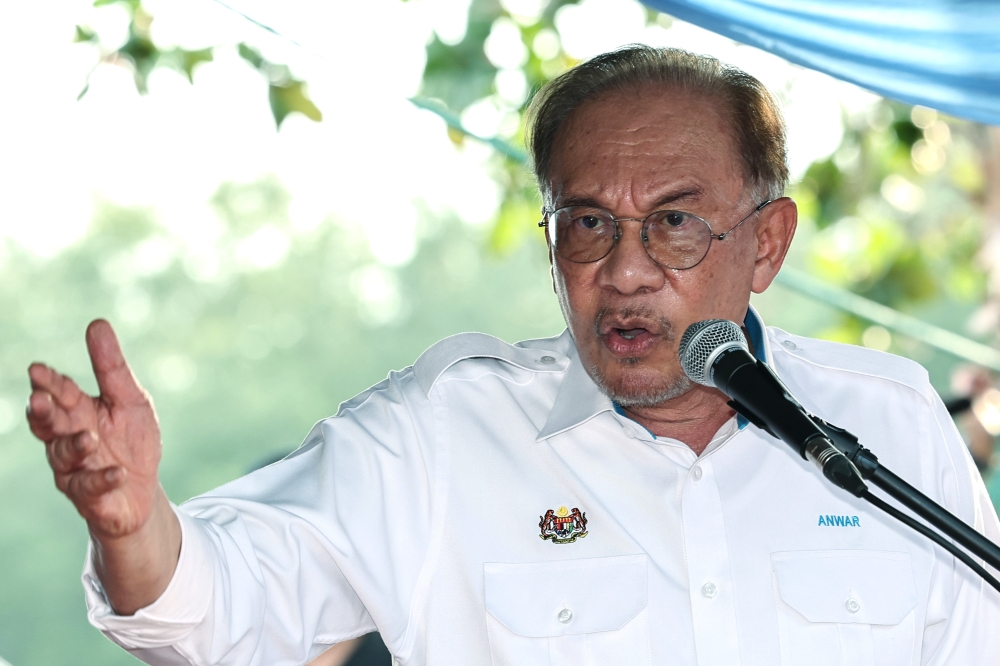
Prime Minister Datuk Seri Anwar Ibrahim has forcefully pushed back against opposition criticism, asserting that his administration has honoured its electoral commitments and delivering tangible benefits to the Malaysian public. In a pointed response to his detractors, Anwar cited the nation's fuel pricing structure as a concrete demonstration of his government's ability to manage the economy effectively despite challenging global conditions.
The prime minister's remarks reflect growing tension between the ruling coalition and the opposition benches, with both sides engaged in an increasingly heated debate over economic performance and policy implementation. Anwar's choice to highlight petrol prices specifically is strategically significant, as fuel costs directly impact the cost of living for ordinary Malaysians and remain a politically sensitive issue that shapes public sentiment towards any administration. By drawing a direct comparison with Saudi Arabia—a major oil-producing nation—Anwar was attempting to frame Malaysia's energy management in favourable terms, suggesting that Malaysian consumers are better positioned than those in a wealthy hydrocarbon-exporting country.
The comparison between Malaysian and Saudi Arabian petrol prices carries broader implications for how the government wishes to present its economic credentials. Malaysia, while a significant oil and gas producer, is not of Saudi Arabia's scale in global energy markets. The domestic fuel pricing structure in Malaysia has long been managed through subsidy mechanisms and regulatory controls designed to shield consumers from the full impact of international crude price fluctuations. This approach differs markedly from Saudi Arabia's domestic pricing model, which reflects a different economic philosophy and relationship between the state and its citizens' purchasing power.
Anwar's invocation of this comparison suggests the government believes it has successfully navigated the difficult balance between maintaining fiscal sustainability and protecting household budgets from energy cost shocks. The administration inherited an economic framework affected by pandemic disruptions, global inflation, and geopolitical tensions that elevated energy prices worldwide. Within this context, the prime minister appears to be arguing that Malaysia's policy choices have produced outcomes that exceed those available to consumers in even wealthier petrostate economies.
The opposition's criticism of unfulfilled promises points to broader concerns about policy delivery and the gap between campaign rhetoric and governing reality. Opposition parties have presumably argued that various pledges made during the electoral campaign remain outstanding or have been inadequately implemented. These could relate to economic growth targets, employment creation, poverty reduction, cost of living relief measures, or specific sectoral reforms. By countering with a concrete example where the government claims superior performance—cheaper fuel than Saudi Arabia—Anwar sought to establish that his coalition has indeed delivered measurable results, even if not uniformly across all policy domains.
The political context surrounding these remarks is important for Malaysian readers assessing government performance. The current administration represents a significant political realignment following the 2022 general election, which produced a hung parliament and required substantial coalition negotiations. The resulting government comprises diverse political parties with varying agendas, making consensus on policy implementation sometimes challenging. Anwar's defensive posture suggests that the government faces sustained pressure from opposition quarters to justify its record and demonstrate that it deserves continued public confidence.
Fuel pricing in Malaysia carries particular political weight because transport and energy costs cascade through the entire economy, affecting everything from grocery prices to delivery charges to manufacturing competitiveness. A government that can credibly claim to have kept petrol costs manageable gains significant political capital, as citizens experience this benefit in their daily lives through lower transportation costs and reduced pressure on household budgets. This explains why Anwar selected this particular metric as his defence against broader accusations of unfulfilled promises.
However, the opposition's critique likely extends beyond any single policy metric. The broader debate involves questions about the overall direction of economic policy, implementation capacity, corruption control, institutional reform, and whether the government is delivering the transformative change it promised. Anwar's response, while focused on one achievement, implicitly acknowledges that opposition parties continue to press the government on multiple fronts regarding policy delivery and performance measurement.
For Southeast Asian observers, Malaysia's ongoing political debate reflects patterns seen across the region regarding the challenges of governing coalitions, electoral accountability, and the difficulty of translating campaign promises into delivered outcomes. The region has seen numerous instances where governments struggle to implement agendas due to coalition constraints, fiscal limitations, or structural economic challenges beyond their direct control. Malaysia's experience offers insights into how governments communicate their achievements and defend their records when facing skeptical opposition voices.
Moving forward, the government will likely need to expand its defence beyond individual policy successes to address the full scope of opposition criticism. However, by highlighting concrete benefits that ordinary Malaysians experience—such as manageable fuel costs—the administration can build a narrative of competent stewardship even amid imperfect overall performance. The political effectiveness of this strategy will ultimately depend on whether voters perceive their lived experience as matching the government's claims of delivering on promises, a calculation that will shape Malaysian politics in the period leading toward the next general election.

