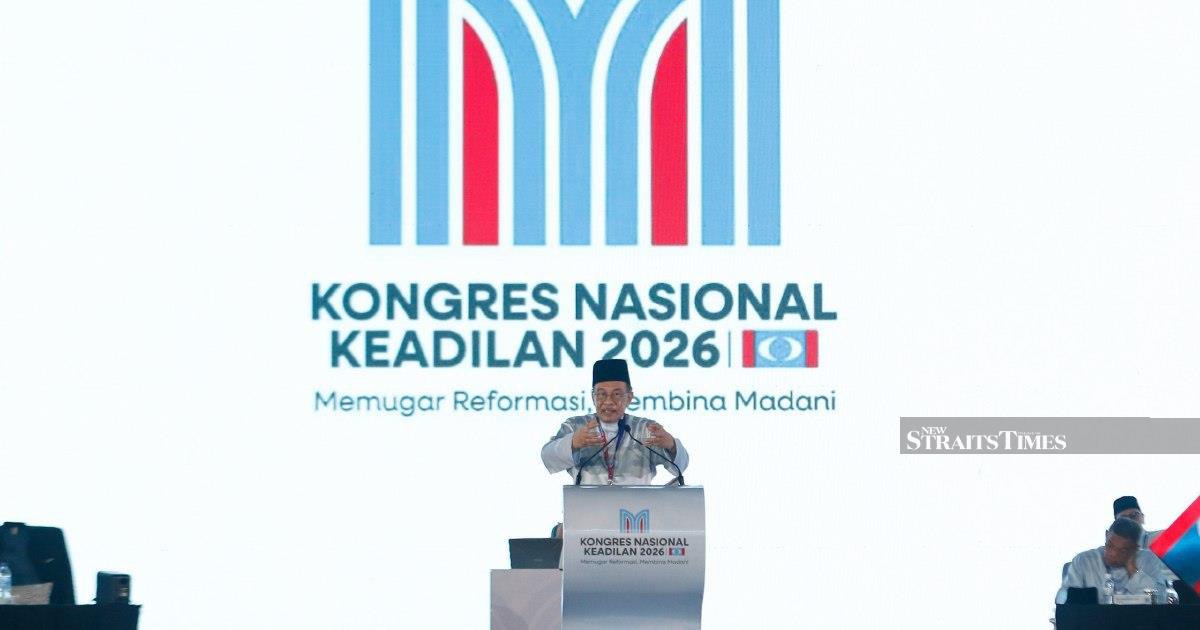
PKR president Datuk Seri Anwar Ibrahim used the party's congress in Ayer Keroh to publicly confirm that embezzlement had taken place within Tabung Haji, referencing the conclusions outlined in the Royal Commission of Inquiry that investigated the institution. The acknowledgement represents a significant moment for the government's handling of a long-standing controversy surrounding one of Malaysia's most important Islamic financial institutions.
Tabung Haji, formally known as Lembaga Tabung Haji, has faced intense scrutiny in recent years over its financial management and the security of funds belonging to millions of Malaysian Muslims saving for the Hajj pilgrimage. The institution manages contributions from over 8 million members, making it a critical financial pillar for ordinary Malaysians planning their religious obligations. The discovery of alleged wrongdoing at such a sensitive institution struck at public trust and raised questions about governance and oversight in the pilgrimage financing sector.
The Royal Commission of Inquiry was established to conduct a thorough investigation into allegations of financial irregularities and misconduct at Tabung Haji. This formal investigative body examined records, interviewed witnesses, and compiled evidence to determine the scope and nature of any impropriety. The RCI's findings became the evidentiary foundation for Anwar's statement, lending institutional weight to the admission of systemic problems rather than isolated incidents.
Anwar's willingness to publicly articulate the embezzlement findings at a major party gathering signals the government's approach to accountability and transparency regarding a deeply sensitive matter. For a sitting prime minister and party leader to explicitly confirm wrongdoing demonstrates a departure from previous administrations' tendency to downplay or obscure institutional failures. This candid acknowledgement carries implications for how the government intends to address the breach of public confidence and restore legitimacy to Tabung Haji's operations moving forward.
The timing of Anwar's statement at the PKR Congress, his party's major annual gathering, suggests the issue remains a priority within the governing coalition's agenda. PKR, as a key component of the current government structure, has maintained strong rhetoric around anti-corruption and institutional reform since the 2022 general election. Confirming the RCI's findings aligns with the party's public positioning on governance standards and the need for accountability at the highest institutional levels.
For Malaysian Muslim savers who have entrusted their pilgrimage funds to Tabung Haji over decades, Anwar's confirmation validates long-held suspicions and concerns about where their money went. Millions of contributors had questioned why the institution faced persistent financial difficulties and why payouts for Hajj pilgrimage were delayed or reduced. The formal governmental acknowledgement of embezzlement at least provides clarity, even as it raises uncomfortable questions about regulatory failures that allowed such misconduct to occur unchecked.
The embezzlement at Tabung Haji also carries broader implications for Malaysia's Islamic finance sector, which is positioned as a global leader in sharia-compliant financial services. International stakeholders and foreign governments invest considerable confidence in Malaysia's ability to manage large-scale Islamic financial operations ethically and professionally. Irregularities at such a prominent institution inevitably cast shadows on the credibility and robustness of governance standards across the Islamic financial ecosystem, potentially affecting investor sentiment and Malaysia's regional standing in halal finance.
Regional observers have been monitoring how Malaysia addresses the Tabung Haji situation, as governance failures in iconic institutions reverberate across the broader developing economy narrative in Southeast Asia. Countries like Indonesia, with its own massive hajj fund management systems, and Brunei and other nations with significant Muslim populations and pilgrim-saving mechanisms, watch how Malaysia handles institutional reform and accountability. The government's response could set regional benchmarks for how Islamic nations manage pilgrim financing during periods of financial stress and alleged corruption.
Moving beyond the acknowledgement, the critical question becomes what remedial actions the government will implement to prevent recurrence, compensate affected contributors, and strengthen oversight mechanisms at Tabung Haji. The RCI investigation presumably outlined not only the extent of embezzlement but also systemic vulnerabilities that enabled it. Whether the government pursues criminal prosecutions, implements structural governance reforms, or commits to full restitution of misappropriated funds remains to be seen. Public statements confirming wrongdoing must be followed by concrete corrective measures that rebuild institutional credibility and member confidence.
Anwar's acknowledgement also reflects the political calculus within Malaysia's coalition government. Addressing institutional failures head-on, particularly one affecting millions of ordinary Muslims across income levels, demonstrates responsiveness to public concerns and positions the government as serious about reform. In the context of subsequent elections and political competition, ownership of tough issues rather than deflection can shift narrative frameworks and public perception of administrative competence and ethical commitment.
The broader significance of the Tabung Haji embezzlement lies in what it reveals about institutional governance in Malaysia during the pre-2022 period when the alleged misconduct occurred. Whether systematic oversight failures, regulatory capture, or individual malfeasance created the conditions for embezzlement, the situation underscores the need for robust independent auditing, whistle-blower protections, and swift investigative mechanisms across Malaysian public institutions. The RCI process itself, while validating concerns, also consumed considerable time and resources that could have been deployed elsewhere had internal controls functioned properly.
Looking ahead, the government faces pressure to demonstrate that Tabung Haji can recover its standing as a trustworthy custodian of Muslim savings for pilgrimage. Transparent communication with the 8 million members about what went wrong, how their interests are being protected going forward, and what compensation mechanisms exist will be crucial. The embezzlement represents a betrayal of ordinary Malaysians' faith in a uniquely important institution, and rebuilding that trust requires sustained commitment to reform and accountability that extends well beyond rhetorical acknowledgement at party congresses.

