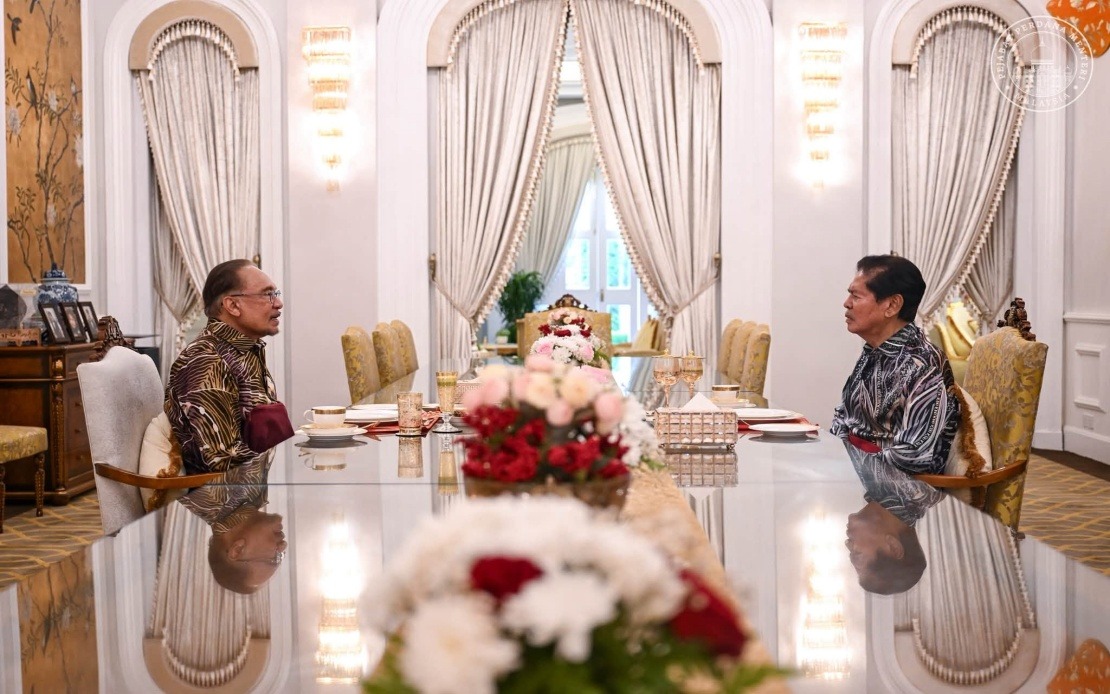
Prime Minister Datuk Seri Anwar Ibrahim brought his two-day working visit to Penang to a close on August 29 with a formal tea reception at Seri Mutiara, the official residence of Governor Tun Ramli Ngah Talib. The engagement served as the final diplomatic engagement of an itinerary that had seen the premier engage with multiple stakeholder groups across the state.
Through a Facebook post documenting the occasion, Anwar highlighted the significance of the meeting in cementing the collaborative relationship between federal and state administrations. His remarks underscored a shared vision for Penang's continued advancement and the improved quality of life for its residents, positioning the encounter as symbolic of the alignment between Kuala Lumpur and George Town on developmental matters.
Governor Ramli, in reciprocating the sentiment, expressed gratitude for the Prime Minister's visit and characterised the session as a valuable opportunity to discuss pressing issues affecting both Penang and Malaysia more broadly. His statement conveyed recognition of the importance of such high-level engagements in maintaining smooth inter-governmental relations and ensuring that state-level concerns receive adequate attention at the federal level.
A particularly notable moment during the reception involved the Governor's grandson, Aldrey Alfi, whose youthful curiosity prompted a series of questions directed at the Prime Minister. According to Ramli's account, Anwar responded with warmth and patience, an interaction that added an informal dimension to an otherwise formal state occasion. This episode, which Ramli documented and shared publicly, illustrates the softer diplomatic aspects of high-level political engagement.
Ramli's public acknowledgment of Anwar's willingness to visit his residence before returning to the capital reflects the courtesies that characterise Malaysia's federal-state political protocols. His expression of appreciation for the continued friendship between the two figures suggests an effort to project unity and constructive working relationships, particularly important in a political environment where such relationships can sometimes be complex or contested.
Anwar's schedule during the Penang sojourn encompassed a diverse range of programmatic commitments that reflected different aspects of government priorities. The Permatang Pauh Entrepreneur Revival Programme speaks to economic regeneration and small-business development, areas of particular concern for local communities seeking employment and income opportunities. This initiative aligns with broader federal initiatives aimed at creating sustainable livelihoods and reducing economic disparities.
The 15th Malaysia Scout Jamboree represented engagement with youth development and national institution-building, reflecting the government's continued investment in youth leadership and character formation through scouting movements. Jamborees of this scale bring together hundreds or thousands of young people and represent significant logistical undertakings that require coordination across multiple government agencies and community partners.
The MADANI Sahabat 2026 National Day Countdown Programme embodied a forward-looking approach to national celebration and community participation. The nomenclature references the government's MADANI (Madani Development Index) framework, suggesting that the countdown programme incorporates development messaging alongside patriotic themes. Such programming allows governments to communicate their policy agenda through celebratory occasions that generate widespread public engagement.
For Malaysian readers, particularly those in Penang, Anwar's visit and the range of programmes undertaken signal continued federal attention to the state's development requirements. Penang, as a major economic hub with historical significance as Malaysia's first state to embrace early industrialisation, occupies a particular position in national calculations. The emphasis on entrepreneurship revival suggests federal recognition of economic challenges facing certain segments of the Penang population, even within a generally prosperous state.
The visit also provides insight into how the current federal administration is attempting to manage centre-state relations. By scheduling substantive engagements alongside diplomatic courtesies, Anwar's approach combines substantive governance work with relationship maintenance. The tea reception at the Governor's residence represents the soft-power dimension of this strategy, creating informal settings where trust and personal rapport can be reinforced.
From a Southeast Asian perspective, Malaysia's federal-state dynamics offer lessons in how geographically dispersed political units maintain cohesion while preserving regional autonomy. Anwar's visible engagement in state activities, culminating in formal courtesy calls on state leadership, reflects an approach to national governance that acknowledges the legitimacy and importance of state governments rather than attempting to overshadow them.
The prominence given to the Governor's personal account of the interaction, including details about his grandson's encounter with the Prime Minister, reflects contemporary political communication strategies that blend official reporting with personal narrative. By humanising high-level political engagement, such accounts aim to build public confidence in the accessibility and approachability of national leadership, characteristics that voters increasingly value in democratic systems.
Moving forward, such visits typically generate follow-up actions at administrative levels, where officials from both federal and state governments work to translate the expressed political will into concrete policy implementation. The warm tone and emphasis on cooperation documented during Anwar's Penang visit suggest that any initiatives discussed are likely to proceed with mutual support and coordinated effort, benefiting implementation timelines and policy effectiveness.

