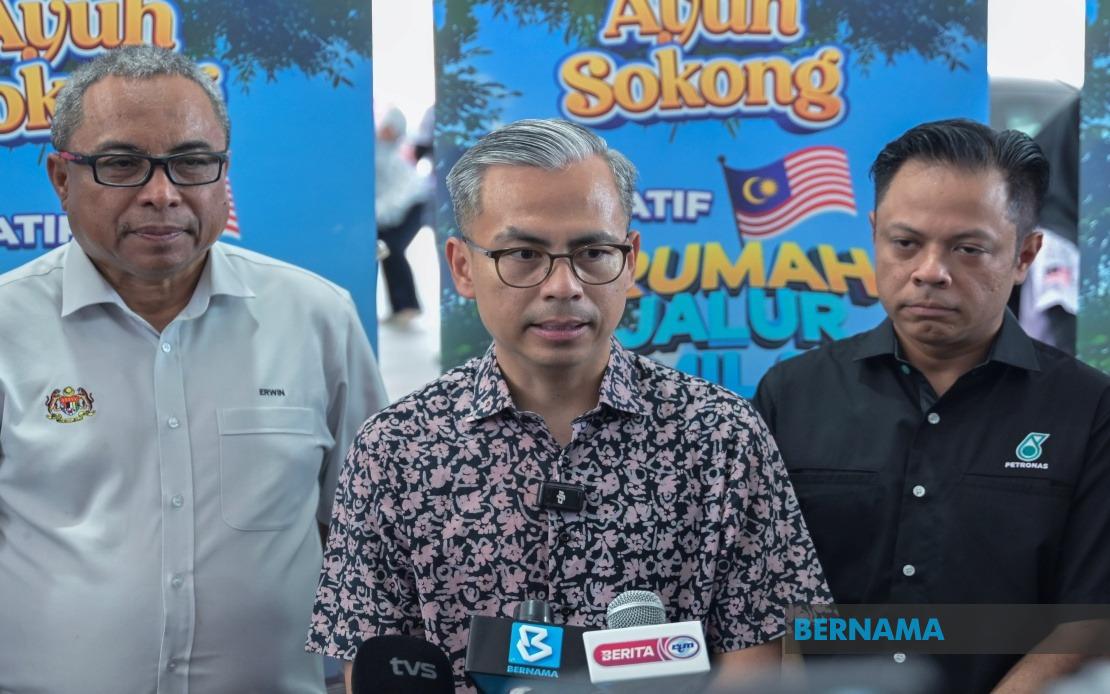
Prime Minister Datuk Seri Anwar Ibrahim has reaffirmed the government's commitment to expanding the Sarawak State Legislative Assembly and instructed the Election Commission to furnish an updated progress report on the redelineation initiative. The assurance came during a recent Cabinet session, where the matter was formally tabled before the federal leadership. Communications Minister Datuk Seri Fahmi Fadzil, who doubles as the MADANI Government's official spokesperson, revealed the development to journalists following the JAPEN@PETRONAS Jalur Gemilang Expression Programme in Kuala Lumpur, underscoring the administration's prioritization of the long-delayed electoral restructuring for Malaysia's largest state by area.
Fahmi's disclosure indicates that while the Prime Minister has committed unequivocally to implementation, the specific timeline remains subject to completion of technical groundwork by the Election Commission. The spokesman explained that the Cabinet has not yet received confirmation of a concrete implementation date, as several procedural requirements mandated by the EC must first be satisfied. This measured approach suggests the government is keen to ensure the redelineation exercise meets all constitutional and administrative standards, particularly given the significance of altering the composition of Sarawak's legislative body. The cautious pacing reflects awareness among senior officials that rushing such changes without proper regulatory compliance could invite legal or procedural challenges from opposition quarters.
The proposed expansion targets an increase of 17 additional seats to the Sarawak State Legislative Assembly, raising the total complement from 82 to 99 seats. This reform was formally introduced through the Sarawak State Legislative Assembly (Composition of Membership) Bill 2025, which represents one of the most substantial electoral boundary adjustments for the state in recent memory. The expansion is intended to better reflect Sarawak's growing population and evolving demographic distribution across its vast geographical expanse, addressing longstanding grievances from constituencies that have experienced rapid urban and settlement development without corresponding increases in representation. For Malaysian observers, the redelineation carries implications beyond Sarawak itself, as it signals the federal government's willingness to engage substantively with state-level concerns through institutional channels.
Two Cabinet ministers—Women, Family and Community Development Minister Datuk Seri Nancy Shukri and Works Minister Datuk Seri Alexander Nanta Linggi—had championed the Sarawak redelineation issue during the Cabinet discussion, demonstrating cross-portfolio support for the initiative. Their advocacy suggests backing extends beyond a single ministry, reflecting broader consensus within the MADANI administration that the electoral redrawing merits priority attention. This ministerial coalition is significant because it indicates the issue enjoys sufficient political weight to persist on the Cabinet agenda despite competing demands on government time and resources. The involvement of Shukri, whose portfolio touches community and social welfare dimensions, and Linggi, whose works brief encompasses infrastructure and constituency development, suggests the government views redelineation as linked to broader service delivery and representation equity considerations.
Parallel to the Sarawak initiative, Fahmi disclosed that the government is undertaking substantial logistical preparations for the forthcoming Melaka state election. The administration is conducting detailed site assessments to identify suitable media briefing locations and ensuring that digital infrastructure requirements are adequately provisioned across all polling venues. The emphasis on media facilities and internet connectivity reflects lessons absorbed from recent state electoral exercises in Johor and Negeri Sembilan, where communications infrastructure limitations presented operational challenges for election officials and media personnel.
The Malaysian Communications and Multimedia Commission has been tasked with coordinating directly with the Election Commission to audit and resolve internet accessibility specifications at each Melaka polling centre. This interagency collaboration represents a deliberate effort to standardize and streamline electoral logistics, building upon institutional knowledge accumulated during recent state polls. For Malaysian voters and election observers, the attention to communications infrastructure signals an effort to enhance transparency and real-time information flow during the polling process. Reliable connectivity at polling stations facilitates immediate reporting, reduces misinformation, and enables rapid dissemination of official electoral updates.
The Sarawak redelineation issue carries particular significance within Malaysia's broader political landscape, as Sarawak holds considerable sway in federal parliament through its delegation of elected representatives. Expanding state assembly seats could eventually influence the composition of the state government and, by extension, affect the power dynamics within the federal coalition. The state has historically maintained considerable autonomy in managing its internal electoral affairs, and any restructuring carries symbolic weight in terms of federal-state relations. For Sarawakians, the seat expansion represents potential for increased legislative scrutiny of state administration and greater opportunities for localized representation across the sprawling state.
The Election Commission's role in determining implementation feasibility cannot be overstated. As the constitutional body responsible for delimiting electoral boundaries and managing the technical aspects of elections, the EC's assessment must account for logistical challenges inherent in redrawing boundaries across Sarawak's extensive terrain. The state encompasses vast rural areas with dispersed populations, river-based settlements, and limited transportation infrastructure, making boundary delineation and voter registration verification substantially more complex than in peninsular states. The EC's mandate to deliver an updated report suggests the Commission is actively assessing technical and administrative pathways forward, though the precise timeline for such findings remains unannounced.
From a Southeast Asian perspective, Malaysia's deliberate and consultative approach to electoral boundary adjustment contrasts with more rapid or contentious redelineation exercises elsewhere in the region. The involvement of multiple government agencies, the emphasis on inter-ministerial coordination, and the formal request for Commission input demonstrate institutional mechanisms designed to insulate electoral management from partisan manipulation. For regional observers monitoring democratic practices across Southeast Asia, Malaysia's handling of the Sarawak redelineation may offer insights into how federal democracies with federal systems balance central authority with state autonomy on electoral matters.
Looking ahead, the government's dual focus on delivering the Sarawak initiative while simultaneously ensuring robust electoral logistics for the Melaka state poll suggests the administration intends to project competence and responsiveness in managing electoral processes. Successfully implementing both initiatives—the structural expansion in Sarawak and the enhanced communications infrastructure in Melaka—would strengthen the government's credibility on matters of democratic governance and institutional reform. For the MADANI coalition, demonstrating capacity to execute complex electoral projects while maintaining institutional standards carries electoral and reputational benefits extending beyond the immediate constituencies affected.

