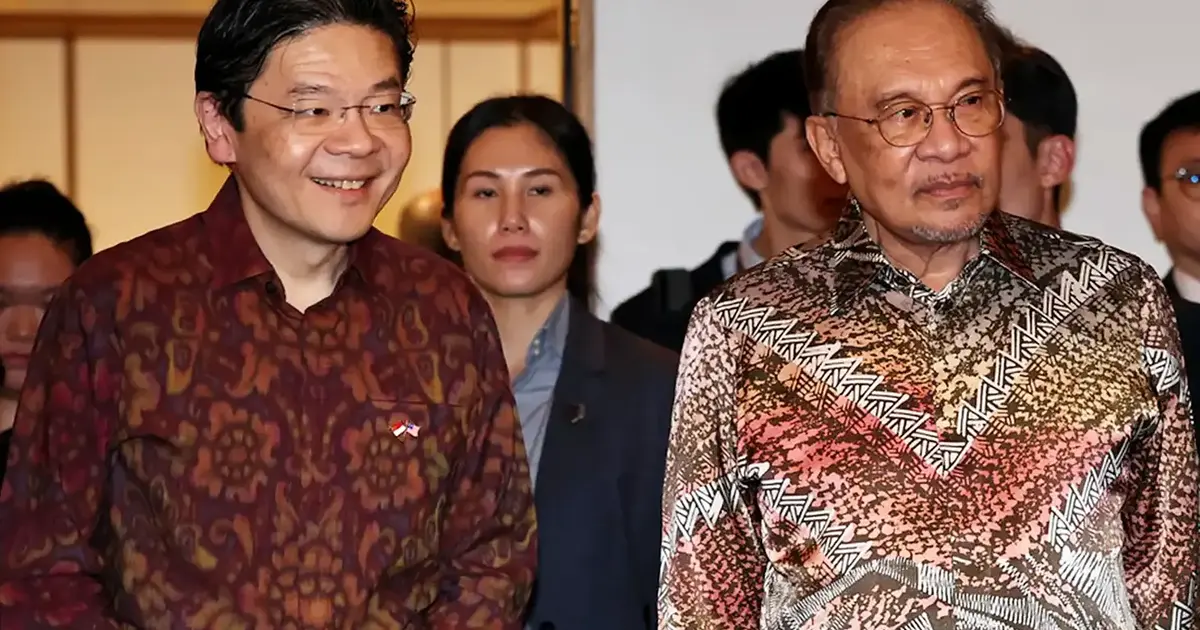
Prime Minister Anwar Ibrahim has set the record straight on cross-border coordination regarding the upcoming Johor state elections, stating emphatically that his office has initiated no contact with Singapore's government to address voting arrangements for Malaysians residing there. The clarification emerged when Anwar fielded questions about whether he intended to reach out to his Singaporean counterpart to permit citizens based in the city-state to temporarily return and exercise their electoral rights in Johor.
The question itself reflects broader practical realities facing Malaysian voters who work and live across the border in Singapore, a common arrangement given the geographic proximity and economic integration between the two nations. Many Malaysians maintain homes in southern Johor while holding employment in Singapore's financial and service sectors, creating genuine scheduling conflicts during election periods. Yet Anwar's response indicates the government has taken no diplomatic steps to smooth such arrangements, suggesting the matter remains primarily an individual responsibility rather than a formal bilateral concern.
This position carries implications for voter participation rates in what is typically considered one of Malaysia's most competitive and politically significant states. Johor's electoral outcomes have historically influenced national political trajectories, and the state's voter turnout has become an increasingly watched metric. Any reduction in participation from Malaysians unable to leave Singapore during polling day could theoretically affect the representativeness of the final result, though the actual numerical impact would depend on the cross-border population's proportion of the total electorate.
The absence of formal government-to-government coordination on this issue stands in contrast to other neighbouring countries that have occasionally negotiated temporary allowances or voting facilitation measures during critical elections. However, the Singapore-Malaysia relationship involves distinctive sensitivities around sovereignty and movement of citizens, making such arrangements potentially diplomatically complex. Singapore maintains strict immigration controls, and any formal arrangement would require both governments to establish protocols that satisfied their respective administrative and security requirements.
Anwar's response also underscores the distinction between what government might facilitate and what citizens must manage individually. Malaysians in Singapore seeking to vote in Johor elections possess the right to do so but bear the burden of arranging leave from employers and managing travel logistics themselves. This reflects a broader approach where electoral authorities establish polling dates and locations, but the responsibility for reaching those locations lies with individual voters. The prime minister's statement suggests this framework will continue unchanged for the Johor elections.
The timing of Anwar's clarification is significant given that Johor remains a crucial political battleground. The state has witnessed substantial population movement between Malaysia and Singapore, with many Johor residents maintaining family ties and property interests in both jurisdictions. Any electoral participation gaps stemming from cross-border logistics could have strategic implications for contending political coalitions, particularly if the election outcome emerges close or contested.
For Malaysians regularly commuting between Johor and Singapore, the announcement provides clear guidance: they should anticipate making their own arrangements, potentially through advance vacation planning or unpaid leave, if they wish to participate in the state elections. This places practical constraints on voters whose employment situations offer limited flexibility, potentially creating a structural advantage for those with more discretionary control over their schedules. The government's position essentially accepts this outcome as an inherent aspect of electoral administration.
The broader context includes Malaysia's ongoing efforts to strengthen voter registration and turnout across all demographic segments and geographic areas. Election Commission initiatives have sought to increase registration among diaspora populations and mobile workers, yet formal institutional arrangements to ease voting for those temporarily abroad remain limited. Anwar's statement indicates that approach extends to Singaporean-based Malaysians, where solving logistical challenges remains primarily an individual matter rather than a government-facilitated process.
This situation also reflects how electoral systems designed for geographic populations face genuine friction when substantial segments regularly traverse borders for employment. Singapore and other nearby jurisdictions absorb significant Malaysian worker populations, creating periodic misalignments between legal residency status and work location. While technology and modernised electoral procedures have addressed many traditional barriers to voting, geographic constraint and employer accommodation remain fundamentally challenging without formal coordination.
Looking forward, Anwar's clarification establishes that no special diplomatic arrangements should be anticipated, and Malaysians in Singapore planning to vote in Johor elections must navigate this through personal planning. The prime minister's statement closes one potential policy avenue while leaving the matter as a practical challenge for individual voters, reflecting a conventional approach to electoral participation that prioritises administrative simplicity over accommodation of cross-border movement complications.

