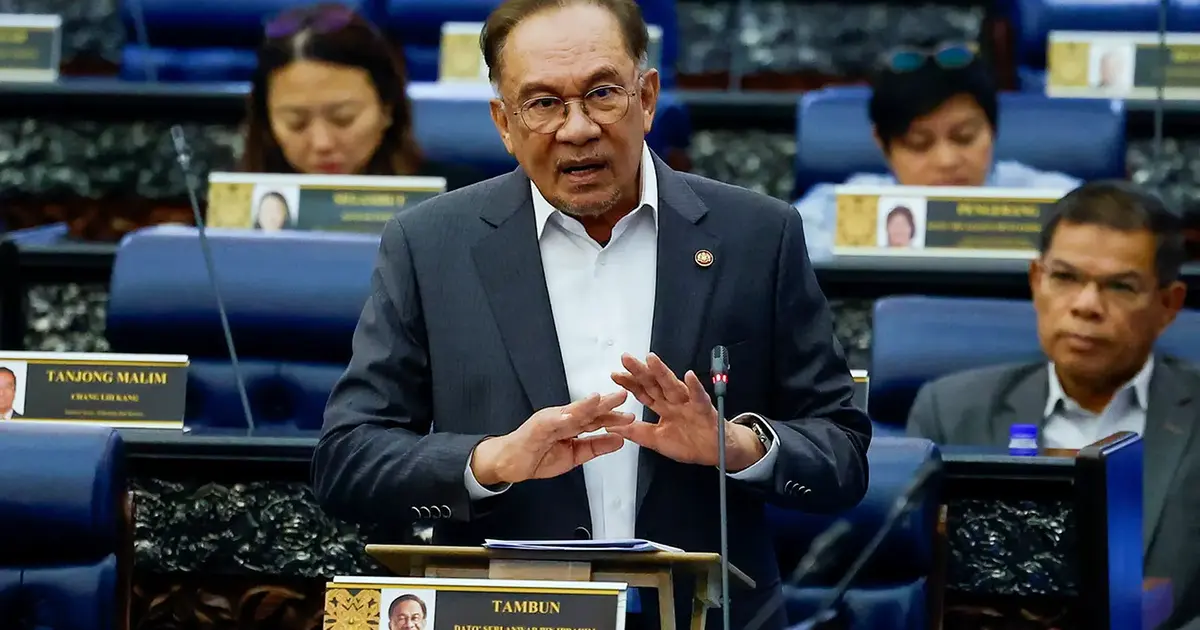
Prime Minister Anwar Ibrahim has asserted that the previous Warisan Sabah administration reached an agreement on enhanced special grant arrangements for the state, with fund distributions climbing substantially over a four-year period. According to Anwar, the financial commitments—which commenced at RM53.4 million for the 2020 and 2021 fiscal years—were formally endorsed by the then-ruling state government and subsequently expanded to RM106.8 million by 2024.
The assertion carries significant weight in the context of Malaysia's federal-state fiscal relationships, particularly regarding how the federal government allocates additional resources to constituent states beyond their standard revenue allocations. Special grants represent discretionary federal funding mechanisms that can address specific development needs or political arrangements between Putrajaya and state administrations. For Sabah, an oil-producing state with substantial infrastructure and development demands, these supplementary allocations form a crucial component of its total federal support.
The doubling of the grant amount over four years reflects an approximately 100 percent increase in federal funding commitments to Sabah through this particular channel. This trajectory indicates either a gradual expansion programme that was previously negotiated or a response to evolving financial needs articulated by the state government at the time. The significance of these figures extends beyond mere budgetary mechanics; they underscore the fiscal interdependencies between federal and state governments in Malaysia's federal structure.
Anwar's emphasis on prior governmental approval suggests an attempt to frame these allocations as continuations of agreements rather than novel initiatives introduced under the current federal administration. By attributing the arrangement to his predecessors, the Prime Minister positions the grants within a narrative of political stability and consistent policy frameworks, even as government control at the federal level has transitioned. This approach may address questions about the rationale behind increased spending or forestall criticism that such measures constitute new financial commitments undertaken without prior consultation.
The Warisan Party, which governed Sabah from 2018 until 2020, represented a significant political realignment in the state. Its tenure followed the collapse of the Barisan Nasional's long-standing control of Sabah and introduced a period of political experimentation with different coalition partners at the federal level. The agreements reached during that period would have reflected the specific political circumstances and negotiating positions of both Warisan leadership and the federal government of that era.
For Malaysian and Southeast Asian observers, the episode illustrates how special grants function as tools within federal governance and political management. Larger federal contributions can serve as incentives for political alignment or recognition of state-level challenges. The scale of these allocations—doubling from approximately RM53 million to over RM106 million—suggests material commitments that could fund significant infrastructure, development, or service delivery initiatives across Sabah's extensive geography.
The transparency surrounding these figures, with Anwar publicly referencing specific amounts and timeframes, reflects evolving expectations regarding accountability in federal-state financial arrangements. Malaysian voters and political observers increasingly demand clarity about how federal funds are distributed and allocated, particularly when sums reach hundreds of millions of ringgit. Public disclosure of grant arrangements, even when attributed to previous administrations, contributes to informed public discourse about fiscal federalism and resource distribution.
Sabah's particular circumstances warrant consideration within this framework. As a large, geographically dispersed state with competing development priorities across urban centres and rural areas, substantial federal funding represents an essential component of state capacity. The special grants, when deployed effectively, can address infrastructure deficits, support service delivery, or catalyse economic development initiatives that might otherwise proceed more slowly.
The reference to Warisan's prior approval also serves a diplomatic function within Malaysian politics. By crediting previous state leadership with endorsing these arrangements, Anwar potentially depoliticises the grant increases, positioning them as bipartisan or non-partisan matters of administrative continuity rather than partisan advantage. This framing may prove strategically valuable in a state where political coalitions remain fluid and competitive.
Moving forward, the trajectory of these special grants will warrant monitoring. Whether the RM106.8 million allocated for 2024 represents a ceiling or a baseline for subsequent years will influence both Sabah's fiscal planning and the broader federal government's budgetary commitments. Additionally, the effectiveness with which Sabah deploys these additional resources will determine whether the political and financial investments generate tangible development outcomes visible to state residents.
The announcement also occurs within the context of broader federal spending discussions occurring across Malaysia. As the government manages national finances amid competing demands and economic considerations, the visibility of substantial allocations to individual states may prompt scrutiny or expectations from other state governments seeking comparable treatment. Sabah's enhanced grant arrangements therefore carry implications extending beyond the state itself to federal-state dynamics nationwide.

