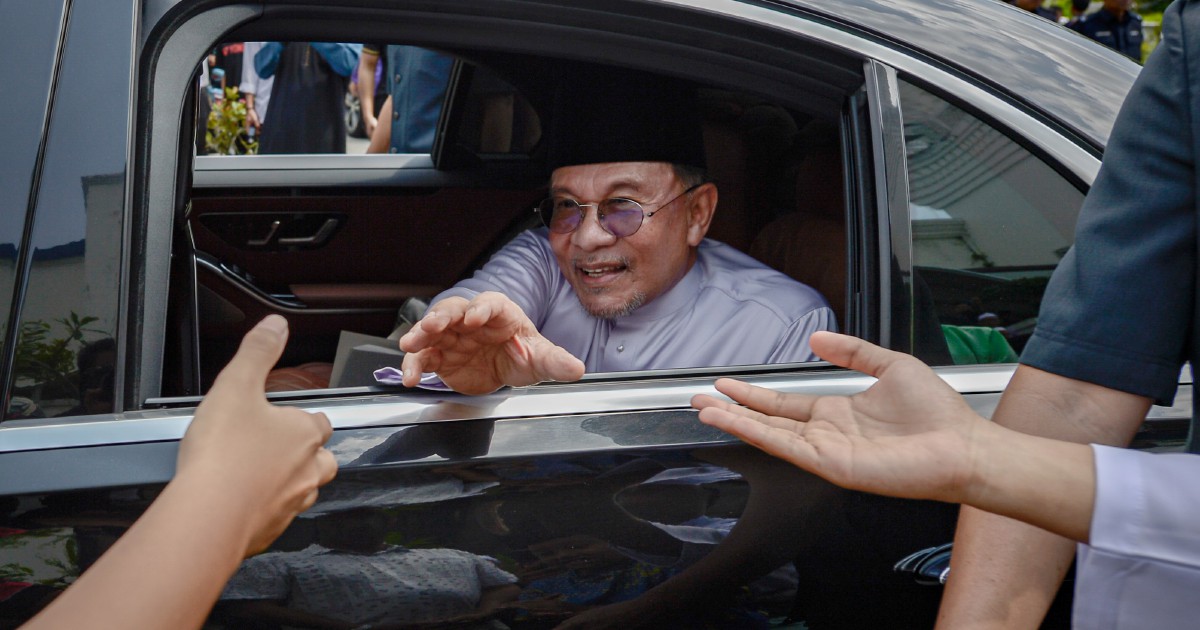
Prime Minister Datuk Seri Anwar Ibrahim is taking centre stage on the campaign trail in Negri Sembilan as Pakatan Harapan seeks to capitalise on momentum heading into the state election. His ground engagement represents a critical push to shore up the coalition's electoral prospects in a state where the political landscape has shown signs of volatility in recent electoral cycles.
The participation of Malaysia's chief executive underscores the strategic importance Pakatan Harapan attaches to Negri Sembilan in its broader electoral calculus. State elections frequently serve as bellwethers for federal political sentiment, and a strong performance in Negri Sembilan would provide considerable validation for the governing coalition's policy direction and management of national affairs. Conversely, setbacks in state contests can presage challenges at the federal level, making Anwar's direct involvement a signal of internal party strategy prioritisation.
Negri Sembilan has traditionally been a competitive political territory where multiple coalitions vie for dominance. The state's voting patterns reflect a sophisticated electorate responsive to both national narratives and local governance concerns. Anwar's campaign activities are likely to focus on articulating Pakatan Harapan's legislative achievements at the federal level whilst simultaneously addressing constituency-specific issues that resonate with Negri Sembilan voters. Such dual messaging is essential for connecting national governance records with local expectations.
The campaign trail visit represents a hands-on approach to electoral mobilisation, whereby the Prime Minister directly engages with voters, party cadres, and local leaders. These interactions allow Anwar to gauge grassroots sentiment, identify areas requiring targeted policy communication, and reinvigorate party workers whose sustained effort determines electoral success. Direct prime ministerial involvement also generates media coverage and social amplification, extending campaign reach beyond those physically present at events.
Packatan Harapan's push in Negri Sembilan must contend with a competitive political environment where opposition parties retain considerable organisational capacity. The coalition's messaging strategy likely emphasises governance stability, economic management, and social policy achievements to differentiate itself from rival groupings. In a context where voter engagement fluctuates between state and federal elections, Anwar's presence serves to elevate campaign visibility and underscore the coalition's commitment to the state's development priorities.
The timing of this campaign intervention reflects the compressed electoral schedule typical of state elections, where concentrated activity periods prove decisive. By deploying senior leadership at strategic moments, Pakatan Harapan aims to maximise impact during high-attention phases of campaigning. Anwar's engagement also permits coordination between federal party machinery and state-level structures, ensuring cohesive messaging across hierarchical levels of party organisation.
Negri Sembilan voters, like constituents throughout Malaysia, demonstrate nuanced political preferences shaped by economic considerations, social policies, and assessments of governance competence. Prime ministerial campaigns typically address these multifaceted voter concerns whilst framing them within broader national narratives about Malaysia's developmental trajectory. Anwar's personal credibility and political standing thus become assets in Pakatan Harapan's broader persuasion effort.
The state election represents an opportunity for Pakatan Harapan to demonstrate that its federal governance translates into tangible benefits for state-level constituencies. Campaign communications during Anwar's Negri Sembilan visit likely highlight infrastructure development, education initiatives, healthcare improvements, or business-friendly policies implemented at the national level that benefit state residents. These connections between federal action and local benefit constitute powerful electoral messaging when articulated by the Prime Minister himself.
Electoral performance in Negri Sembilan carries implications extending beyond the state's borders. Strong showings by Pakatan Harapan in state contests strengthen the coalition's political legitimacy and provide momentum for future electoral contests. Conversely, disappointing results create vulnerabilities that opposition parties exploit in their own campaigns. The stakes surrounding Anwar's Negri Sembilan campaign visit thus transcend the state itself, forming part of Malaysia's broader political competition narrative.
Party worker mobilisation constitutes another critical dimension of Anwar's campaign involvement. Direct engagement by national leadership motivates volunteers, reinforces party discipline, and ensures that grassroots campaigning activities follow strategic direction established at higher organisational levels. Prime ministerial appearances at campaign events communicate the central importance Pakatan Harapan attaches to the electoral outcome, spurring intensified effort from party structures throughout the state.
The campaign trail activities also provide opportunities for Anwar to gather intelligence regarding voter sentiment on specific policy areas, constituency concerns, and organisational performance by state-level party structures. This feedback informs subsequent strategic adjustments to campaign messaging and resource allocation, demonstrating how electoral activities serve both immediate persuasion objectives and longer-term strategic planning functions within political parties.
As Pakatan Harapan seeks to sustain electoral momentum in Negri Sembilan, Anwar's visible commitment to the campaign reinforces the coalition's assertion that it remains focused on delivering governance outcomes for Malaysian voters. The Prime Minister's ground engagement during the state election period exemplifies how political leadership directly contributes to electoral competition, with outcomes ultimately determined by voters assessing which coalition best represents their interests and values.

