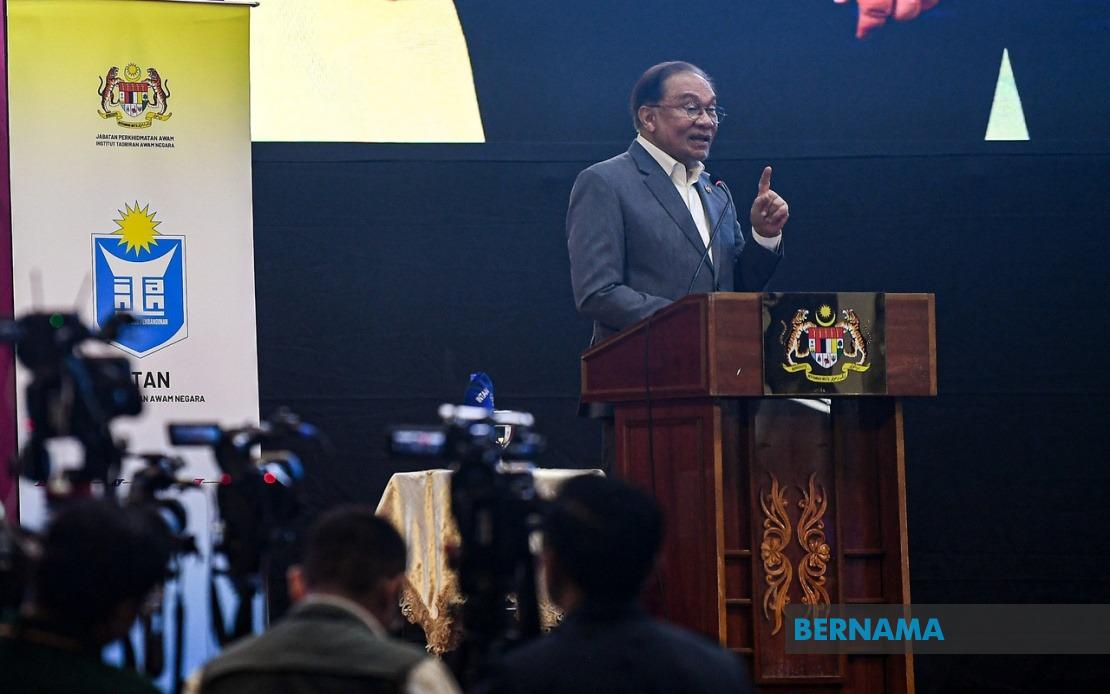
Prime Minister Datuk Seri Anwar Ibrahim has issued a sharp call for Malaysians to abandon the colonial mentality that continues to regard Western institutions, governance models, languages and cultural practices as the gold standard by which to measure national progress. Speaking at Universiti Islam Selangor during a gathering with civil servants from the Central Zone, Anwar framed this intellectual decolonisation as essential to giving true substance to the independence Malaysia achieved seven decades ago. The Prime Minister's remarks, delivered alongside Chief Secretary to the Government Tan Sri Shamsul Azri Abu Bakar and Director-General of the Public Service Tan Sri Wan Ahmad Dahlan Abdul Aziz, suggest a broader strategic push within government circles to reorient national thinking around indigenous values and capabilities.
Anwar articulated a specific frustration with what he characterised as an internationalised elite mindset that persists among Malaysians born after the nation's independence. He observed that despite Malaysia's successful transition to self-governance, certain segments of society continue to privilege Western models across education, economics, politics and culture. This phenomenon extends beyond mere preference for foreign expertise; Anwar identified it as a deeper psychological orientation in which the West functions as the default benchmark against which Malaysian approaches are measured and frequently found wanting. The Prime Minister's phrasing—that some possess "half-English" thinking despite their Malaysian citizenship—captures his view of this as an incomplete intellectual decolonisation.
The Prime Minister specifically highlighted education as a domain where this mindset manifests visibly. He pointed to the continuing perception that educational legitimacy depends upon English-medium instruction, Western curricula and qualifications from British, American or Australian institutions. This observation resonates with ongoing policy debates in Malaysia around the role of Bahasa Malaysia in higher education and professional training. While English undoubtedly functions as a global lingua franca and linguistic pragmatism has real economic benefits, Anwar's intervention suggests government concern that uncritical acceptance of English-dominated education may undermine efforts to build a distinctive Malaysian intellectual and professional identity.
Beyond education, Anwar extended his critique to encompass economic systems, political governance and cultural orientation more broadly. His argument implies that Malaysian policymakers have sometimes adopted Western institutional templates without sufficient consideration of whether these models suit local contexts, historical experiences or social structures. This reflects broader debates within developing nations about the universality versus contextuality of governance and economic models. The Prime Minister's position—that Malaysia should develop systems reflecting its own strengths and values—aligns with growing intellectual currents in the Global South questioning whether Western institutional models represent timeless best practices or simply historically contingent arrangements that may not transfer effectively across different societies.
The significance of Anwar's remarks lies partly in their timing and audience. By delivering these comments to civil servants—those who design and implement government policy—the Prime Minister was signalling that the state apparatus itself should operate according to distinctively Malaysian principles rather than imported bureaucratic models. This has practical implications for how government agencies function, how they relate to citizens, and what organisational cultures they cultivate. The inclusion of senior figures like the Chief Secretary suggests this reflects deliberate government strategy rather than ad hoc commentary.
For Malaysian readers, Anwar's intervention raises important questions about national identity in an increasingly globalised world. The challenge is distinguishing between healthy pride in Malaysian distinctiveness and parochialism that might damage competitiveness or limit access to global knowledge. Few would argue that Malaysia should isolate itself from international best practices in technology, science, medicine or management. Yet Anwar's broader point about critical rather than blind adoption of foreign models deserves serious consideration. Singapore's success, for instance, has often involved selective adoption of global practices combined with distinctively local institutional innovations.
The colonial history that shapes this debate remains psychologically significant for many Malaysians. Having emerged from British colonial rule only in 1957, Malaysia's generation of post-independence leaders invested considerable energy in building national institutions and cultural narratives distinct from colonial arrangements. Yet as Anwar notes, this intellectual project remains incomplete in certain quarters, with Western reference points continuing to exert disproportionate influence over how Malaysians evaluate their own institutions and aspirations. Breaking this pattern requires not hostility toward the West but rather confident engagement from a position of genuine equality.
Anwar's framing also reflects broader regional and global conversations about sovereignty and intellectual self-determination. Rising powers throughout Asia have increasingly questioned whether Western models of development, democracy and governance represent the only viable path. This shift has geopolitical implications, particularly given Malaysia's position as a multiethnic, multireligious nation navigating complex relationships with Western powers, China, and its own regional neighbours. How Malaysian elites conceptualise development models and governance frameworks inevitably influences foreign policy orientation and strategic positioning.
The practical challenge for Malaysia involves nurturing genuine confidence in indigenous knowledge systems and institutional innovations while remaining pragmatically open to learning from global experiences. This requires building Malaysian institutions—whether in higher education, economic governance, or public administration—that reflect local values yet achieve world-class performance. It means developing intellectuals and professionals deeply rooted in Malaysian context who can nonetheless engage internationally as equals. Anwar's intervention suggests government recognition that this intellectual work remains unfinished and requires conscious, sustained effort from political leadership and the state machinery alike.

