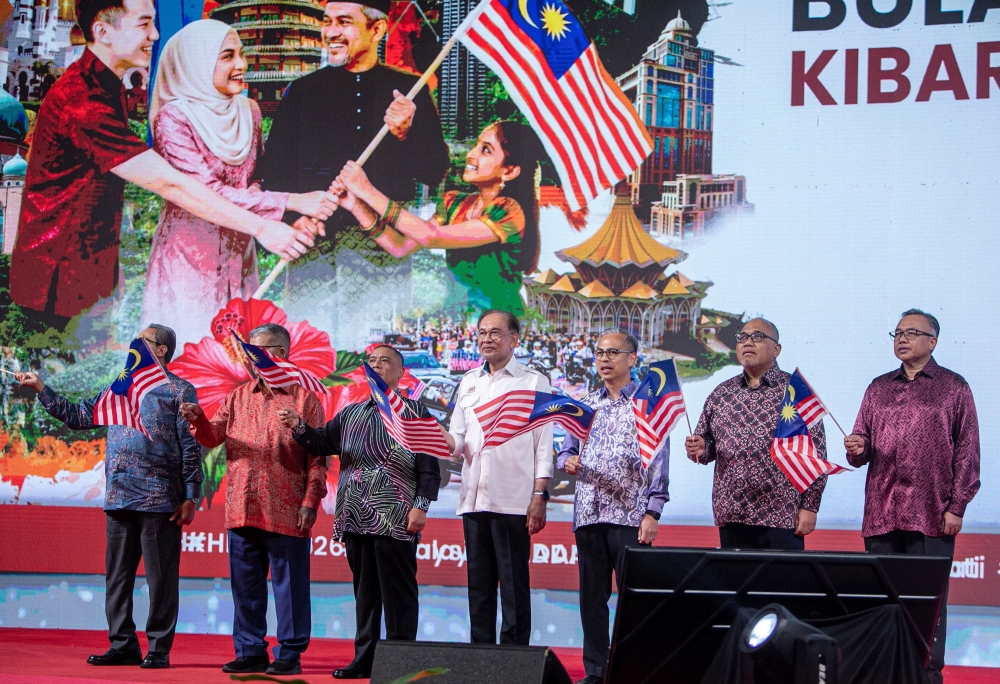
Prime Minister Datuk Seri Anwar Ibrahim has delivered a pointed message to Malaysia's younger generation, stressing the urgent need to understand and respect the historical struggles that secured the nation's independence. Speaking in Ipoh on July 19, Anwar highlighted growing concerns that contemporary youth risk losing touch with the foundational narratives that shaped modern Malaysia, as the events of the mid-twentieth century recede further into the past.
The Prime Minister's remarks arrive at a critical juncture when Malaysia is navigating complex challenges ranging from economic uncertainties to evolving social divisions. His call for remembrance serves as both a cultural invocation and a subtle political reminder that national unity and appreciation for shared history remain essential anchors during periods of transition. By invoking the memory of independence leaders and their sacrifices, Anwar sought to rekindle a sense of collective national purpose among those who have never experienced colonial rule.
Young Malaysians today inherit a nation that achieved independence on August 31, 1957, following sustained efforts by nationalist leaders and various communities working towards self-determination. Yet the passage of more than six decades has created a generational gap in historical consciousness. Those born in the 1990s and 2000s have no direct memory of the independence struggle, and educational systems sometimes struggle to convey the depth of commitment and compromise required to establish a functioning multi-ethnic state. This disconnection can foster a dangerous complacency about institutions and freedoms that earlier generations fought to establish.
Anwar's emphasis on remembrance carries particular weight given his own extensive political history spanning decades of activism and leadership. His call for youth engagement with independence narratives implies that understanding the past is not merely academic; rather, it provides essential context for addressing contemporary challenges. When citizens, particularly younger voters who represent Malaysia's political future, lack grounding in national history, they become more susceptible to polarisation and short-term political agendas that prioritise division over unity.
The broader context of Anwar's message reflects ongoing concerns within Malaysia's political establishment about social cohesion. Recent years have witnessed intensifying communal tensions, debates over constitutional provisions, and disagreements about national identity. While these conflicts are not entirely new, the loss of institutional memory about how such differences were previously negotiated threatens to erode the pragmatic approaches that enabled Malaysia's initial success as a multi-ethnic democracy. By calling youth to remember, Anwar implicitly warns against repeating historical mistakes or abandoning the consensual frameworks that earlier leaders painstakingly constructed.
Educational initiatives and commemorative events therefore take on heightened significance. Schools, universities, and civic organisations have responsibility for ensuring that the independence struggle is presented not as dusty history, but as a living legacy relevant to contemporary debates about governance, inclusion, and national purpose. The Prime Minister's remarks suggest government recognition that this work cannot be left solely to educators; political leadership must actively encourage engagement with historical narratives and explain their relevance to present-day challenges.
For Malaysian readers, particularly in Ipoh and Perak state where Anwar made his remarks, the message resonates with regional pride in independence struggles. Perak played significant roles in Malaysia's nationalist movement and federation formation. The state's historical contributions deserve recognition and study, connecting local pride to national narrative. When leaders speak about remembrance in specific regional contexts, they reinforce how local histories interweave with national identity, strengthening both.
Anwar's appeal also addresses concerns that rapid modernisation, digital culture, and economic pressures have shifted youth focus away from civic engagement and historical consciousness. Young Malaysians navigating university education, early careers, and family formation often prioritise immediate practical concerns over historical reflection. Yet the Prime Minister's intervention suggests that national leadership recognises this generational divergence as a problem requiring intentional correction. Without concerted effort to transmit historical understanding, the coherence of national identity itself becomes fragile.
International observers watching Malaysia's political trajectory will note that Anwar's emphasis on historical memory reflects a democratic society's struggles to maintain consensus around founding narratives. Many nations grapple with similar challenges as populations become more diverse and historical experiences less uniformly shared. How Malaysia addresses this—whether through education, commemoration, or political discourse—will influence the nation's capacity to navigate future divisions and sustain democratic institutions.
The call to remember also carries implicit warnings about complacency regarding sovereignty and self-determination. In an era when external powers exert various forms of influence on developing nations, maintaining consciousness about hard-won independence serves as psychological reinforcement of national agency. Youth who understand the costs of autonomy and the fragility of democratic systems may prove more vigilant in defending institutional integrity and constitutional frameworks against erosion or manipulation.
Looking forward, the Prime Minister's message suggests that sustained investment in historical education and commemorative practices will remain central to government policy. This extends beyond annual independence day celebrations to integrate independence narratives into curriculum development, civic education programmes, and public discourse. For Malaysia to realise its potential as a cohesive, forward-looking nation, it must simultaneously honour its past and ensure younger generations understand why that past matters profoundly to their present and future.

