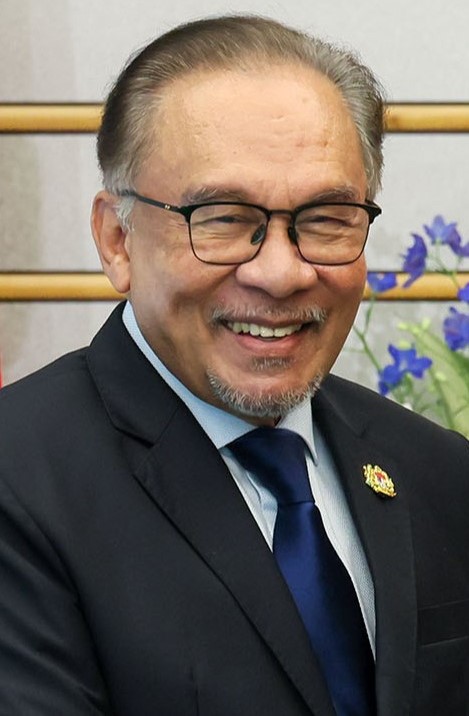
In a direct statement made during a campaign stop in Tangkak, Pakatan Harapan chairman Datuk Seri Anwar Ibrahim drew a clear distinction between electoral competition and the role of constitutional monarchies, arguing that next year's Johor state polls must remain squarely within the political arena rather than entangling the palace and its institutions.
Anwar's remarks come as Malaysia's political landscape continues to grapple with questions about the appropriate boundaries between ceremonial state authority and democratic electoral processes. The statement reflects broader sensitivities surrounding Johor, a state with a particularly prominent royal household and a long history of palace influence in political matters. By emphasising this separation, the Pakatan Harapan leader is effectively setting parameters for how contending political parties should conduct their campaigns in the lead-up to polling day.
The timing of Anwar's intervention suggests concerns within the opposition coalition about how the election contest might unfold. Johor has historically been a stronghold of Barisan Nasional support, though recent electoral shifts in Malaysia have demonstrated that traditional political allegiances are no longer guaranteed. The PKatan Harapan chairman's emphasis on keeping royal institutions separate from the political battle indicates his coalition's desire to ensure the election is decided on policy platforms, performance records, and voter choice rather than through channels involving the sultanate.
This boundary-setting carries significant constitutional implications for Malaysia. The country's system vests considerable ceremonial and residual powers in the nine hereditary rulers, and Johor's Sultan occupies a particularly influential position given the state's geographic size, population, and economic importance. By explicitly urging restraint and separation, Anwar is essentially calling for all stakeholders—including the palace—to respect the modern democratic process and allow electoral outcomes to be determined through legitimate political competition.
The context matters considerably for Malaysian readers understanding why such a statement becomes necessary. Unlike in some democracies where the distinction between state institutions and electoral politics is self-evident, Malaysia's constitutional monarchy operates within a unique framework where Malay-Muslim concerns, royal prerogatives, and parliamentary democracy intersect in complex ways. Johor's royal household has been particularly involved in state politics historically, making the distinction Anwar articulated essential for ensuring the election's credibility and legitimacy.
Anwar's positioning also reflects Pakatan Harapan's broader strategy in approaching the Johor contest. Rather than conducting a campaign that might invoke religious or monarchical sentiments, the coalition appears committed to fighting on grounds of governance, economic management, and popular mandates. This approach distinguishes the coalition's philosophy from strategies that might weaponise traditional institutions for electoral advantage. By laying out this principle publicly, Anwar is essentially signalling to the electorate the kind of campaign the opposition intends to run.
For Southeast Asian observers, this statement reveals how mature democracies in the region navigate the intersection of constitutional monarchy and electoral democracy. Malaysia's model differs fundamentally from those of Thailand, where palace involvement in politics remains far more overt and constitutionally permissible. Anwar's call for boundaries demonstrates the consensus that has emerged in Malaysian political circles—at least among major stakeholder groups—that elections should be decided by voters rather than through institutional channels outside the democratic process.
The Johor election itself carries significance beyond the state level. As Malaysia's second-most populous state and an economic powerhouse, election results there often signal broader national trends. A competitive, fairly-contested poll could demonstrate that Malaysia's electoral system functions according to democratic principles and that political outcomes truly rest on voter preference. Conversely, if royal institutions became perceived as favouring one side, it could undermine confidence in the fairness and legitimacy of the democratic process, with ripple effects across the nation.
Anwar's remarks also implicitly call on other political actors, including Barisan Nasional, to adhere to the same standard. By framing this as a call for maintaining appropriate institutional boundaries rather than directing criticism at any specific party, the Pakatan Harapan chairman creates space for all parties to support the principle without losing face. This diplomatic framing suggests that even in Malaysia's fractious political environment, there remains agreement about fundamental democratic principles.
Looking forward, this statement establishes a marker against which the Johor campaign will be measured. If royal institutions remain visibly aloof from the electoral contest, Anwar's call will be validated and Malaysian democracy strengthened. If, conversely, palace involvement becomes apparent or suspected, the statement will serve as a reference point for criticism and debate about democratic standards. In either case, Anwar has articulated a principle that reflects modern democratic expectations while respecting Malaysia's constitutional arrangements.
The Pakatan Harapan leader's intervention also carries implications for how Malaysian political discourse frames constitutional monarchy. Rather than viewing royal institutions as obstacles to democratic progress or as legitimate instruments of political power, Anwar's framing emphasises their ceremonial and symbolic roles—roles that are enhanced, not diminished, by appropriate restraint from electoral matters. This sophisticated understanding of constitutional monarchy serves both democratic principles and respect for the institution itself.