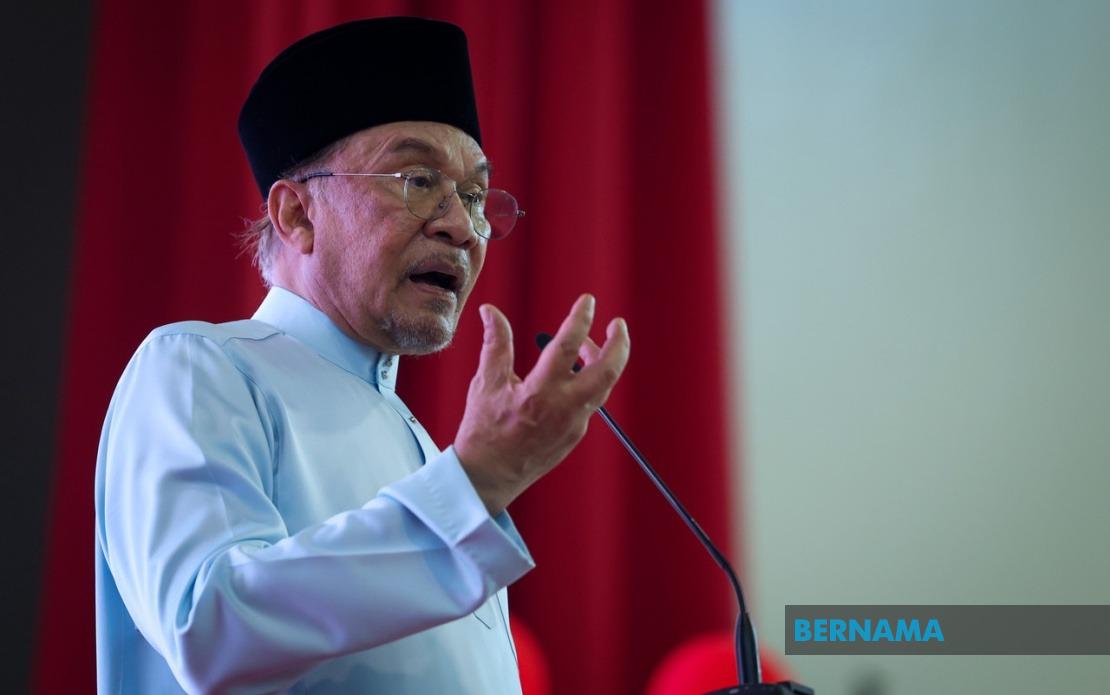
Prime Minister Datuk Seri Anwar Ibrahim has blocked a controversial hotel sale by the Federal Land Development Authority (Felda) after discovering the proposed transaction would result in a 60 million pound loss for the agency. Speaking at a national programme with the Malaysian Armed Forces at Terendak Camp in Melaka on August 7, Anwar revealed that Felda management had approached him two months earlier seeking approval to sell the property for 100 million British pounds—a stark departure from the 160 million pounds the agency had paid for it previously. Anwar, who holds the additional portfolio of Finance Minister, made the decision to withhold his signature from the approval document, citing the financial irresponsibility of such a transaction.
The Prime Minister's intervention underscores a broader concern about fiscal discipline within Malaysia's government-linked enterprises and the mismanagement of public assets. Anwar's refusal represents one of the more visible instances of his stated commitment to tackling institutional inefficiency and financial impropriety since assuming office. His willingness to publicly question the transaction and demand accountability reflects an attempt to position his administration as vigilant stewards of public resources, particularly those entrusted to statutory authorities. The scale of the proposed loss—nearly 38 percent of the original investment—would have been difficult to justify to Felda stakeholders and taxpayers alike.
Central to Anwar's objection is his awareness of the genuine hardships facing Felda settlers, many of whom continue to struggle with inadequate basic amenities and insufficient income. During his own visits to settler communities, beneficiaries have articulated pressing needs ranging from air conditioning in facilities to school repairs and enhanced income support. Against this backdrop, permitting Felda to incur such a substantial financial loss becomes not merely an accounting problem but a moral one. The Prime Minister articulated this tension sharply, questioning how an institution serving vulnerable agricultural communities could be allowed to squander resources through what appears to be either gross negligence or deliberate malfeasance in asset management.
Anwar has instructed Felda management to conduct a comprehensive investigation into the circumstances surrounding the hotel sale proposal. This investigation is expected to identify which officials within the organization authorized and recommended such a disadvantageous transaction. The directive reflects Anwar's determination to establish accountability mechanisms within government agencies, signaling that those responsible for poor decisions will face scrutiny. The inquiry also suggests that the decision to sell at such a loss may not have involved proper oversight or multiple levels of approval, raising questions about governance structures within Felda itself.
The broader significance of this intervention extends beyond a single real estate transaction. Felda, established in 1956, remains symbolically important as a cornerstone institution in Malaysia's rural development and Bumiputera policy framework. The agency has long been viewed as a vehicle for uplifting the Malay-Muslim majority, and its institutional health carries political resonance. Anwar's insistence on defending Felda as an institution worthy of protection reflects recognition that allowing such entities to deteriorate through mismanagement undermines public trust and confidence in government-linked enterprises more broadly. His statement that failure to intervene would inevitably lead to further institutional decay articulates a philosophy of proactive oversight.
The circumstances that permitted such a flagrantly disadvantageous proposal to reach the Finance Minister's desk in the first place warrant examination. In most well-governed organizations, asset sales of this magnitude would require multiple layers of approval, including independent valuations and board-level scrutiny. That the proposal advanced to the Prime Minister's level without being flagged as problematic by intermediate governance structures suggests either systematic weaknesses in Felda's internal controls or a normalization of poor decision-making within the organization. This raises questions about the competence and integrity of the leadership cadre that would have reviewed such a transaction.
For Malaysian readers and Southeast Asian observers, the episode illuminates ongoing challenges in managing state enterprises across the region. Many government-linked companies face recurring issues with financial discipline, cronyism, and inefficient asset allocation. Anwar's public intervention sends a signal that such practices will not be tolerated under his administration, though the effectiveness of this stance will ultimately depend on the investigation's findings and any subsequent consequences imposed on responsible officials. The precedent established here—that significant asset transactions will be subject to stringent scrutiny—may encourage greater prudence among Felda management and other statutory bodies.
The political dimension of Anwar's response is also noteworthy. By highlighting the contrast between Felda's financial mismanagement and the genuine needs of settlers, he positions himself as a defender of ordinary Malaysians against institutional incompetence. This narrative aligns with his administration's broader messaging around reform and accountability. However, it also raises expectations that similar intervention will occur across other government agencies, and failure to maintain consistent standards of oversight could undermine the credibility of this commitment. The coming weeks will reveal whether this represents a genuine shift in governance culture or a politically calculated response to a particular incident.
The hotel sale proposal remains blocked pending completion of the investigation and submission of the full report to the Prime Minister. Felda management has been tasked with identifying what went wrong in the decision-making process and determining which officials bear responsibility. The outcome of this investigation will likely set precedents for how future large-scale asset transactions within government agencies are evaluated and approved. Whether it leads to systemic reforms within Felda or serves as a singular correction remains to be seen, but the clear directive from Malaysia's Finance Minister and Prime Minister leaves no doubt that the transaction as originally proposed will not proceed.

