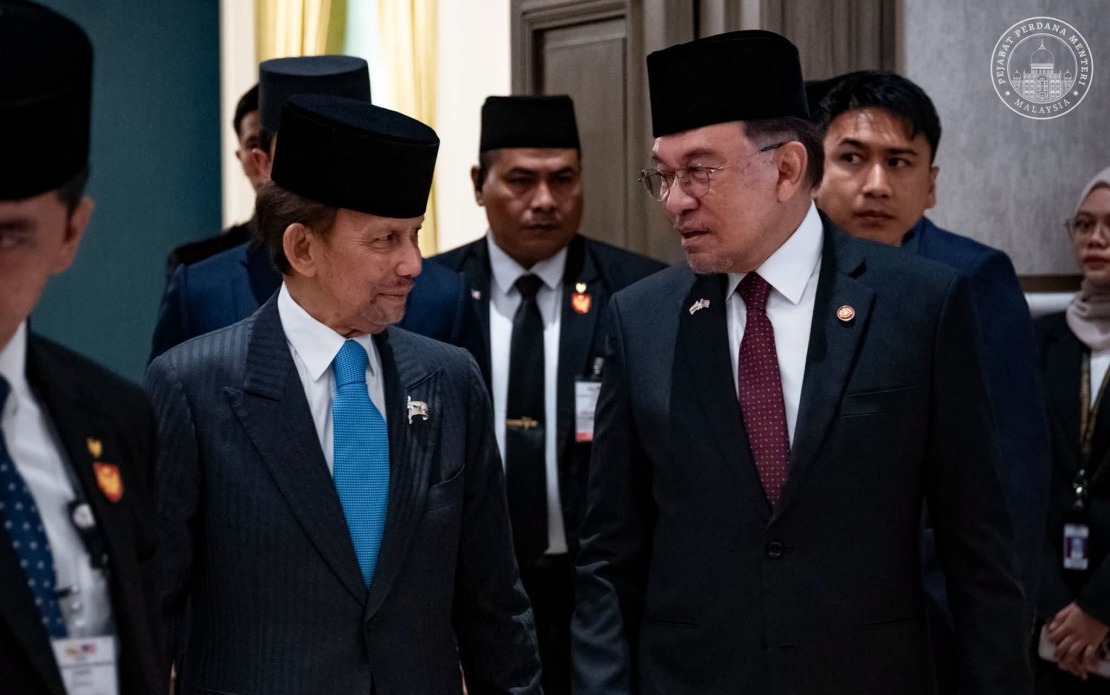
Prime Minister Datuk Seri Anwar Ibrahim acknowledged a personal phone call from Sultan Hassanal Bolkiah of Brunei Darussalam on Tuesday, in which the Brunei ruler inquired after his health and offered prayers for his continued wellbeing. The Malaysian leader took to social media to publicly express his gratitude for the gesture, noting that such expressions of concern reflect the strong personal bonds between regional leaders and the broader ties linking Malaysia and Brunei.
Anwar reciprocated the well-wishes in his statement, offering his own prayers for Sultan Hassanal Bolkiah's health and invoking divine blessing and protection upon the monarch. The exchange underscores the ceremonial courtesies and mutual respect that characterise high-level diplomacy between neighbouring Southeast Asian nations, even as both countries navigate complex regional and domestic agendas.
The timing of the Sultan's call comes just days after Anwar underwent an elective laparoscopic surgical intervention to address a para-umbilical hernia, a procedure performed the previous Monday. Following the operation, the Prime Minister has remained under continuous care and observation by a team of specialised medical practitioners, reflecting the seriousness with which the Malaysian government is treating his post-operative recovery and the importance of ensuring his continued capacity to discharge his duties.
Despite the recent medical procedure, Anwar's schedule remains active and engaged. The Prime Minister confirmed that he will travel to Bandar Seri Begawan within the following week to hold a formal audience with Sultan Hassanal Bolkiah. The visit coincides with the 27th iteration of the Annual Leaders' Consultation, a bilateral engagement mechanism between Malaysia and Brunei that has become a cornerstone of diplomatic relations between the two countries.
The Annual Leaders' Consultation represents a significant institutional framework for addressing shared concerns, coordinating regional responses to pressing issues, and maintaining the stability and prosperity of the broader Brunei-Malaysia relationship. Such summits typically address matters ranging from trade and investment to security cooperation and cultural exchange, making them essential platforms for steering bilateral ties in a constructive direction.
From a broader perspective, the exchange between Anwar and Sultan Hassanal Bolkiah illustrates the intricate web of personal diplomatic relationships that undergird formal state-to-state interactions in Southeast Asia. Despite occasional tensions and disagreements that inevitably arise between neighbouring nations, the maintenance of cordial personal relationships between leaders serves as a stabilising force and can facilitate dialogue and compromise on contentious matters.
Brunei, as a small, oil-rich sultanate, maintains a carefully calibrated foreign policy that emphasises stability, regional integration through ASEAN, and strategic partnerships with larger neighbours. Malaysia, conversely, operates as a more assertive regional player with significant economic and demographic weight. The relationship between the two countries has historically been characterised by pragmatism, with both nations recognising the mutual benefits of cooperation despite occasional disputes over maritime boundaries and resource rights.
Anwar's commitment to proceeding with the planned audience despite undergoing recent surgery demonstrates his determination to maintain the momentum of diplomatic engagement and the prioritisation of bilateral relations even during periods of personal health challenges. For the Malaysian government, such continuity is politically important, as it signals stability in leadership and commitment to regional partnerships during a period when there may be domestic questions about the Prime Minister's fitness to discharge his full range of responsibilities.
The gesture from Sultan Hassanal Bolkiah also reflects the protocol and courtesies traditionally extended between heads of state, particularly within the Southeast Asian region where such expressions of concern carry cultural and diplomatic significance. The public acknowledgment of the Sultan's call through a Facebook post by Anwar serves to document the interaction and reinforce messaging about the strength of Malaysia-Brunei relations to both domestic and international audiences.
Looking ahead, the 27th Annual Leaders' Consultation will provide an opportunity for substantive discussions between the two nations on matters of mutual interest and concern. The agenda will likely encompass economic cooperation, particularly in energy and trade; security and defence collaboration; and regional issues affecting both countries' interests and those of the broader ASEAN community. The visit also underscores the continued relevance of bilateral engagement mechanisms even in an increasingly multipolar regional environment.
For Malaysian observers, the incident provides reassurance regarding the Prime Minister's recovery trajectory and his capacity to maintain an engaged diplomatic schedule. The smooth functioning of such high-level exchanges is essential for demonstrating continuity and stability in Malaysian governance, particularly at a time when the nation grapples with various domestic political and economic challenges. The support extended by Brunei's leadership, symbolised by the Sultan's personal call and prayers, reinforces regional solidarity and the bonds of brotherhood that ASEAN leadership frequently invokes as fundamental to the organisation's cohesion and effectiveness.

