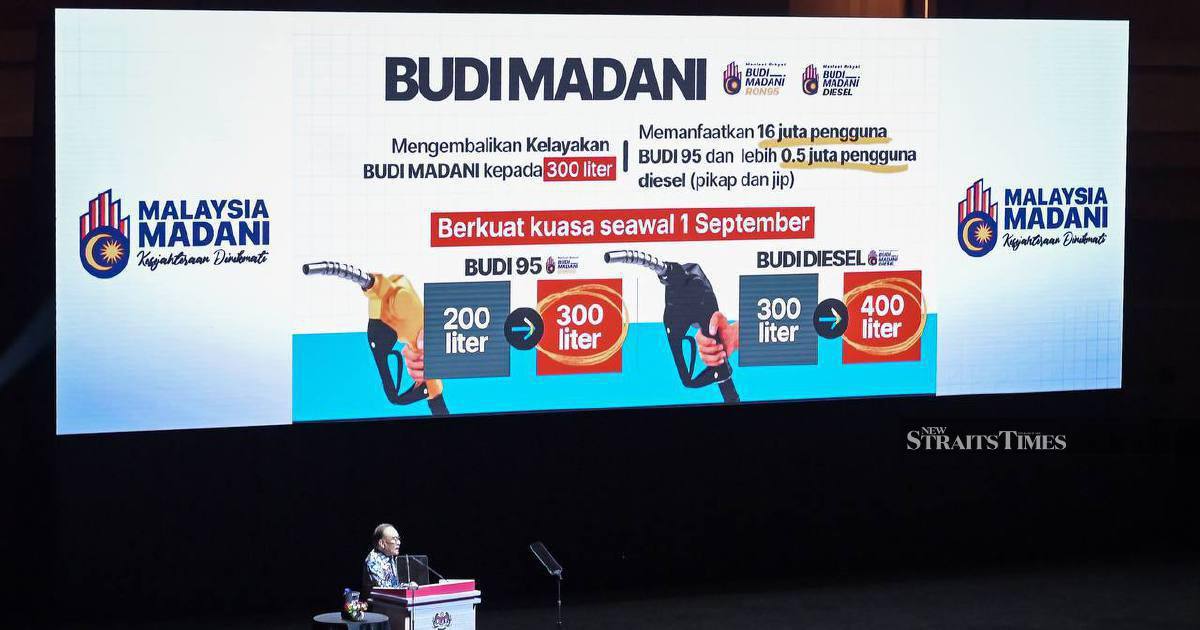
Prime Minister Datuk Seri Anwar Ibrahim has outlined a six-pronged economic relief strategy aimed at alleviating the financial strain facing Malaysian households and businesses, signalling the government's commitment to addressing affordability concerns that have dominated public discourse. The announcement, delivered during the National Day Eve address in Putrajaya, sets the tone for the administration's approach to the forthcoming 2027 Budget, which is scheduled for parliamentary tabling in October.
The timing of these measures reflects a deliberate policy sequencing by the government, which appears intent on demonstrating concrete action on household finances before presenting its comprehensive fiscal blueprint later this year. By announcing targeted interventions now, the administration seeks to build momentum and show responsiveness to citizen concerns about inflation, housing costs, utility bills, and food prices—issues that have persistently weighed on consumer sentiment across the country.
For Malaysian households already navigating tighter household budgets and competing financial obligations, such relief measures carry immediate significance. The middle-income segment, in particular, has articulated growing anxiety about real wage stagnation coupled with rising essential costs, making any government intervention directly relevant to daily economic decisions affecting millions of families from Perlis to Sabah.
The broader business community, particularly small and medium enterprises that form the backbone of Malaysia's economic ecosystem, stands to benefit from policies designed to strengthen operational viability. SMEs have consistently cited cost pressures and uncertain market conditions as key impediments to expansion and job creation, making supportive measures essential for sustaining employment levels and economic resilience.
The government's emphasis on strengthening public services alongside household and business support suggests a holistic approach to economic management. Quality public infrastructure, efficient government administration, and reliable public utilities directly influence the cost structure faced by both consumers and enterprises, meaning improvements in service delivery can yield multiplier effects across the broader economy.
Regionally, Malaysia's approach to managing inflation and household pressures will be monitored closely by peers in Southeast Asia facing similar demographic and economic challenges. The country's experience with targeted relief mechanisms, if successful, could offer valuable lessons for neighbouring economies grappling with comparable affordability dilemmas in the post-pandemic environment.
The October budget tabling will provide crucial details about the government's medium-term fiscal strategy and resource allocation priorities. These six immediate measures can be viewed as early-stage interventions that set fiscal direction while allowing time for stakeholder consultation and parliamentary scrutiny before the comprehensive budget framework is presented.
Inflationary pressures in Malaysia have been shaped by global commodity price volatility, supply chain adjustments, and domestic demand patterns. Any government response must therefore carefully calibrate support mechanisms to provide relief without fuelling further price spirals or creating unsustainable fiscal commitments that could compromise long-term economic stability.
The announcement also reflects evolving political expectations in Malaysia, where cost-of-living concerns feature prominently in public opinion surveys and electoral calculations. Demonstrating responsiveness through concrete policy action before major budget negotiations helps establish the government's economic credentials with both urban and rural constituencies.
For investors monitoring Malaysia's macroeconomic trajectory, these relief measures signal the administration's intent to preserve domestic consumption capacity and business confidence during a period of global economic uncertainty. Sustained household purchasing power and stable business conditions remain fundamental to achieving the growth targets necessary for advancing the country's development agenda.
Looking ahead, the success of these six measures will likely influence public reception to the October 2027 Budget and shape expectations for subsequent fiscal interventions. The government faces the delicate task of providing meaningful relief while maintaining fiscal discipline and ensuring that anti-inflation measures do not compromise its ability to fund critical infrastructure, education, and healthcare initiatives.
The coordination between immediate relief efforts and the comprehensive budget framework will be critical for demonstrating policy coherence and sustained commitment to economic stabilization. Malaysians observing these unfolding initiatives will be assessing whether the government's rhetoric translates into tangible improvements in their purchasing power and quality of life in the months ahead.

