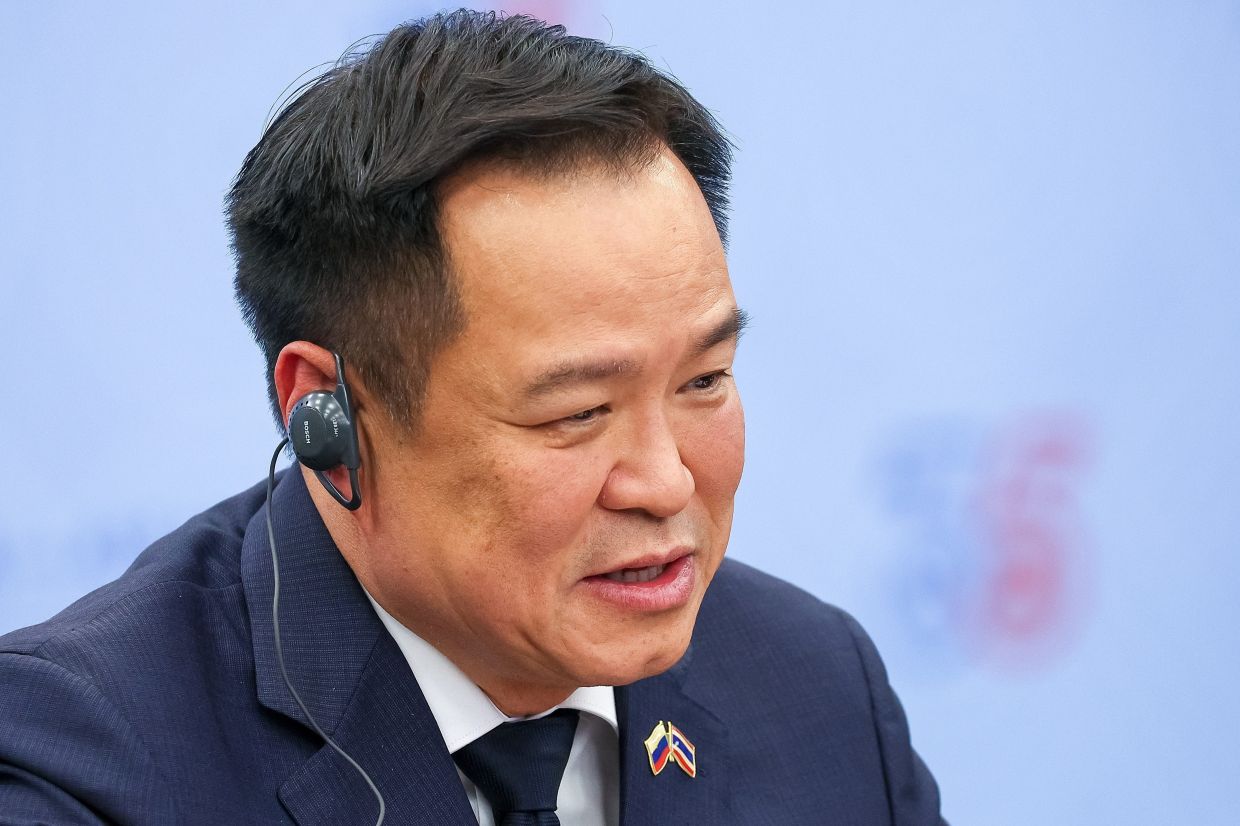
Thailand's Prime Minister Anutin Charnvirakul reaches a significant milestone on June 27, marking one hundred days since being sworn in as the country's 32nd prime minister on March 20. His ascension followed re-election success and comes roughly nine months after he initially assumed office in September 2025, when the previous Paetongtarn Shinawatra government collapsed. The benchmark offers an opportunity to assess how the 59-year-old leader and his administration have steered the kingdom through an eventful opening phase.
Early verdicts from political analysts suggest a mixed performance. Anutin has managed to maintain political stability—a precious commodity in Thailand's coup-prone history—and navigated an acute energy shock sparked by regional conflict. His government has also delivered on popular campaign pledges that resonate with voters. However, the absence of meaningful progress on the country's deeper structural economic problems remains conspicuous, with no clear strategy for long-term reform evident after the initial hundred days.
The immediate challenge facing the government arrived almost as soon as Anutin took office. Geopolitical tension in the Middle East erupted on February 28 when US-Israel military action against Iran disrupted global oil exports. Thailand felt the impact swiftly as shipping through the Strait of Hormuz faced repeated disruptions, sending crude prices above US$100 per barrel for extended periods. The shock exposed Southeast Asia's fundamental vulnerability to maritime crises far beyond its shores. Panic buying gripped Thai petrol stations, with some unable to refuel quickly enough as consumers feared supply shortages and further price increases.
The government's response combined immediate relief measures with structural adjustments. Officials tapped the national Oil Fuel Fund to subsidise fuel prices, eased borrowing costs for farmers and industrial operators struggling with energy expenses, and directed coal-fired power plants to operate at maximum capacity. Simultaneously, Thailand pursued energy source diversification by increasing imports from the United States, Malaysia, and Brunei. Political science scholar Mathis Lohatepanont from the University of Michigan assessed that the administration successfully "weathered the initial storm and managed to avoid further instability" despite early supply disruptions and sharp price volatility. While public grumbling about elevated fuel costs persists, the absence of mass street protests suggests the government avoided the political fallout that such a crisis might have triggered.
Beyond crisis management, Anutin consolidated support through his party's core electoral coalition and broader nationalist appeal. Bhumjaithai won the most seats in February's general election partly by championing a hardline stance on the long-running border dispute with Cambodia. As prime minister, Anutin maintained this positioning by keeping military forces at the forefront of border protection operations and unilaterally terminating the 2001 bilateral maritime boundary agreement with Phnom Penh—a move that escalated the matter to United Nations arbitration. This approach delivered an early political victory by validating the expectations of his party's nationalist base and voters who supported his campaign rhetoric.
A signature domestic initiative further bolstered Anutin's early political standing. Launched on June 1, the "Thais Help Thais Plus" subsidy programme allows approximately thirty million eligible citizens aged eighteen and above to purchase selected goods from participating merchants at just forty per cent of the retail price, with government covering the remainder. The administration allocated 176 billion baht—roughly US$5.27 billion—to fund the scheme. By delivering on a campaign promise, Anutin satisfied the immediate expectations of voters seeking relief from household cost pressures while stimulating consumer spending across the economy.
Yet observers caution against reading too much into these accomplishments. Puangthong Pawakapan, a political science faculty member at Chulalongkorn University, noted that many Thais recognise the subsidy scheme provides only fleeting temporary relief rather than addressing root causes of economic hardship. Mathis similarly cautioned that "it is too early to assess the Anutin government's success on longer-term structural policies," noting the initiative represents a popular but inherently temporary stimulus rather than durable economic reform.
Thailand confronts formidable structural economic headwinds that remain largely unaddressed after the government's opening hundred days. The kingdom has failed to achieve annual economic growth exceeding three per cent over the past five years, a concerning trajectory amid intensifying regional competition. The International Monetary Fund projects Thailand's economy will expand by merely 1.5 per cent in the current year—the slowest rate across Southeast Asia. Vietnam's projected 7.1 per cent growth, Cambodia's four per cent, and even Myanmar's three per cent expansion despite ongoing civil conflict all substantially outpace Thailand's anaemic performance. These figures underscore how economic stagnation threatens Thailand's regional standing.
The underlying challenges extend beyond sluggish growth. Thailand grapples with an ageing demographic profile that will strain public finances and reduce the labour force, persistently elevated household debt burdens, and the challenge of building new economic engines in emerging sectors. Anutin has publicly articulated ambitions to develop capabilities in digital technology, artificial intelligence, and clean energy. However, political analysts detect an absence of concrete implementation blueprints or credible roadmaps translating these aspirations into policy action.
Perhaps most tellingly, the government has demonstrated minimal commitment to constitutional reform despite overwhelming public mandate. In a referendum held alongside the February general election, nearly sixty per cent of voters—approximately twenty million citizens—indicated their desire to revise the 2017 Constitution. This charter was drafted under former Prime Minister Prayut Chan-o-cha, who seized power in the 2014 military coup and governed until 2023, and is widely regarded as undemocratic by Thai civil society. Yet this fundamental reform agenda has seen negligible progress. Stithorn Thananithichot, a political science faculty member at Chulalongkorn University, observed that "a government that intended to reform would have signalled at least one substantive structural commitment at the outset; this one did not, and that absence is by design rather than a matter of time."
The absence of meaningful movement on constitutional change exemplifies a broader pattern. Anutin's administration appears preoccupied with routine administration and day-to-day crisis management rather than pursuing transformative economic or political reform. Thailand's history of military coups and short-lived governments over the past two decades has undermined policy continuity and long-term planning capacity, allowing structural economic problems to fester and worsen. Breaking this cycle would require the type of sustained commitment to reform that the current government has not yet demonstrated, despite clear voter expectations.
Questions about reform commitment extend to Cabinet composition and personnel selection. The makeup of Anutin's ministerial team raises concerns among observers about whether key positions have been allocated to drive systemic change or primarily to reward political allies and manage routine governance. This distinction matters because genuine structural reform typically requires ministers willing to challenge vested interests and pursue difficult policy shifts—precisely the type of leadership indicators analysts have not yet observed in the current administration's early phase.
As Thailand reaches this hundred-day checkpoint, the government has undeniably succeeded in its immediate objectives: maintaining political stability during a volatile period, navigating an energy crisis without triggering domestic upheaval, and delivering visible constituency benefits through popular subsidy programmes. However, these accomplishments primarily reflect competent crisis management and tactical political astuteness rather than a forward-looking economic or institutional vision. With regional competitors advancing rapidly and structural challenges accumulating, observers question whether Thailand can afford much longer the pattern of putting short-term stability ahead of long-term reform.

