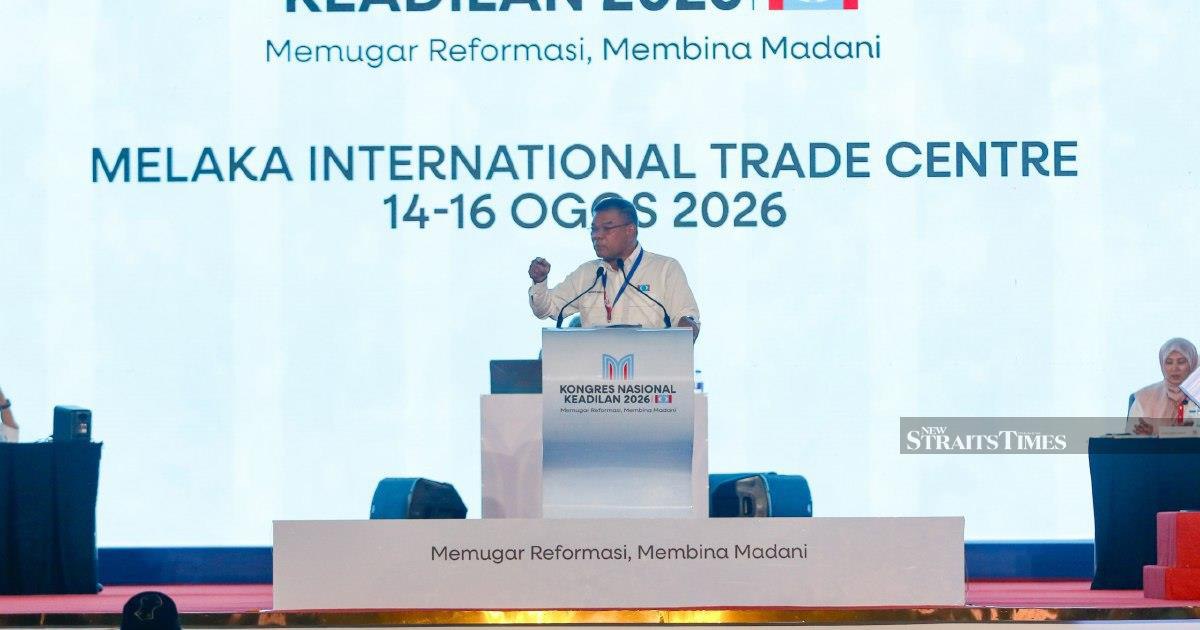
Corruption in Malaysia will only be effectively tackled when the nation's leadership and citizenry treat it as a fundamental moral and governance crisis rather than a vehicle for partisan advantage along racial or religious lines, according to PKR vice-president Datuk Seri Saifuddin Nasution Ismail. Speaking at an event in Ayer Keroh, the senior politician articulated a vision for anti-graft efforts that transcends the identity-based divisions increasingly prevalent in Malaysian political discourse, arguing that framing corruption through such narrow lenses undermines institutional accountability and public trust.
The statement carries particular resonance given Malaysia's recurring struggles with graft at various levels of government and the private sector. Over the past two decades, the country has weathered high-profile corruption cases involving senior officials, elected representatives, and business executives—from the 1Malaysia Development Berhad scandal to multiple convictions under the Malaysian Anti-Corruption Commission's purview. Yet despite these visible prosecutions, public perception of endemic corruption persists, suggesting that enforcement alone cannot solve the deeper governance problem.
Saifuddin's framing represents an implicit critique of how corruption has been deployed politically in Malaysian discourse. Opposition parties and civil society groups have at times been accused of selectively prosecuting anti-corruption messaging based on their political opponents' ethnicity or religious background, while government supporters have similarly weaponised graft allegations. This pattern creates a vicious cycle: when anti-corruption work becomes associated with particular racial or religious communities, it loses moral authority and becomes merely another expression of zero-sum competition between Malaysia's plural constituencies.
The governance dimension that Saifuddin emphasises is critical because systemic corruption cannot be meaningfully reduced through sporadic enforcement actions alone. Rather, it requires institutional reforms—strengthened procurement systems, transparent budget processes, independent oversight mechanisms, and professional civil service standards—that protect the integrity of government regardless of which party or individual holds power. When anti-corruption efforts are framed through partisan or identity lenses, these structural improvements become hostage to electoral cycles and demographic politics.
For Malaysian readers, the implications extend beyond high-level political statements. Corruption at local government level—in land approvals, contractor selection, development permits, and service delivery—directly affects ordinary citizens' daily lives. When anti-corruption work becomes tribalistic, it weakens local accountability mechanisms and allows entrenched local networks to persist by wrapping themselves in identity politics. Ayer Keroh residents and Malaysians nationwide benefit from anti-corruption efforts grounded in universal principles rather than sectional advantage.
The PKR vice-president's intervention also reflects internal coalition dynamics. As part of Malaysia's ruling alliance, PKR must balance aggressive anti-corruption positioning against the political reality that graft allegations can be directed at partners or coalition members. Saifuddin's emphasis on principled governance rather than selective targeting may signal an attempt to establish common ground within the ruling coalition on anti-corruption standards, reducing the risk that graft investigations become weapons in intra-coalition disputes.
Regionally, Malaysia's approach to corruption influences Southeast Asian governance trends. The Association of Southeast Asian Nations region has long grappled with graft as a development challenge, with international indices consistently ranking several member states as problematic. Malaysia's ability to demonstrate that corruption can be tackled through institutional rather than partisan means could offer a valuable model—or conversely, continued politicisation would underscore the region's broader governance vulnerabilities.
The separation of anti-corruption from racial and religious narratives also matters for inclusive policymaking. When graft-fighting becomes ethnic or religious in character, it can alienate communities and reduce public cooperation with enforcement agencies. Citizens who perceive bias in corruption investigations are less likely to report wrongdoing or support institutional reforms. A moral framework, by contrast, can appeal across communal lines—all Malaysians can understand that public resources diverted through corruption represent stolen development opportunities that affect everyone.
Implementing this vision practically presents challenges. Corruption investigation bodies must demonstrate consistently applied standards across all communities and political affiliations, requiring substantial institutional autonomy and transparent methodology. The judiciary handling corruption cases must project impartiality, and political leaders across the spectrum must demonstrate restraint in weaponising investigation outcomes. These conditions are difficult to achieve in Malaysia's charged political environment but are necessary for the moral authority Saifuddin advocates.
The PKR leader's remarks also implicitly acknowledge that Malaysia's legitimacy crisis—low institutional trust, concerns about governance quality—cannot be solved by identity-based mobilisation alone. Rather, effective governance performance grounded in recognisable principles becomes the foundation for rebuilding public confidence. Anti-corruption work, framed as part of broader institutional reform rather than ethnic or religious strategy, becomes a vehicle for demonstrating commitment to universal standards.
Moving forward, the test of whether Saifuddin's vision gains traction lies in how actual investigations and prosecutions unfold. If high-profile cases continue to appear selectively distributed along ethnic or religious lines, his call for principled governance will ring hollow. Conversely, consistent application of anti-corruption standards across all political factions and communities would demonstrate that governance reform, not sectional advantage, drives Malaysia's graft-fighting efforts.

