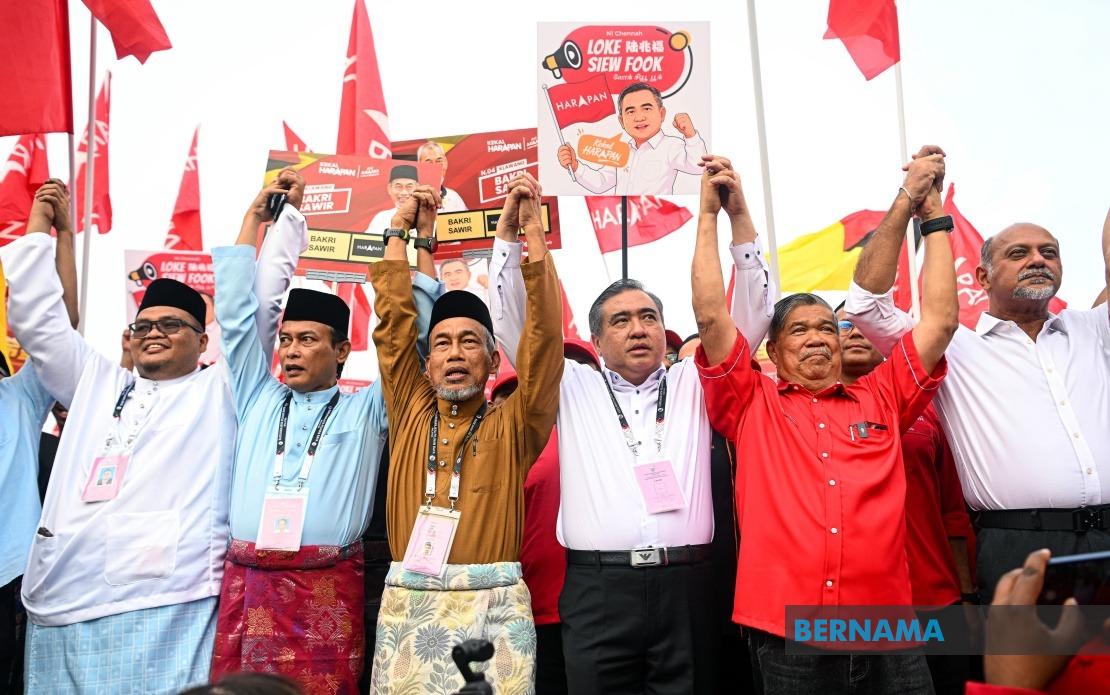
DAP Secretary-General Anthony Loke is preparing for a competitive rematch in the Chennah state seat, where he faces a challenge from Siow Kong Choon, the state MCA Youth chief contesting on a Barisan Nasional ticket. The nomination process for the 16th Negeri Sembilan state election was officially closed at 10 am on July 18, with Loke and Siow both filing their papers at the nomination centre in Dewan Besar Kuala Klawang in Jelebu. Jelebu Parliamentary returning officer Abdul Rahim A Aziz confirmed the straight contest at the ceremony, signalling what is expected to be a closely watched three-cornered race transformed into a direct challenge between the ruling Pakatan coalition and the BN opposition.
Loke, who also serves as Transport Minister, submitted his nomination papers at 9.05 am, with Siow following just four minutes later. The timing underscores the coordinated nature of candidate registration on polling day preparations. Their near-simultaneous submission reflects the administrative efficiency required to manage competing interests across the federation's various electoral contests. Loke brings considerable political experience to the contest, having represented Seremban as Member of Parliament and held the Chennah seat since 2013, making him one of the state's longest-serving DAP representatives. His dual roles in both federal and state-level politics have raised his profile significantly across Negeri Sembilan and beyond.
The Chennah constituency carries particular significance within the Negeri Sembilan political landscape. Loke's tenure spanning the past eleven years has seen the DAP consolidate support in this traditionally competitive area. The seat's composition and voting patterns have evolved considerably, reflecting broader demographic and economic shifts in the state. Siow's nomination as the BN challenger signals the coalition's determination to recapture territory where it previously held stronger influence. The MCA's decision to field its Youth chief in this crucial contest demonstrates the importance both coalitions attach to Negeri Sembilan's political complexion.
Performance data from the previous election cycle provides crucial context for understanding the stakes involved. In the 2023 Negeri Sembilan state election, Loke secured 5,888 votes against Perikatan Nasional candidate Rosmadi Arif, winning by a substantial 2,200-vote margin. This commanding victory reflected strong grassroots support and effective mobilisation across the Chennah constituency. However, the political landscape has shifted considerably since that contest. The realignment of forces—with PN stepping aside to allow BN to mount the challenge—introduces new variables that could reshape voter behaviour and coalition support patterns across the state.
The Electoral Commission has structured the polling timeline to provide voters with adequate opportunity to participate. Early voting is scheduled for July 28, while the main polling day occurs on August 1. This framework allows working professionals, government employees, and others with scheduling constraints to cast their votes conveniently. For constituencies like Chennah, where demographic composition includes significant numbers of commuter workers and business owners with demanding schedules, the early voting provision may prove particularly influential in determining final turnout and result.
Negeri Sembilan's state election represents a significant barometer of political sentiment in the nation's heartland. The state has long served as a bellwether for broader peninsular political trends, with its voting patterns often foreshadowing outcomes in other regions. The outcome in Chennah, therefore, carries implications extending well beyond the constituency's boundaries. A decisive victory for Loke would reinforce DAP's position as a formidable political force within Pakatan and validate the coalition's approach to governance and state development. Conversely, a breakthrough for Siow and BN would signal potential vulnerabilities in the ruling coalition's support structure and indicate rising voter appetite for change or alternative governance approaches.
The Transport Ministry portfolio held by Loke adds another dimension to his campaign narrative. His responsibility for federal transport infrastructure projects and policies places him in a position to highlight developmental achievements and investments benefiting Negeri Sembilan. However, this role also subjects him to scrutiny regarding transport sector challenges, infrastructure delays, and policy implementation issues. Voters in Chennah may factor national-level performance considerations into their assessment of Loke's suitability for continued representation, alongside purely state-level governance questions.
Siow Kong Choon's entry into the contest brings MCA's organisational resources and BN's traditional machinery into direct competition with DAP's ground networks. The MCA Youth chief designation suggests he represents a generational shift within the Chinese community's political representation, potentially appealing to younger voters seeking fresh perspectives. BN's endorsement and resource allocation to his campaign indicates the coalition's confidence in his electability and his capacity to articulate BN's platform effectively to Chennah's diverse voter base. His nomination reflects a strategic calculation regarding which candidates and constituencies offer the most promising pathways to recapturing lost ground.
Voter sentiment in Negeri Sembilan has undergone significant evolution across recent political cycles. The state experienced major shifts during the 2018 general election aftermath, subsequent 2022 elections, and the 2023 state polls. These successive contests have fragmented and realigned voter preferences, with some communities consolidating support around particular coalitions while others maintain more fluid allegiances. Understanding these micro-level voting patterns, neighbourhood sentiment, and community concerns will be essential for both Loke and Siow as they campaign intensively across Chennah over the coming weeks.
The campaign period offers both candidates opportunities to articulate their visions for Chennah's future development. Infrastructure improvements, economic opportunities, education and healthcare services, and environmental considerations typically dominate discussion agendas in state-level contests. Loke can leverage his incumbent status and accumulated relationships with state development bodies to highlight projects delivered and planned initiatives. Siow must articulate a compelling alternative narrative that addresses voter concerns about governance effectiveness, delivery of services, and alignment with the state's broader economic development trajectory.
Geographic and socioeconomic variation within Chennah creates distinct voter interest clusters. Urban areas within the constituency may prioritise different issues than rural or semi-rural sections, and these preferences will shape how candidates allocate campaign resources and messaging strategies. Transient populations in growing commercial centres alongside more established residential communities create complex campaign dynamics requiring nuanced understanding of evolving constituent needs and expectations.

