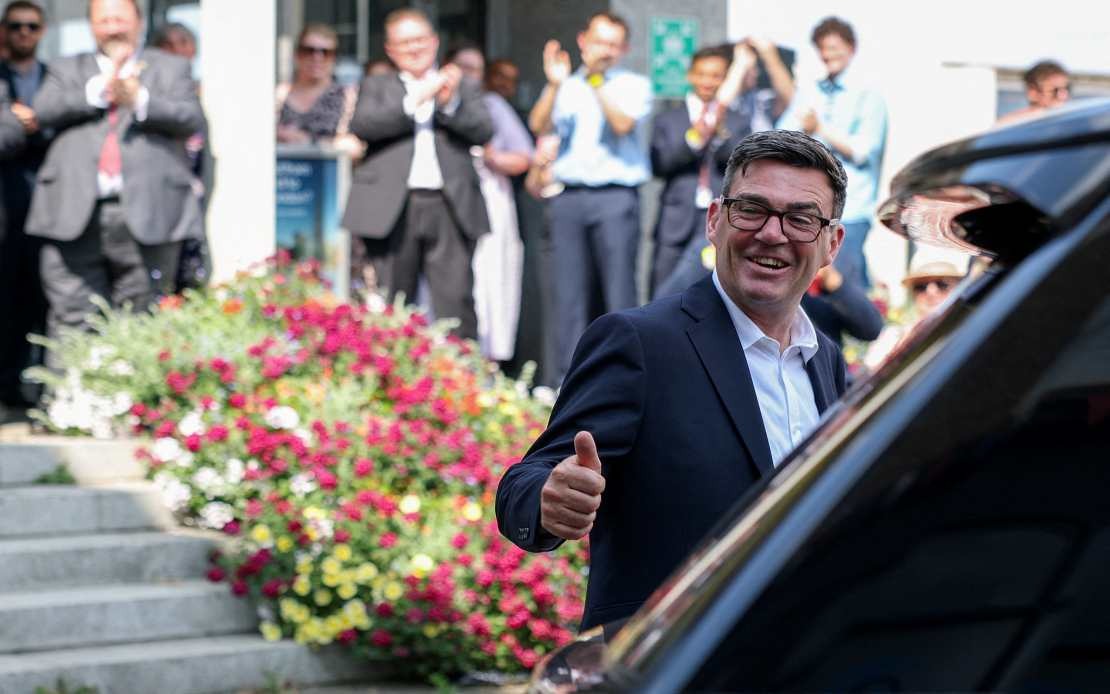
Andy Burnham formally became Prime Minister of the United Kingdom on Monday, taking the helm at a turbulent moment in British politics and inheriting significant domestic challenges. The former mayor of Greater Manchester will deliver his inaugural address at Downing Street following an audience with King Charles III, marking a transition that unfolds against the backdrop of sustained voter scepticism about political leadership. His accession represents an unusual pathway to the country's top office—Burnham secured the Labour Party leadership without facing a contested election, consolidating support rapidly after returning to Parliament just weeks earlier.
The new premier's central messaging emphasises restoration of public trust and provision of "breathing room" on household finances, two concepts that reflect the immediate anxieties facing ordinary Britons. In framing his tenure, Burnham will characterise the present juncture as demanding both "reflection and resolution," signalling his intent to acknowledge the accumulated damage from years of political churn while demonstrating capacity to deliver tangible improvements. His advisors have been explicit that stability alone will prove insufficient; the government must translate it into concrete benefits affecting people's daily lives, particularly regarding energy costs and household budgets that have strained under inflationary pressures since 2021.
The stark reality of recent British political history informs Burnham's messaging strategy. Seven prime ministers have occupied Downing Street across the past decade, a statistic that encapsulates institutional decay and voter exhaustion. Burnham recognises that this historical turbulence has corroded confidence in Westminster's capacity to govern effectively. By emphasising the virtues of "stable and responsible politics," he positions himself as an antidote to the chaos of predecessor administrations, though whether rhetorical pledges translate into sustained parliamentary discipline remains an open question for markets, investors, and the electorate alike.
Burnham has already identified devolution of power from London as a signature priority for his administration. This approach reflects his experience as a regional leader and signals intent to redistribute governmental authority away from Westminster's centralising tendencies. Such decentralisation aligns with sentiment in Scotland, Wales, and English regions that feel marginalised by metropolitan elites, potentially offering a mechanism to rebuild legitimacy across different parts of the kingdom. How substantially he pursues this agenda will likely determine whether his premiership constitutes genuine structural reform or merely rhetorical gesture.
Among his earliest policy actions, Burnham announced the scrapping of Keir Starmer's digital identification programme, redirecting resources toward cost-of-living support. This decision signals a recalibration of Labour priorities and reflects Burnham's judgment that technological infrastructure projects lack political salience compared to household economic security. The move represents a clear break with his predecessor's policy direction and demonstrates willingness to repudiate unpopular initiatives inherited from the previous administration.
Energy policy looms as a critical flashpoint within the new government. Reports suggest Burnham may expand North Sea oil and gas extraction as a mechanism to moderate energy bills, a position that contradicts Labour's 2024 election manifesto pledge against issuing fresh drilling licences. Environmental advocates have mobilised in opposition, arguing that expanded fossil fuel extraction will neither substantially reduce bills nor advance the party's climate commitments. This tension between economic pragmatism and environmental obligation presents a defining test of Burnham's willingness to navigate conflicting constituencies—working-class voters demanding affordable energy versus green activists demanding fossil fuel restraint.
Thames Water presents another significant early governance challenge. The firm staggers under a £20 billion debt burden and teeters on the brink of insolvency, with specialised administration looming as a possibility absent intervention. Burnham has previously signalled receptiveness to enhanced public ownership of essential services, and the company's principal creditors have reportedly indicated flexibility regarding rescue arrangements. A nationalisation or quasi-public takeover would represent a striking ideological statement by a Labour government, reversing decades of privatisation orthodoxy. Such a move would carry substantial fiscal implications and reshape the landscape of water governance across England and Wales.
Domestically, Burnham's first weeks will focus on announcements designed to ease immediate pressures on household finances and demonstrate governmental responsiveness to public hardship. These initiatives carry symbolic weight beyond their practical impact, signalling that the new administration has heard voter grievances and intends action. The calibre and credibility of these early measures will substantially influence whether Burnham can consolidate the political capital he possesses at the moment of assumption of office.
Cabinet construction has already attracted scrutiny, with particular attention focused on the chancellorship—the second-most powerful position in the British government. Energy Secretary Ed Miliband and Home Secretary Shabana Mahmood emerge as leading contenders for this role. Either appointment carries distinct symbolic messages about Burnham's priorities and coalition-building strategy. The chancellor selection will signal whether Burnham prioritises continuity with recent Labour orthodoxy or pursues a more distinctive economic direction reflecting his provincial roots and regional governance experience.
For Malaysian observers and Southeast Asian policymakers, the Burnham transition carries relevance principally regarding UK trade policy, international climate commitments, and the broader stability of Western democracies amid rising populism and institutional erosion. A British government preoccupied with domestic economic distress may recalibrate its international engagement, with implications for regional security architecture and commercial arrangements. The UK's trajectory toward either renewed stability or further institutional decline resonates within Southeast Asia's calculus regarding great-power reliability and the durability of liberal democratic governance.
Burnham's premiership arrives at a moment when democratic systems globally face legitimacy questions. His explicit commitment to responsible, stable governance contrasts sharply with the volatility and norm-erosion that characterised recent British politics. Whether his administration can deliver on this promise depends fundamentally on his capacity to secure tangible improvements in living standards whilst maintaining parliamentary discipline—an undertaking more easily pledged than executed in contemporary politics.

