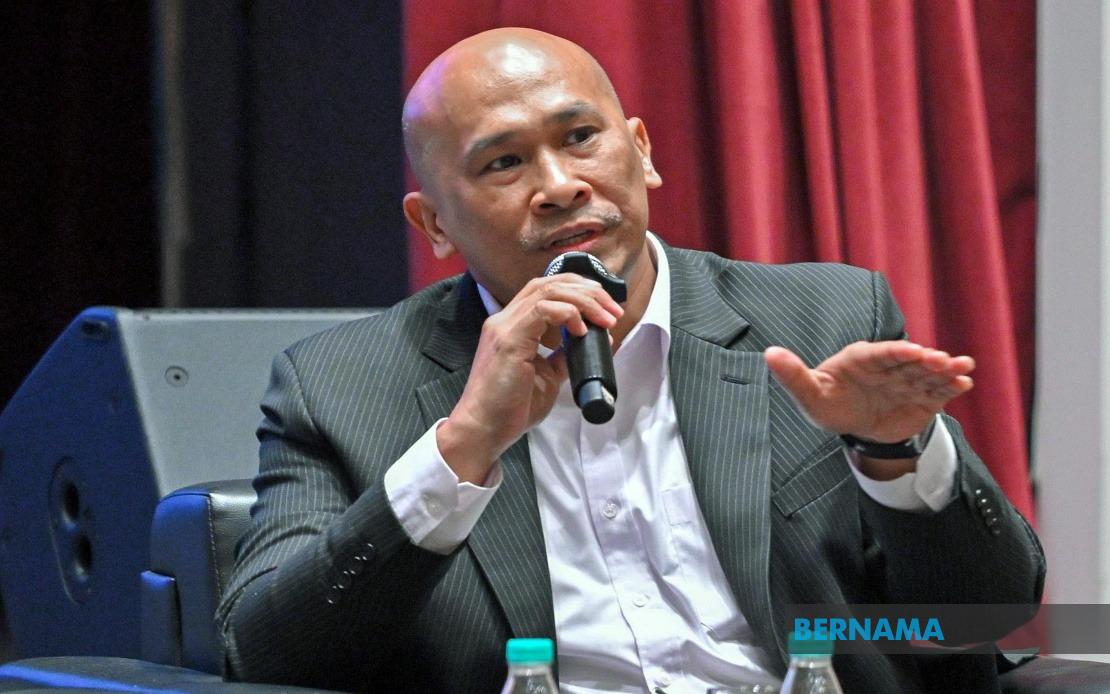
The release of a comprehensive Royal Commission of Inquiry report into Tabung Haji's operations has prompted financial analysts and Islamic finance experts to reassure depositors that the institution remains sound and worthy of continued trust. Though the document's publication sparked public discussion, analysts contend that the underlying issues identified were neither surprising nor indicative of systemic failure, having already been addressed through an ongoing programme of institutional reforms.
Dr Mohd Afzanizam Abdul Rashid, chief economist at Bank Muamalat Malaysia Bhd, emphasised that Tabung Haji's financial trajectory offers grounds for confidence among current and prospective savers. The institution has achieved positive net assets—the measure of total assets minus total liabilities—for five consecutive years running through to the previous calendar year, demonstrating sustained financial recovery. This consecutive performance constitutes concrete evidence of management action translating into measurable outcomes at the balance sheet level.
The 211-page RCI report, made publicly available on July 29, examined management and operational weaknesses spanning the period from 2014 to 2020 and set forth 25 recommendations for institutional improvement. By July 30, Tabung Haji had already implemented seventy-five per cent of these recommendations, indicating a proactive stance toward remediation. For Dr Mohd Afzanizam, the timing of the report's public disclosure—initially completed in 2022—should not be interpreted as evidence of new problems but rather as a belated transparency exercise addressing matters the institution has already begun resolving.
Governance reform occupies a central position in Tabung Haji's recovery agenda. Strengthening the institution's leadership architecture and management structures represents a priority area identified in the RCI report and acknowledged by analysts as essential to rebuilding public confidence. Such structural changes typically unfold gradually, requiring careful coordination between the board, senior management, and regulatory authorities. The deliberate pace of governance transformation reflects the complexity of reshaping an institution whose operations span domestic administration and international pilgrimage coordination.
Beyond the conventional financial metrics, analysts underscore the importance of evaluating Tabung Haji's broader institutional role and standing. The organisation functions not merely as a savings vehicle but as a custodian of religious aspirations for millions of Malaysian Muslims seeking to fulfil the haj obligation. This dual identity—part financial intermediary, part faith-based institution—distinguishes Tabung Haji from conventional banking entities and warrants assessment through a more expansive analytical framework. Mohd Hafiz Abd Hamid, secretary-general of IKRAM Malaysia, stressed that public trust in Tabung Haji represents a distinct form of confidence, rooted in religious obligation and communal expectation rather than simple commercial return-seeking.
Tabung Haji's international relationships, particularly its standing with Saudi Arabian authorities, constitute an often-overlooked dimension of institutional value. Dr Mohd Afzanizam highlighted that the organisation maintains robust diplomatic and operational ties with the Saudi government, relationships that have translated into advantageous arrangements for Malaysian pilgrims. The Kingdom's favourable perception of Malaysian hajj groups reflects years of Tabung Haji-led discipline and organisation, benefits that accumulate not in financial statements but in improved pilgrimage quotas and enhanced facilitation of religious observance. The positive reputation commanded by the institution across the Arabian Peninsula underscores its importance as a bridge between Malaysian society and the Islamic world's holiest sites.
Testimonial evidence from individual depositors suggests that public concern, while warranted as a response to institutional scrutiny, has not translated into panic withdrawal or lost confidence at the grassroots level. Nooraishah Wahab, a 57-year-old housewife and long-term Tabung Haji depositor, stated that the RCI report's public release did not prompt her to reassess her commitment to the institution. Her decision to retain her savings reflects a calculation balancing the institution's demonstrated recovery efforts against the existential importance of maintaining a dedicated vehicle for Islamic pilgrimage finance. Such individual choices, aggregated across the depositor base, provide a practical gauge of whether analytical reassurances translate into sustained public confidence.
The institutional challenge confronting Tabung Haji management involves reinforcing these fragile demonstrations of continued public faith while completing the remaining twenty-five per cent of recommended reforms. The gap between full implementation and current progress suggests that certain reforms either present technical complexity or require extended implementation timelines. Transparency regarding which recommendations remain outstanding and why would serve to demonstrate management commitment to addressing the RCI's concerns comprehensively rather than selectively.
For Malaysian society more broadly, Tabung Haji's recovery trajectory carries implications extending beyond depositor interests. The institution represents a significant component of the Islamic finance ecosystem in Malaysia and Southeast Asia, and its stabilisation contributes to confidence in faith-based financial institutions generally. Any erosion of depositor confidence in Tabung Haji could spill over into other Islamic financial vehicles, potentially dampening broader Islamic finance adoption. Conversely, successful navigation of the RCI process and completion of recommended reforms would signal that Islamic financial institutions can effectively address governance concerns while preserving public trust and religious legitimacy.

