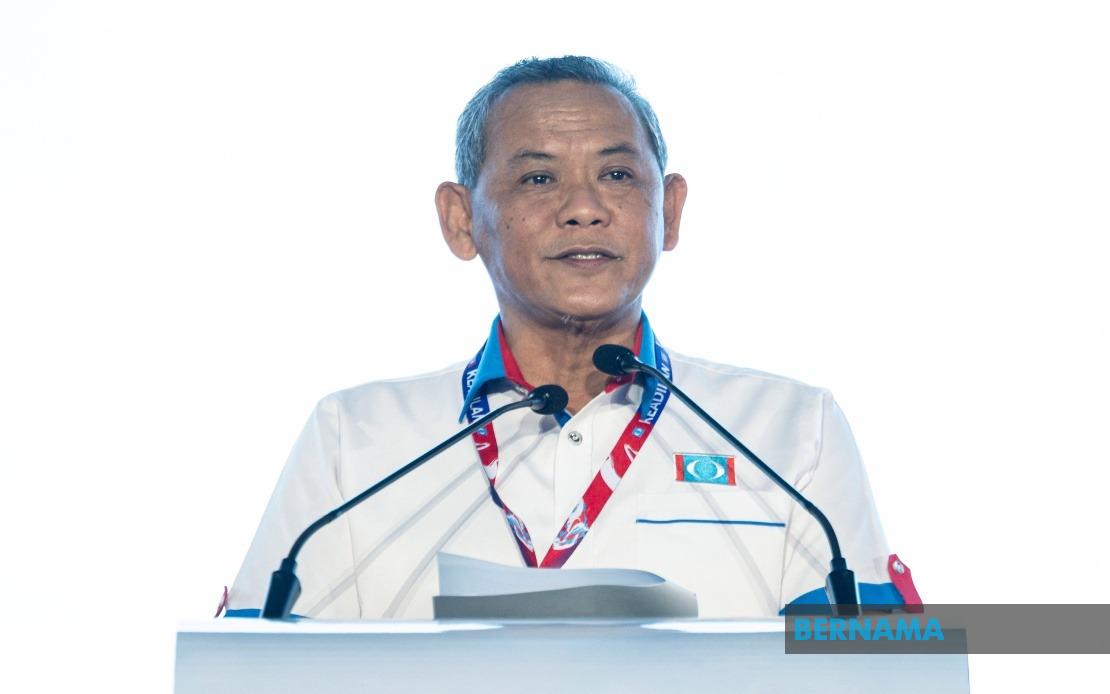
Datuk Seri Aminuddin Harun, the former Menteri Besar of Negeri Sembilan, has publicly indicated his readiness to vacate the chairman position of the Negeri Sembilan State Leadership Council (MPN) within Parti Keadilan Rakyat (PKR), acknowledging the party's underwhelming performance in the August 1 state election. Speaking during the closing session of PKR's National Congress in Melaka on August 16, Aminuddin demonstrated a willingness to shoulder the consequences of the electoral reversal, signalling a significant moment of political accountability within the party.
The Negeri Sembilan election proved distinctly challenging for PKR, which retained just two of fifteen state assembly seats it contested, a result that triggered internal calls for leadership changes. Six PKR branch leaders in the state openly demanded a reassessment of party direction and called for Aminuddin to assume personal responsibility for the disappointing outcome. Rather than deflect or defend the result, Aminuddin acknowledged these grievances and validated the branch leaders' position during his remarks at the MITC venue, indicating broad alignment with the sentiment that the party's management warranted examination.
In his address, Aminuddin articulated a measured approach to accepting accountability. He stated plainly that the position he holds ultimately belongs to the party itself, not to him as an individual, and that he deferred to the broader party leadership regarding any decisions about his future role. This framing—emphasising that the position is held in trust on behalf of the party organisation rather than as a personal achievement—reflects a political philosophy increasingly common among Malaysian leaders seeking to demonstrate institutional commitment over ego. He made clear that he would comply with whatever determination the party hierarchy reached concerning his continued tenure.
Despite his offer to step aside, Aminuddin attempted to contextualise the defeat as neither final nor demoralising. He stressed that electoral reversal should serve as a catalyst for renewal and reconstruction rather than as cause for surrender or recrimination. This rhetorical positioning—framing defeat as a foundation for rebuilding—carries particular significance for PKR as the party navigates its broader role in Malaysian politics. The message appears intended to maintain morale among party members while simultaneously accepting the necessity for organisational reflection and adjustment.
The personal toll of the election was evident in Aminuddin's own constituency results. Contesting the Linggi state seat, Aminuddin lost to BN incumbent Datuk Mohd Faizal Ramli by a margin of 2,976 votes in a three-way contest that also featured Bersatu's Datuk Zamri Md Said. Aminuddin's 6,163 votes fell short of Mohd Faizal's 9,139, whilst Zamri managed only 391 votes, illustrating both the BN's resilience in the state and the fragmentation of opposition support that contributed to PKR's difficulties.
The broader context of PKR's Negeri Sembilan performance reflects shifting electoral dynamics in the state, where Barisan Nasional recovered substantial ground. The party's inability to build momentum despite its role in the federal government suggests that Negeri Sembilan voters remain sceptical of PKR's stewardship, a pattern that warrants examination by party strategists. The entry of Bersatu as a competing force—even securing minimal votes in Linggi—indicates that opposition efforts remained fragmented, a structural problem PKR alone cannot resolve without addressing coalition dynamics.
For Malaysian political observers, Aminuddin's measured response to internal pressure demonstrates how contemporary opposition parties attempt to balance accountability with organisational stability. Unlike earlier eras when electoral defeats might trigger defensive posturing or blame-shifting, Aminuddin's acknowledgment of his branch leaders' demands signals evolving standards for political responsibility. This approach potentially strengthens PKR's credibility by demonstrating that leadership positions remain contingent on performance and that the party places institutional health above protecting individual leaders.
The implications extend beyond Negeri Sembilan. As PKR navigates its position within the federal coalition and prepares for future electoral cycles, the handling of state-level accountability becomes emblematic of the party's broader governance philosophy. Should the party leadership accept Aminuddin's offer to resign, it sends a signal that internal pressure mechanisms function and that electoral consequences carry actual weight. Conversely, should he be retained, the party must articulate why the election result warrants continuity rather than change, a more difficult rhetorical position.
For Negeri Sembilan specifically, the state's political trajectory appears increasingly competitive. The August election demonstrated that no party enjoys unchallenged dominance, even in areas where individual leaders had previously established strong personal networks. Voters demonstrated willingness to shift allegiances, a pattern that may persist if economic conditions deteriorate or if governance at state or federal level disappoints. PKR's challenge lies in reorganising its grassroots structures whilst simultaneously addressing broader coalition concerns that affect how voters perceive the party's competence and commitment.
Amiuddin's public statement also carries significance for how PKR manages future internal conflicts. By inviting party leadership to make the final determination on his position rather than clinging to it, he has shifted accountability upward whilst simultaneously making clear his own acceptance of responsibility. This dual positioning—accepting blame whilst deferring the remedy to higher authority—represents sophisticated political management, allowing him to preserve some dignity whilst demonstrating party loyalty. The approach may influence how other state or party leaders respond to future electoral disappointments.

