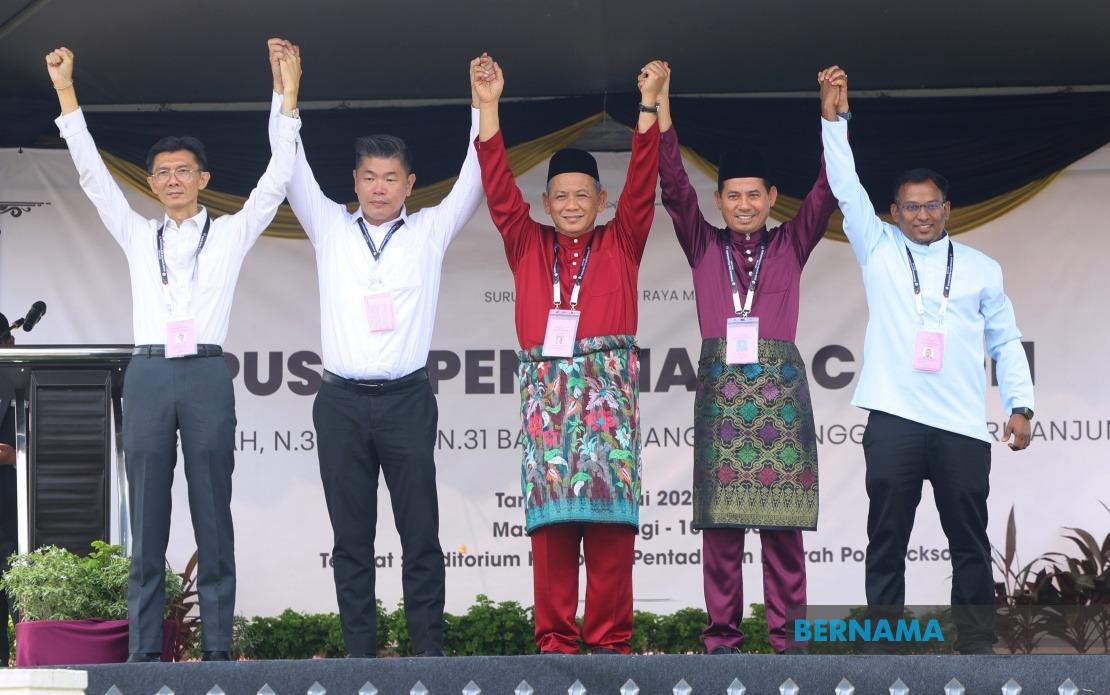
Negeri Sembilan Menteri Besar Datuk Seri Aminuddin Harun has pledged to develop a port and industrial estate in the Linggi state constituency, positioning these facilities as centrepieces of economic transformation for the region if voters deliver him a mandate in the 16th Negeri Sembilan state election scheduled for August 1. Aminuddin, who heads the Negeri Sembilan chapter of Pakatan Harapan, made the announcement following nomination proceedings at the District Administration Complex Auditorium in Port Dickson, signalling that major infrastructure investment will form the cornerstone of his campaign strategy.
The proposed developments represent part of a comprehensive economic blueprint designed to strengthen Linggi's competitive position within Negeri Sembilan and establish new pathways for job creation and commercial activity. By anchoring his campaign on tangible infrastructure projects rather than political rhetoric alone, Aminuddin is attempting to build a forward-looking narrative that appeals to constituents seeking concrete economic benefits. The port proposal is particularly significant given Port Dickson's existing maritime heritage and Linggi's geographical proximity to regional trade corridors, suggesting the plans tap into legitimate economic potential rather than serving as mere electoral promises.
Aminuddin acknowledged the formidable political terrain he is navigating, recognising that Linggi carries a well-established reputation as a Barisan Nasional fortress where the incumbent, Datuk Mohd Faizal Ramli, enjoys considerable structural advantage. Rather than downplaying this challenge, he framed his candidacy as requiring courage and conviction to champion Pakatan Harapan's vision in traditionally hostile territory. This messaging strategy—combining ambitious development pledges with frank assessment of electoral difficulty—serves to soften expectations while simultaneously portraying his campaign as principled rather than opportunistic.
The Menteri Besar attributed the infrastructure proposals to his own initiative, explaining that he personally championed the ideas to party leadership and secured approval before nomination. This personalisation of the development agenda potentially strengthens Aminuddin's individual brand within Linggi, allowing him to claim ownership of the vision rather than presenting himself as merely executing predetermined party strategy. For voters evaluating candidates, this approach signals that Aminuddin possesses both influence within party hierarchies and genuine commitment to translating that influence into constituency-level benefits.
The contest in Linggi has evolved into a three-way fight, with Aminuddin squaring off against Mohd Faizal of Barisan Nasional and Datuk Zamri Md Said representing Bersatu. This multi-cornered dynamic introduces significant variables into electoral calculations, potentially fragmenting the opposition vote and creating unexpected openings for any candidate capable of consolidating support efficiently. The presence of a Bersatu contender is particularly noteworthy given that party's fractious relationship with both Barisan Nasional and Pakatan Harapan, reflecting broader instability within Malaysia's political landscape and the emerging importance of regional political movements.
Mohd Faizal's response to the campaign challenge emphasised that Barisan Nasional cannot treat Linggi as assured despite its historical dominance there. His call for a campaign conducted without excessive provocation or unsubstantiated allegations signals awareness that toxic political environments can mobilise opposition voters while demoralising the incumbent coalition's support base. This appeal for civility, whether genuine or strategic positioning, reflects broader voter fatigue with aggressive electoral theatrics, suggesting that constituencies increasingly respond to candidates demonstrating restraint and focus on substantive governance.
The timing of these announcements comes as the Negeri Sembilan electoral landscape undergoes significant recalibration. The state election represents an important test for both Pakatan Harapan's ability to penetrate traditional Barisan Nasional strongholds and for regional political realignments following earlier national political upheaval. How Linggi votes will provide important signals about voter appetite for change in a state where development pressures and demographic shifts may be eroding longstanding political allegiances.
For Malaysian observers, the Linggi contest encapsulates broader tensions between incumbent entrenchment and challenger ambition that will likely characterise multiple state and federal contests in coming years. Aminuddin's willingness to contest a difficult seat while offering specific development visions suggests Pakatan Harapan recognises that electoral recovery requires visible commitment to winning difficult territory rather than concentrating resources solely in friendlier constituencies. The port and industrial zone proposals, if implemented, could genuinely transform Linggi's economic profile and provide a template for infrastructure-led political messaging in other marginal seats.
The industrial zone proposal holds particular relevance for Negeri Sembilan's manufacturing sector, which has historically relied on established industrial clusters in areas like Selangor-adjacent zones. Creating a new industrial node in Linggi could address capacity constraints, attract investment, and position the constituency as an alternative location for small and medium enterprises seeking to establish operations outside congested Klang Valley regions. This dimension appeals to entrepreneur-voters and business communities that might otherwise align with Barisan Nasional's establishment credentials.
The campaign period running until August 1 will test whether Aminuddin's infrastructure pledges gain traction with Linggi voters or whether traditional political loyalties and Mohd Faizal's incumbent advantage prove decisive. The outcome will offer important lessons about the persuasive power of development narratives in Malaysian electoral contests and whether port and industrial development promises sufficiently address voter concerns to overcome entrenched political patterns. Regardless of the electoral result, the Linggi contest demonstrates how Malaysian politicians are increasingly anchoring campaigns on specific economic proposals rather than abstract ideological appeals.

