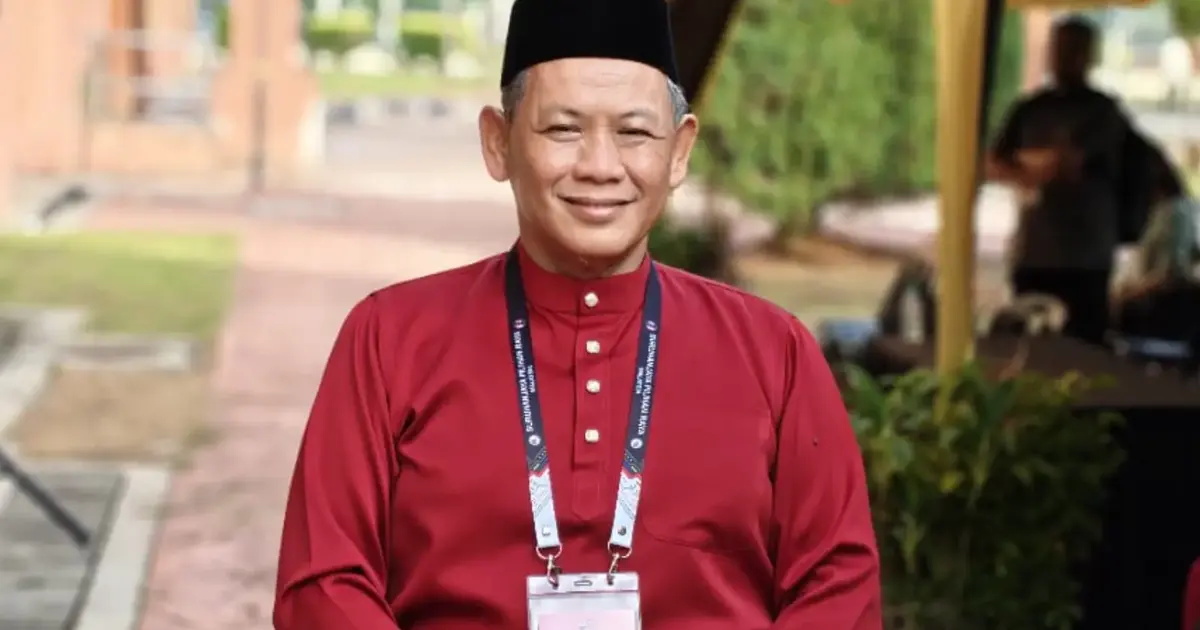
Negeri Sembilan Menteri Besar Aminuddin has set his sights on reclaiming the Linggi parliamentary constituency, entering a competitive three-cornered battle that will reshape the political landscape in one of the country's traditionally conservative strongholds. The Malay-majority seat, long regarded as a Umno bastion, has become a battleground where the state's top political leader faces off against the incumbent and a challenger from the Perikatan Nasional component, signalling deeper fractures within Malaysia's ruling coalition.
Faizal Ramli, who captured the seat for the Barisan Nasional under the Umno banner during the 2023 general election, represents the establishment candidate seeking to consolidate his recent victory. His win two years ago reflected the traditional voting patterns in Linggi, where the Malay-Muslim demographic has historically favoured the coalition's mainstream parties. However, Faizal's tenure has not immunised him from internal party competition or external pressure, particularly given the shifting dynamics within the broader political coalition.
The entry of a Bersatu candidate complicates the traditional binary contest and underscores the fracturing of opposition unity. Perikatan Nasional, the alliance anchored by Bersatu alongside PAS and other parties, has been positioning itself as an alternative force across multiple constituencies. The decision to field a candidate in Linggi suggests that the coalition believes it can appeal to voters in this predominantly Malay area, potentially eroding the consolidated support that once guaranteed Umno-led victories.
Aminuddin's candidacy represents a significant political manoeuvre for the Menteri Besar, who currently leads a Selangor-based PKR administration. His decision to contest in Negeri Sembilan, his home state, signals ambitions that extend beyond his current executive role. The move also reflects the intensifying competition within the Pakatan Harapan coalition, where PKR has been aggressive in pursuing parliamentary representation in traditionally conservative states. For Aminuddin, a victory in Linggi would substantially elevate his national profile and provide him with a federal platform while maintaining his state position.
Linggi's demographic composition has historically made it predictable territory for Umno, with the Malay-Muslim voter base constituting the overwhelming majority. This characteristic has typically discouraged serious challenges from parties positioned as multi-racial or secular-oriented. However, the contemporary political environment has become more fluid, with voters demonstrating greater willingness to consider alternatives based on performance, governance, and local issues rather than purely ethno-religious alignment. The three-way contest thus represents a test of whether traditional voting patterns persist or whether the electorate is prepared to explore new options.
The contest also reflects broader organisational changes within the political landscape. The coordination between Bersatu and other Perikatan components suggests a strategic decision to contest multiple seats simultaneously, potentially maximising their influence in parliament even if they fall short of forming government. This approach differs from previous cycles when opposition parties were more likely to negotiate seat arrangements to avoid splitting anti-government votes. The willingness to proceed with a three-cornered fight indicates confidence in their electoral strategy, though it also carries significant risks of inadvertently helping their least-preferred outcome.
For Umno and the Barisan Nasional, Linggi represents a test of their resilience in constituencies where they have traditionally dominated. The party has faced recurring challenges to its hold on federal power and state governments over the past five years, necessitating a focus on preserving strongholds. Faizal's position as the sitting member provides organisational advantages and incumbent benefits, yet he cannot take the seat for granted given the emergence of high-profile challengers. The contest may also serve as an indicator of how Umno will perform in coming electoral contests across the peninsula's heartland.
Aminuddin's base as Menteri Besar grants him administrative visibility and resources, though the extent to which these translate into electoral advantage remains unclear. His capacity to deliver development projects, allocate resources, and maintain a public profile offers tactical advantages, but these must be weighed against Faizal's status as the sitting MP with direct federal connections through the Umno apparatus. The Bersatu candidate, meanwhile, enters the contest with the backing of a well-organised coalition but faces the challenge of cutting through in a state where his party has limited historical presence.
The outcome of this three-way contest will provide crucial insights into voter behaviour in Negeri Sembilan and comparable constituencies across Malaysia. A victory for Aminuddin would suggest that strong local leadership and alternative party platforms can overcome traditional voting patterns. A Faizal retention would indicate that Umno's institutional advantages and federal alignment remain decisive in Malay-majority constituencies. A Bersatu breakthrough would signal that the Perikatan coalition is successfully diversifying its geographic reach beyond its strongholds on the east coast and in Sabah and Sarawak.
The race also underscores the increased complexity of Malaysian electoral competition, where the simple binary contest between government and opposition has fragmented into multiple vectors of political competition. Parties must now contend not only with traditional rivals but also with internal coalition tensions and candidates representing cross-cutting interests. For voters in Linggi, the choice presents an opportunity to evaluate competing visions of governance and representation, moving beyond the conventional patterns that have characterised this constituency for decades.

