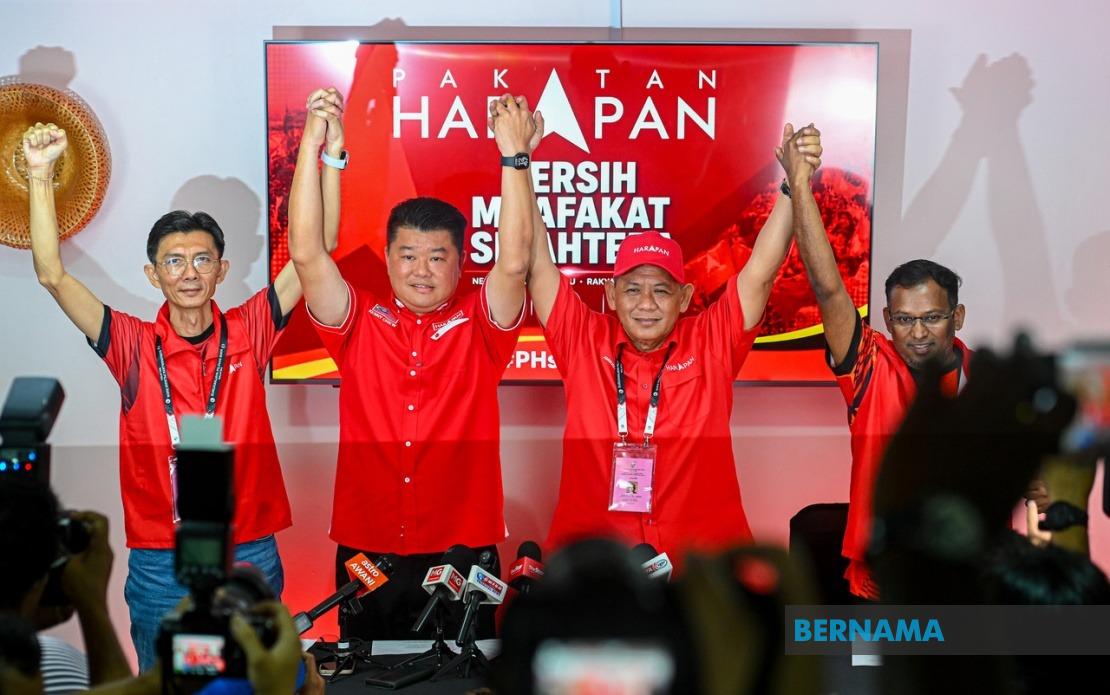
Datuk Seri Aminuddin Harun, the Negeri Sembilan Pakatan Harapan chairman and menteri besar, has firmly rejected suggestions that the coalition faces organisational fractures in its Port Dickson parliamentary division ahead of the state election. Speaking at a press conference in Port Dickson on July 20, Aminuddin expressed confidence that despite recent chatter on social media regarding candidate selections, the PH machinery remains focused and unified in pursuit of electoral victory across the five state constituencies that comprise the Port Dickson seat: Chuah, Lukut, Sri Tanjung, Bagan Pinang and Linggi.
The controversy centred on the re-nomination of Yew Boon Lye, the incumbent assemblyman for Chuah, whose selection as PH's candidate for the constituency had generated online discussion touching upon Port Dickson PKR deputy division chief Datuk Kenny Chiew Chi Kin. Rather than allowing the matter to fester, Aminuddin indicated that internal dialogue had resolved the issue satisfactorily, with Chiew committing himself to advancing PH's electoral prospects across all five seats.
Aminuddin, who himself stands as PH's candidate for the Linggi seat, characterised the speculation as a deliberate attempt by opposition elements to undermine public confidence in the coalition's organisational strength. He portrayed such narrative-setting as part of a broader strategy to present PH in an unfavourable light to voters. This framing reflects a common pattern in Malaysian politics, where candidates and party officials routinely attribute negative media coverage or social media criticism to malicious outsiders rather than genuine internal dissent.
The menteri besar highlighted Chiew's track record within the party structure, acknowledging the deputy division chief's service and efforts to build party strength at the grassroots level. Despite not securing a candidacy for the upcoming election, Aminuddin stressed that Chiew had demonstrated commitment to the broader coalition project. This acknowledgement serves a dual purpose: it validates Chiew's contributions whilst simultaneously reinforcing the narrative that differences within the party apparatus are manageable and do not reflect fundamental organisational dysfunction.
The electoral context provides important backdrop to these assurances. In the 2023 state election, Yew secured the Chuah seat with a commanding 6,298-vote majority over Perikatan Nasional candidate Tang Jay Son. However, the competitive environment has shifted in this election cycle, with the incumbent now facing Barisan Nasional challenger Pau Jeou Ching. For PH, retaining its sitting seats whilst expanding representation remains a critical objective, particularly in Selangor's neighbouring state where demographics and voter sentiment fluctuate.
The emphasis on unity messaging ahead of the ballot reflects broader strategic calculations within PH. In a three-cornered contest involving BN, PN and PH candidates, internal cohesion directly translates into campaign effectiveness and voter mobilisation capacity. Any public acknowledgement of substantive disagreements risks fragmenting the voter base and demoralising ground-level activists. Aminuddin's public reaffirmation of coalition solidarity thus serves as both an internal morale-boosting exercise and an external signal to voters that PH presents a functioning, organised alternative to incumbent governance.
For Malaysian political observers, the incident illustrates how candidate selection processes within major coalitions frequently generate friction among ambitious party members. The PKR, as the largest component of PH, particularly experiences such tensions given the relatively limited number of winnable seats compared to the number of aspirants. The resolution of Chiew's disappointment without apparent acrimony suggests either effective internal management or, alternatively, an understanding that public displays of discontent serve no beneficial strategic purpose.
The electoral timeline adds urgency to coalition coordination efforts. With early voting scheduled for July 28 and polling day on August 1, PH has limited time to consolidate support and mobilise sympathetic voters. Any suggestion of internal division could translate into reduced turnout among party workers and supporters, or worse, strategic defections to rival coalitions. Aminuddin's proactive communication thus represents an attempt to foreclose such possibilities before they materialise.
Regionally, the Negeri Sembilan election holds significance beyond the state itself. As a predominantly Malay-Muslim state with strong traditional institutions, it represents important terrain for both PH's effort to rebuild its once-dominant position in Peninsular politics and for PN's attempt to consolidate support among more conservative constituencies. The performance of individual constituencies like Chuah, where demographic and electoral characteristics may shift between election cycles, often foreshadows broader state-level or even national trends.
The characterisation of online speculation as externally generated misinformation also reflects evolving Malaysian political discourse around digital media's role in shaping perceptions. Whether social media discussion genuinely originated from outside agitators or represented authentic expression of internal sentiment remains difficult to verify, yet Aminuddin's framing establishes a template for party officials to dismiss inconvenient reporting or commentary. This rhetorical move has become increasingly common across Malaysian political parties, serving to simultaneously dismiss criticism and reinforce internal discipline.
For PH's broader national recovery project, state elections in strongholds like Negeri Sembilan carry disproportionate symbolic weight. The coalition's ability to retain and extend representation in such territories influences its capacity to project viability as a governing alternative and to maintain internal morale among party activists who have experienced significant setbacks since the 2023 general election. Conversely, reversals in such contests embolden rival coalitions and create openings for defections or realignments within PH itself.
As the state election approaches, the Port Dickson parliamentary division will serve as a test case for PH's organisational coherence and campaign effectiveness. The coalition's success in translating Aminuddin's unity messaging into actual electoral performance across the five constituencies will likely influence broader interpretations of its political health heading into future contests. The stakes extend beyond Negeri Sembilan's borders into calculations about which coalition might credibly claim the mantle of national governance.

