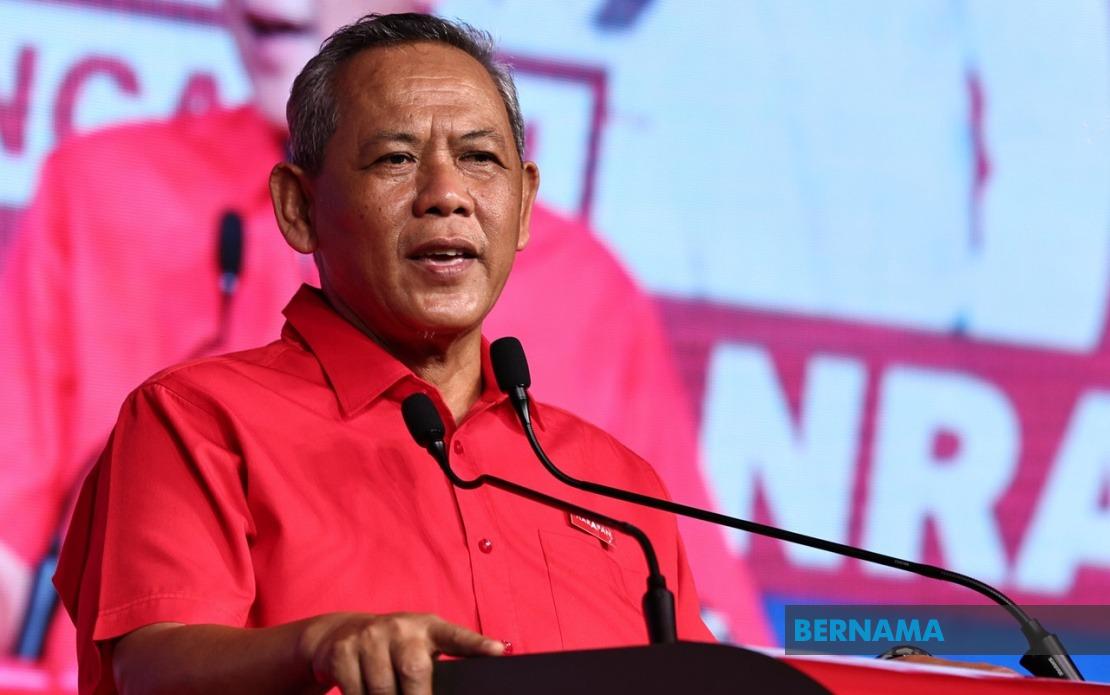
Negeri Sembilan Menteri Besar Datuk Seri Aminuddin Harun has appealed to voters in the Linggi constituency to evaluate the government's substantive response to the area's persistent flooding rather than allowing the issue to be weaponized during campaign season. Speaking after Friday prayers in Seremban on July 17, Aminuddin—who stands as the Pakatan Harapan candidate for the state seat—emphasized that his administration takes the chronic flood situation seriously and has mobilized concrete institutional responses to address what residents and observers have long identified as a recurring problem.
The remarks came as the flooding issue gained traction on social media, with users circulating claims that Linggi residents face repeated inundation during periods of sustained rainfall in the Seremban area. Rather than dismissing these concerns, Aminuddin acknowledged the legitimacy of the problem while stressing that durable solutions require sustained effort and collaboration across governmental tiers. The state government has secured approval for two separate flood-mitigation projects, both now in active implementation phases. These initiatives represent a partnership between Negeri Sembilan's state apparatus and federal authorities, reflecting an attempt to marshal resources and expertise across administrative boundaries.
According to Aminuddin, the timeline for such infrastructure undertakings necessarily extends beyond the immediate campaign season. Flood-control systems—whether involving improvements to drainage networks, construction of retention facilities, or reinforcement of watercourse management—demand careful planning, environmental assessment, and staged execution. The Menteri Besar's implicit argument is that voters should distinguish between genuine infrastructure development, which unfolds across months or years, and political opportunism that seeks short-term advantage by inflaming grievances without proposing realistic remedies.
His statement reflects a broader strategic posture adopted by Pakatan Harapan's campaign apparatus in Negeri Sembilan. Rather than matching what the coalition characterizes as opposition theatrics, the state leadership is attempting to anchor its electoral appeal to documented administrative performance and visible development initiatives. This approach assumes that voters in constituencies like Linggi will reward governments that demonstrate sustained commitment to problem-solving, even when results take time to materialize. Aminuddin articulated this philosophy directly: the coalition would compete on the basis of its proven track record and ongoing investment in state infrastructure, allowing voters themselves to evaluate opposition strategies without further commentary from the ruling camp.
The Negeri Sembilan Pakatan Harapan chairman's framing also reflects broader patterns in Malaysian state-level politics, where development outcomes and service delivery have become increasingly central to electoral calculations. In an era when social media can rapidly amplify localized grievances, elected representatives face pressure to demonstrate tangible responses—not merely to acknowledge problems, but to implement solutions visible to constituents. Aminuddin's emphasis on the two approved projects functions partly as evidence of responsiveness, suggesting that the state government has heard community concerns and acted upon them.
The timing of these remarks carries particular significance given the imminent electoral schedule. The Election Commission designated July 18 as nomination day for the 16th Negeri Sembilan state election, with early voting scheduled for July 28 and polling day on August 1. This compressed timeline means that candidates have little more than two weeks to frame their messages and mobilize supporters. Aminuddin's choice to emphasize infrastructure implementation rather than engage in point-by-point rebuttals of opposition claims suggests confidence in the electorate's ability to distinguish substantive governance from campaign rhetoric, or at least a calculation that such a posture serves the coalition's interests more effectively than defensive sparring.
The flood issue itself speaks to broader infrastructural challenges across Malaysian urban and peri-urban areas. Seremban, as the capital of Negeri Sembilan, has experienced rapid development in recent decades, altering drainage patterns and increasing impervious surface coverage. The Linggi area's vulnerability to inundation likely reflects some combination of geographical factors—proximity to watercourses, topography—and cumulative effects of development. Addressing such problems comprehensively requires not only reactive measures like improved drainage but also potentially longer-term strategic planning around urban design, land-use patterns, and water-resource management. Whether the two approved projects tackle these issues at the necessary depth remains to be seen, but their existence at least suggests official acknowledgment that ad-hoc responses will not suffice.
For Malaysian voters observing state-level politics, Aminuddin's appeal illustrates a recurring tension in democratic campaigns: the pressure to promise immediate results colliding with the reality that meaningful infrastructure development proceeds on its own timeline. Constituencies throughout Malaysia contend with similar challenges—flooding in Selangor, landslide risks in Pahang, water shortages in certain areas—and the question of how governments communicate about progress on these fronts affects public confidence and electoral outcomes. Aminuddin's strategy of emphasizing institutional process, intergovernmental coordination, and realistic timelines represents one possible approach, though its effectiveness depends partly on whether voters believe the projects will genuinely be completed and whether visible progress emerges before polling day.
The broader context of Negeri Sembilan's political landscape also matters here. The state has alternated between Pakatan Harapan and opposition-controlled governments in recent election cycles, reflecting relatively competitive electoral dynamics. In such contexts, marginal constituencies where local issues loom large—like Linggi—can determine overall outcomes. Aminuddin's effort to reframe the flood issue as evidence of competent governance rather than government failure represents an attempt to secure these marginal areas by demonstrating that the ruling coalition takes constituent concerns seriously and possesses the administrative capacity to act. Whether this messaging proves persuasive will become clearer as the campaign intensifies and voters ultimately cast their ballots.

