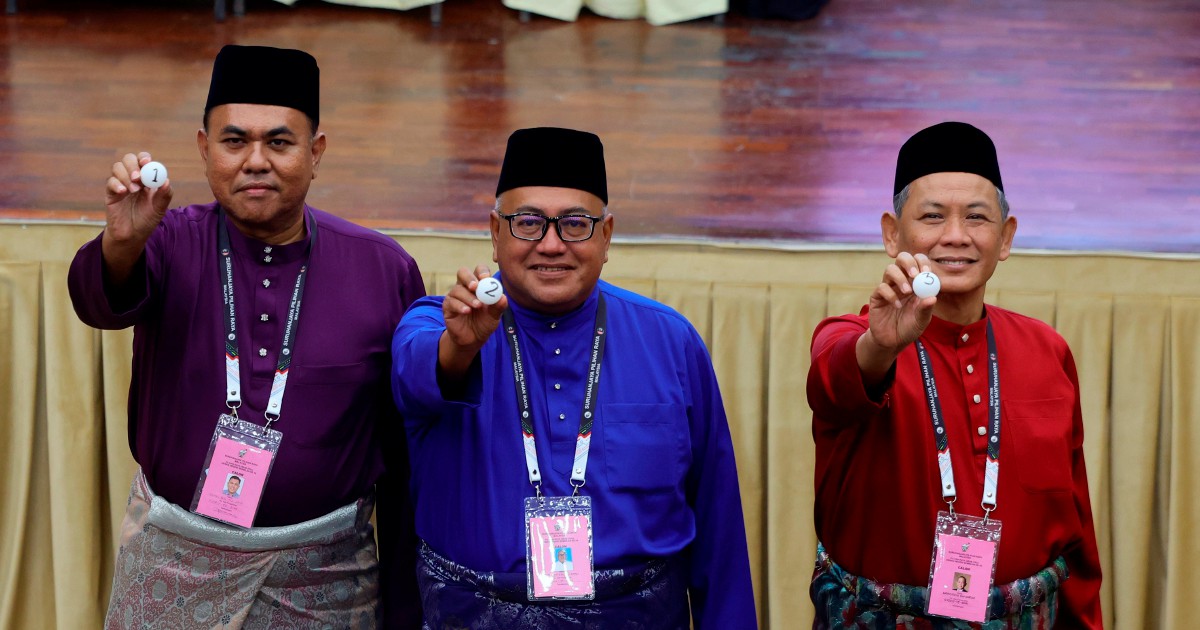
Caretaker Menteri Besar Datuk Seri Aminuddin Harun has acknowledged a fiercely competitive contest awaits him in the Linggi constituency as Negri Sembilan gears up for its state election. Speaking at Port Dickson, Aminuddin offered a frank assessment of his electoral prospects, indicating that his chances of reclaiming the seat remain finely balanced at what he characterised as a "50-50" proposition. His candid remarks underscore the intensifying political dynamics in one of Barisan Nasional's traditionally secure territories within the state.
The Linggi constituency has long represented a bastion of BN support in Negri Sembilan, yet Aminuddin's measured acknowledgement of the tight race reflects broader shifts in Malaysian electoral sentiment. The state election represents a critical juncture for the ruling coalition as it confronts mounting pressure from opposition forces in multiple constituencies. BN's traditional dominance cannot be taken for granted in an increasingly competitive electoral environment, where voters are scrutinising party performance and candidate credentials with greater intensity than in previous cycles.
Aminuddin's position as caretaker Menteri Besar carries substantial weight in local politics, yet this status alone may prove insufficient to guarantee retention of his seat. The acknowledgement of such competitive parity between himself and opposition challengers suggests that ground sentiment in Linggi has become considerably more fluid. Voters are evidently weighing multiple factors—from development track records to broader perceptions of BN's governance at both state and federal levels—in making their electoral choices.
The political landscape across Negri Sembilan has undergone notable transformation in recent years. The state, once viewed as a predictable BN stronghold, now presents a patchwork of competitive and marginal seats where traditional loyalty cannot guarantee electoral success. Opposition parties have invested significant organisational effort in constituencies they previously considered unwinnable, and this strategic recalibration appears to be bearing fruit in terms of voter responsiveness and participation.
Aminuddin's assessment carries additional significance given his prominence within the BN coalition. As the sitting Menteri Besar leading the campaign, his electoral fortunes will substantially influence perceptions of the coalition's broader performance in Negri Sembilan. A challenging contest in Linggi could serve as a barometer for BN's standing more generally across the state and potentially signal broader difficulties in constituencies that have historically favoured the coalition.
The "50-50" characterisation is particularly notable as it represents neither optimism nor resignation, but rather a pragmatic acknowledgement of genuine uncertainty. This contrasts sharply with confident predictions sometimes offered by political figures and suggests Aminuddin is operating with solid ground intelligence regarding voter sentiment in his constituency. Such honesty about electoral prospects, while perhaps surprising given his position, may actually serve to mobilise BN supporters who might otherwise underestimate the challenge.
Linggi's competitive status reflects evolving voter priorities across Malaysian constituencies. Development issues, service delivery, economic opportunity, and representation quality have become increasingly important factors in electoral calculations. Voters are less inclined to extend automatic support based on party affiliation alone, instead examining what local representatives have accomplished and what they propose to deliver during incoming terms.
The state election holds implications extending beyond Negri Sembilan's borders. Results in constituencies like Linggi will offer insights into BN's broader capacity to retain support in traditionally friendly territory. Malaysian political observers and analysts will scrutinise these outcomes closely for signals about voting patterns in other states and regions where BN maintains significant presence. A competitive showing in Linggi could foreshadow similar challenges elsewhere.
For the opposition, the apparent tightness of the Linggi race presents an opportunity to make inroads into BN's traditional support base. Opposition parties have invested strategically in the constituency, and if they can mount a credible challenge in such an established BN stronghold, the cascading political implications could be substantial. Victory would represent a symbolic breakthrough and could energise opposition campaigns across other constituencies within Negri Sembilan and beyond.
Aminuddin's acknowledgement of the competitive dynamics in Linggi must be understood within the context of broader transformations affecting Malaysian electoral politics. Voter volatility, shifting demographic patterns, and increased political awareness have all contributed to a more unpredictable electoral environment. Even constituencies with strong historical voting patterns have become susceptible to swings and surprises when elections are held.
The campaign period ahead will be critical in determining whether the "50-50" assessment proves accurate. Both BN and opposition forces will mobilise substantial resources in Linggi, recognising its symbolic importance and the broader state-level implications of the result. Aminuddin's campaign will likely emphasise his record as Menteri Besar and his development initiatives, while opposition candidates will highlight governance concerns and present alternative visions for the constituency's future.
As Negri Sembilan approaches polling day, the competitive status of constituencies like Linggi exemplifies the maturation of Malaysian electoral politics. Voters are increasingly discerning, ground conditions are more fluid, and traditional advantages provide less automatic protection than they once did. For Aminuddin and the BN coalition, transforming the "50-50" assessment into victory will require energised campaign work, effective messaging, and genuine responsiveness to constituent concerns.

