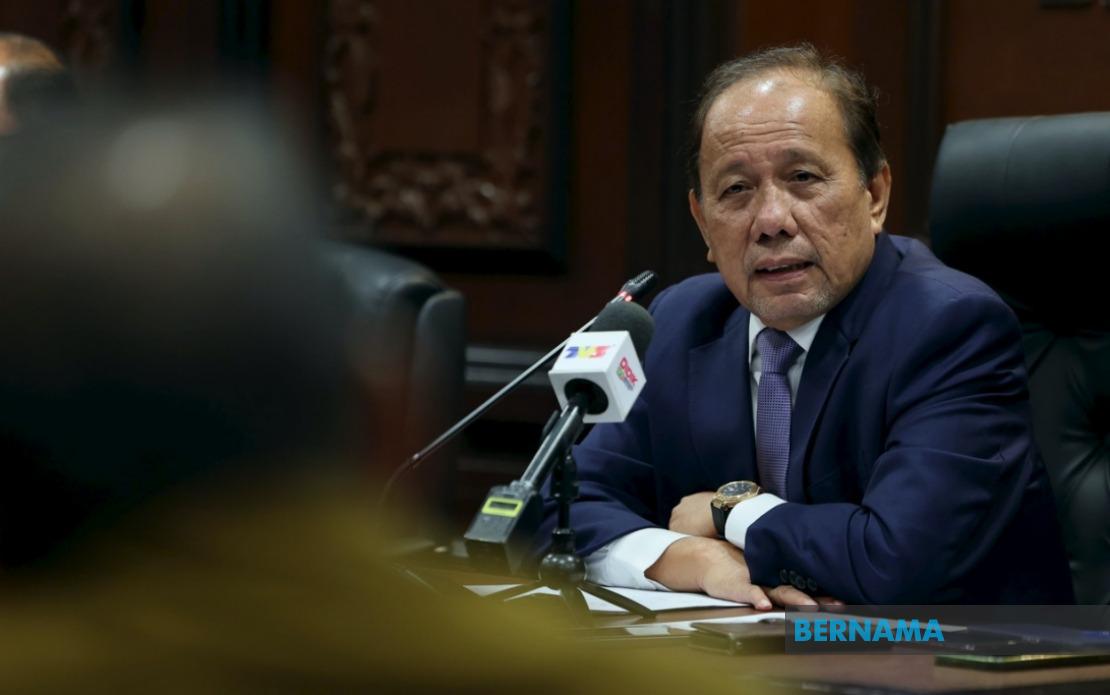
In a striking demonstration of fiscal accountability within Negeri Sembilan's political transition, Menteri Besar Datuk Ismail Lasim has singled out Datuk Seri Aminuddin Harun, the former Pakatan Harapan chief minister, as the sole ex-state assemblyman to have completely repaid the allocations provided to him during his tenure. This disclosure, made in Seremban on August 27, underscores the broader reconciliation of state finances following the dissolution of the state assembly on June 5 and the subsequent change in administration.
The financial reckoning extends across multiple former PH representatives, many of whom have initiated partial repayments since June 30 but have not yet settled their full outstanding balances. Ismail revealed that coordinators for constituencies including Paroi and Labu have begun the return process, yet their contributions remain incomplete. His comments highlight the complexity of untangling accumulated allocations across different constituencies, where spending patterns and outstanding liabilities vary considerably from one representative to another.
Ismail's characterisation of the situation suggested a degree of pragmatism regarding how former assemblymen had utilised the funds. He acknowledged that some allocations had likely been spent on constituency matters and other purposes, indicating that the state government is not pursuing a simple binary of full return or nothing. Instead, the Negeri Sembilan administration appears focused on establishing clarity through documentary evidence, requesting that those unable to repay in full provide detailed expenditure records and financial justifications for their spending. This approach reflects an effort to balance accountability with a recognition that some funds were legitimately deployed for public benefit.
The administrative burden of tracking allocations has proven more intricate than initially apparent. The Menteri Besar's Office is currently engaged in a comprehensive review of records to ascertain the precise amounts each former assemblyman received, acknowledging that allocations were not standardised across constituencies. This variation means that follow-up letters demanding repayment will necessarily differ in their amounts and expectations. Some individuals will face demands to return the full sum, while others may owe considerably less, depending on what records show they were originally allocated and what remains unspent. This individualised approach, while administratively demanding, represents a more equitable method than imposing uniform settlement demands.
The completion of this review process will determine the final framework for recovery. Ismail indicated that correspondence to affected former assemblymen would be issued only after the office has finished its assessment, suggesting that the state government is prioritising accuracy over speed. For those receiving demands, the implied deadline appears to be structured around the original instruction issued on August 26, which gave former PH representatives and state constituency coordinators one month to return allocations for the July to September period following the assembly's dissolution.
An important temporal distinction emerged regarding executive councillors, a category that included Aminuddin and others serving until July 31. These officials retained ex-officio membership rights beyond the assembly's June 5 dissolution, entitling them to utilise allocations through the end of July. This carve-out acknowledges the practical reality that transitional governance requires continuity in funding for ongoing commitments. Aminuddin's full repayment occurred within this framework, suggesting he managed his allocation responsibly during his extended tenure period and subsequently settled the account completely.
From the opposition's perspective, Nilai assemblyman J. Arul Kumar, the Negeri Sembilan DAP chairman, mounted a defence of the allocations' deployment, asserting that funds disbursed before the assembly's dissolution had been directed toward genuine constituency welfare rather than partisan political activity. Kumar indicated that the DAP-aligned representatives had already returned unspent balances to the Menteri Besar's Office before July 10, accompanied by comprehensive financial reports documenting expenditure by constituency. This proactive stance suggests that at least some former PH representatives anticipated the requirement to account for their allocations and took steps to demonstrate fiscal responsibility.
The broader context involves the transition of Negeri Sembilan's governance following the state assembly's dissolution. The shift from a PH administration to the current government, led by Ismail under a different political arrangement, necessitated a complete reconciliation of state finances and the reversion of unused discretionary spending authority. The allocation recovery initiative represents a standard—if sometimes contentious—component of such transitions, ensuring that incoming administrations inherit clear financial slates and that outgoing officials settle their obligations.
For Malaysian political observers, the episode illustrates the mechanics of accountability within state governance and the varying standards of fiscal discipline among elected representatives. The fact that Aminuddin's complete repayment merited specific commendation suggests that full settlement remains exceptional rather than routine, raising questions about the financial discipline of other officials. Whether other assemblymen will eventually meet their obligations in full, or whether negotiations over disputed amounts will extend the process, remains to be determined as the state government completes its review and dispatches individualised correspondence to those with outstanding balances.
The situation also reflects broader patterns within Malaysian state politics, where the transition of power frequently involves disputes over the utilisation and return of public funds allocated to opposition representatives. The approach taken by Negeri Sembilan—emphasising documentation and differentiated settlement rather than blanket demands—may serve as a pragmatic model for managing such transitions elsewhere. Ultimately, the recovery process will demonstrate whether the former PH administration left the state's finances in acceptable order and whether its representatives adhered to reasonable standards of fiduciary responsibility to their constituencies.

